-
Hamas decides to keep living Zionist prisoners in areas alerted by enemy
Al-Qassam Brigades Military Spokesman Abu Obeida stressed that half of the living enemy prisoners are located in areas the occupation army has requested to be evacuated in recent days.
We have decided not to transfer these prisoners from these areas and to keep them under strict security measures, which are extremely dangerous to their lives, he added.
“If the enemy is concerned about the lives of these prisoners, it must immediately negotiate their evacuation or release. He who warns is excused.”
“The Netanyahu government bears full responsibility for the lives of the prisoners. If it were concerned about them, it would have adhered to the agreement it signed in January, and most of them would probably be in their homes today.”
In a devastating escalation of aggression, Israeli airstrikes on Gaza Strip have killed at least 112 Palestinians since Thursday morning, with the majority of the victims reported in Gaza City. The attacks have exacerbated an already dire humanitarian crisis in the region.Al Manar report

-
Martyrs in Zionist aggression on Sidon, IOF renews its violation of ceasefire agreement
In a serious breach of the ceasefire agreement, the Zionist occupation military launched a series of airstrikes targeting various locations across Lebanon, including the killing of a senior Hamas leader in the city of Sidon.
According to reports, at dawn on Friday, Zionist aircraft attacked an apartment building in the Dala’a neighborhood of Sidon, resulting in the deaths of Hamas leader Hassan Farhat (Abu Yasser), along with his son Hamza and daughter Jinan.
The attacks did not stop there. On Thursday night, Israeli warplanes also struck the area between the towns of Azza and Rumin in the Nabatieh district. Earlier that evening, enemy aircraft targeted prefabricated rooms in the southern town of Naqoura, with another strike on similar structures in Naqoura at dawn on Thursday.
In a separate incident, a Zionist drone targeted a Rapid vehicle on the Bint Jbeil-Yaroun highway in the Dora area, injuring two people. An Al-Manar correspondent also reported that a Rapid vehicle was targeted in the town of Alma al-Shaab on Thursday afternoon.
These flagrant violations of Lebanese sovereignty and the ceasefire agreement by the Israeli occupation military have drawn widespread condemnation.
Source: Al-Manar Eglish Website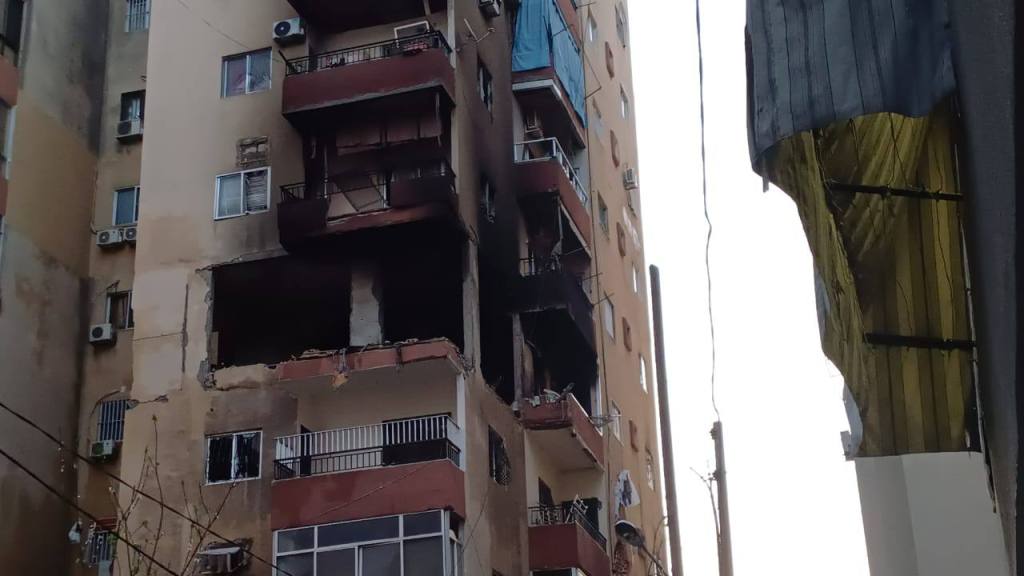
Hamas official Hassan Farhat killed along with his son Hamza and daughter Janan in an Zionist
airstrike that hit their apartment early this morning in Dal’aa neighborhood, Sidon, South Lebanon. -
Syrian refugee influx into northern Lebanon continues
The UNHCR reported a continued influx of Syrian refugees into Lebanon in recent months, especially into the poor host communities of Akkar and North Lebanon. As of early April, 29,000 new arrivals—6,216 families including 365 Lebanese returning from Syria—were recorded, with 20,553 settling in Akkar alone. The village of Al-Masoudiyeh hosts the largest number, with 1,200 families. In North Lebanon, 8,500 refugees—2,111 families—mainly settled in Tripoli’s Jabal Mohsen. The Red Cross and UNHCR expect the inflow to continue.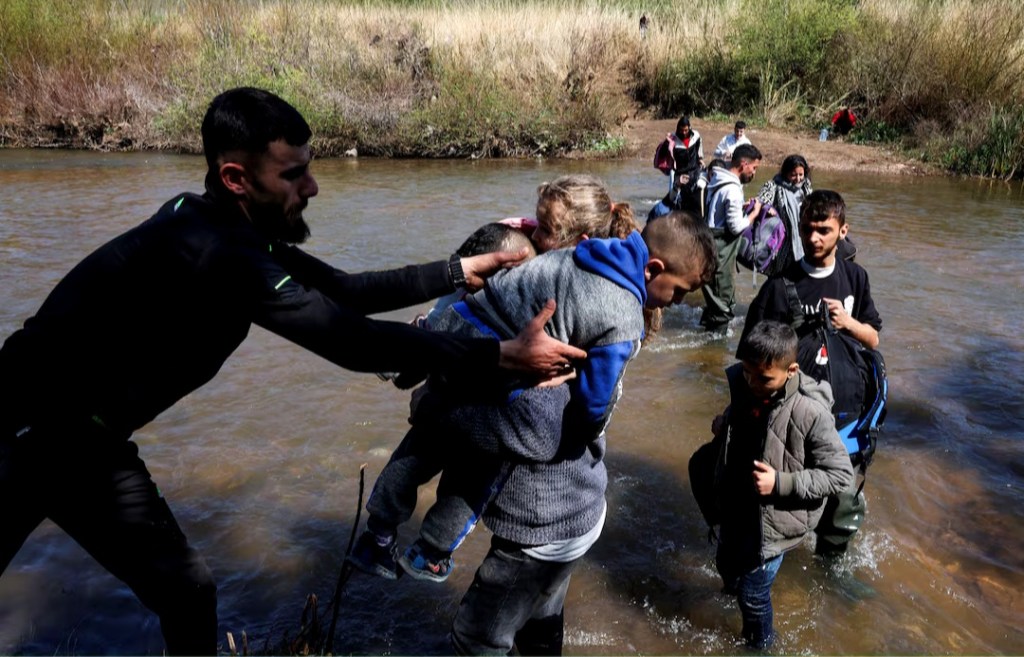
A man assists a Syrian man with children, who fled the violence in western Syria, at the Nahr El Kabir River, after the reported mass killings of Alawite minority members, in Akkar, Lebanon March 11, 2025. -
Yemen facing bloody aggression, rising casualty loll amid international silence
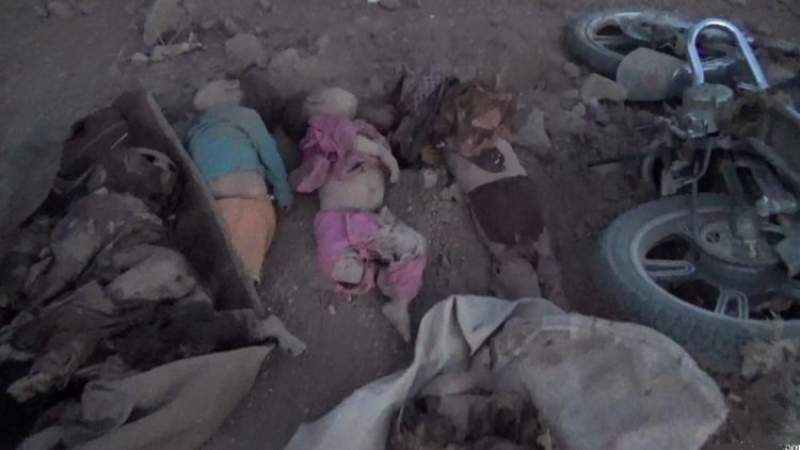
Concerns are growing over the continued U.S. military aggression against Yemen, following the announcement by the Ministry of Health and Environment in Sana’a that 200 martyrs and wounded have fallen between March 15, 2025, and the first of April. This development reflects a shift in U.S. aggression into a bloodier phase.
According to the statement from the Yemeni ministry in Sana’a, U.S. airstrikes have resulted in the martyrdom of 61 civilians and the injury of 139 others, highlighting the increasing threat faced by civilians as U.S. warplanes continue to target civilian sites.
Official figures also indicate that the total number of casualties since the start of Yemen’s support operation for the Gaza Strip until April 1, 2025, has reached 250 martyrs and 714 wounded. This further exacerbates the humanitarian crisis in Yemen, which has endured a decade of regional and international aggression and a suffocating blockade.
Motives Behind the U.S. Escalation
The escalation of U.S. aggression against civilians comes amid rising regional tensions. Analysts suggest that Washington is attempting to curb Yemen’s growing influence in supporting the Palestinian cause, particularly as Sana’a escalates its operations in the Red Sea against “Israeli” and American interests.
This escalation is fueling further polarization in the region, with growing fears that the conflict could expand into a wider war.The Humanitarian Crisis
These airstrikes come at a time when Yemen is already suffering from a dire humanitarian crisis, with millions facing severe shortages of food and medicine due to the decade-long blockade.
Despite repeated calls from human rights organizations to halt these attacks and protect civilians, international reactions remain inconsistent. Some parties have limited their response to condemnation statements without taking concrete steps to de-escalate the situation.
Possible Scenarios for the Crisis
Observers believe that the continuation of these strikes may push Sana’a to escalate its retaliatory measures against American and “Israeli” targets in the region, potentially leading to further military escalation.
On the other hand, some international actors may seek de-escalation through diplomatic channels, especially amid fears of an all-out regional conflict.
Amid this reality, the future of the (Yemeni-American-Zionist) conflict remains open to multiple possibilities—ranging from greater military escalation to a diplomatic breakthrough that could be driven by the calculations of regional and international powers in favor of de-escalation in the Red Sea and Gaza.Al Masirah report
-
At least 31 martyrs following the Dar Al-Arqam School massacre in Tuffah, mostly women and children
The death toll in the latest Zionist massacre on the Dar al-Arqam School, Al-Tuffah neighborhood, northeast of Gaza City, has risen to at least 31 killed and over 100 injured.
Footage captures the horrific aftermath of Israeli airstrike on a school turned shelter in Al-Daraj east of Gaza, as bodies of burnt children are being recovered from underneath the rubble. Most of the victims were displaced Palestinian women and children. Palestinian Ministry of Health in Gaza:
—
Daily statistical report on the number of martyrs and wounded as a result of the “israeli” aggression on the Gaza Strip.
100 martyrs (including 3 recovered martyrs) and 138 injuries arrived at Gaza Strip hospitals over the past 24 hours.
A number of victims remain under the rubble and on the roads, unable to be reached by ambulance and civil defense crews.
The martyrdom toll and injuries since March 18, 2025 has reached 1,163 martyrs, 2,735 injuries.
The martyrdom toll from the “israeli” aggression has risen to 50,523 martyrs and 114,776 injuries since October 7, 2023.
Palestinian Ministry of Health in Gaza.
April 3, 2025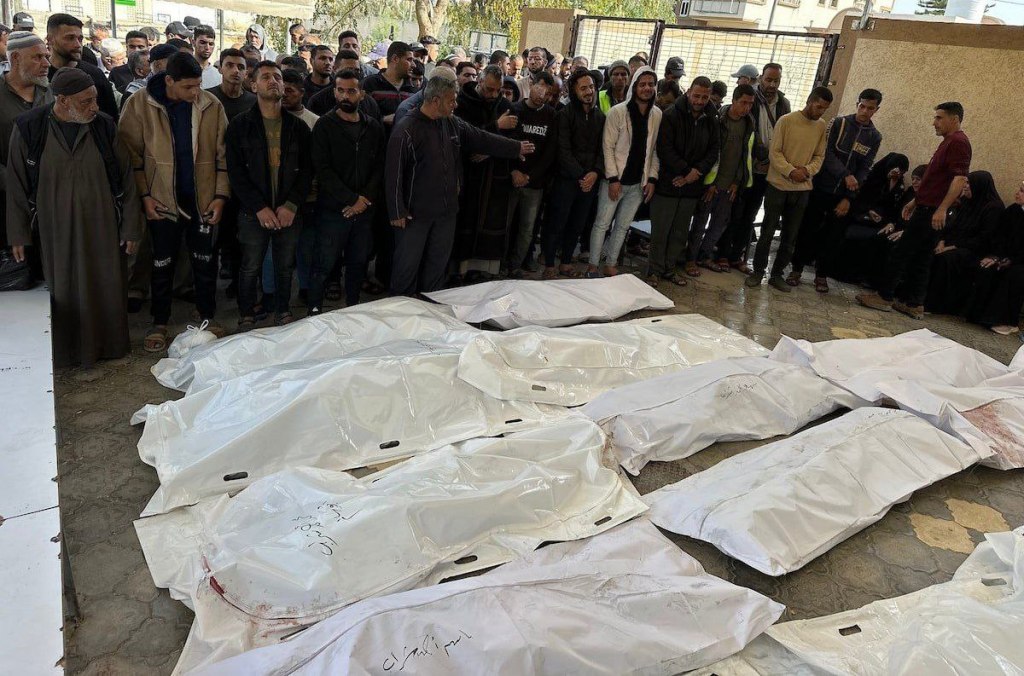
At least 100 Palestinians murdered in Gaza since dawn today as apartheid colony intensified aggression. PressTV -
Statement by the Spox of the Yemeni Armed Forces General Yahya Saree
The American enemy launched a blatant aggression against our country over the past few hours with more than 36 airstrikes targeting several areas in the governorates of Sana’a, Sa’dah, and several other governorates, resulting in a number of martyrs and injuries.
In response to this aggression, the Yemeni Armed Forces’ naval forces, UAV force, and missile force, with the help of Allah Almighty, carried out a specific and joint military operation.
They engaged the US aircraft carrier Truman and its affiliated warships in the northern Red Sea with using a number of cruise missiles and unmanned aerial vehicles.
The operation successfully achieved its objectives, thanks to Allah.
The engagement continued for long hours, and part of the attack on our country was thwarted.
The Yemeni Armed Forces, with the help of Allah Almighty, will continue to target all American warships and all sources of threat in the declared area of operations.
The aggressive raids will not deter them from fulfilling their religious, moral, and humanitarian duties toward the oppressed Palestinian people.
Their military operations deep within the Zionist entity in the occupied Palestine are ongoing and will not stop until the aggression against Gaza is halted and the siege is lifted.
Sana’a,
5 Shawwal 1446 AH
April 3, 2025 AD
Issued by the Yemeni Armed Forces
http://t.me/army21ye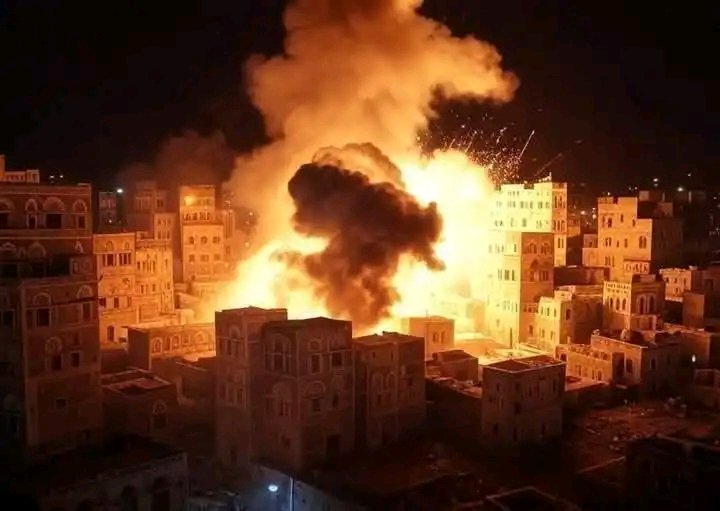
US aircraft launched approximately 41 airstrikes early Friday morning across several regions in Yemen, including the capital, Sanaa, using highly explosive bombs (March 28, 2025). Al Manar report -
IOF strikes Syrian military bases, kills 10 in Daraa
The Zionist occupation army launched airstrikes on military airbases and infrastructure sites in the Syrian cities of Damascus, Hama and Homs as it carried out an incursion in the country’s south late on Wednesday.
The attack on Hama military airport almost completely destroyed the facility and led to dozens of injuries among civilians and military personnel, the Syrian foreign ministry said in a statement.
The strikes targeted the military airport in Hama, and the vicinity of the scientific research center in the Barzeh neighborhood in Damascus, Syrian state media and officials said.
A Syrian military source told Reuters a dozen strikes demolished the runways, tower, arms depots and hangars at the military airport.
“Israel has completely destroyed Hama airbase to ensure it is not used. This is a systematic bombing to destroy the military capabilities of the country’s main airbases,” the source said.The Hama airbase west of the city is one of the country’s main airbases, used extensively during the 13-year-old conflict between Assad and the rebels before they ousted him.
The Israeli occupation military also said on Wednesday it targeted the T4 airbase in Homs province, which it has repeatedly hit over the past week.
Incursion in Daraa
Elsewhere in the southern province of Daraa, 10 people were killed overnight in clashes between Israeli occupation forces and local residents in the Al-Jabaliya area, Syrian state media reported Thursday morning.
The clashes erupted as the occupation forces carried out an incursion into the area, according to the state media in Syria.Al Manar report with videos
A funeral held for the Syrians killed in Zionist airstrikes targeting Nawa city in Daraa countryside, southern Syria. 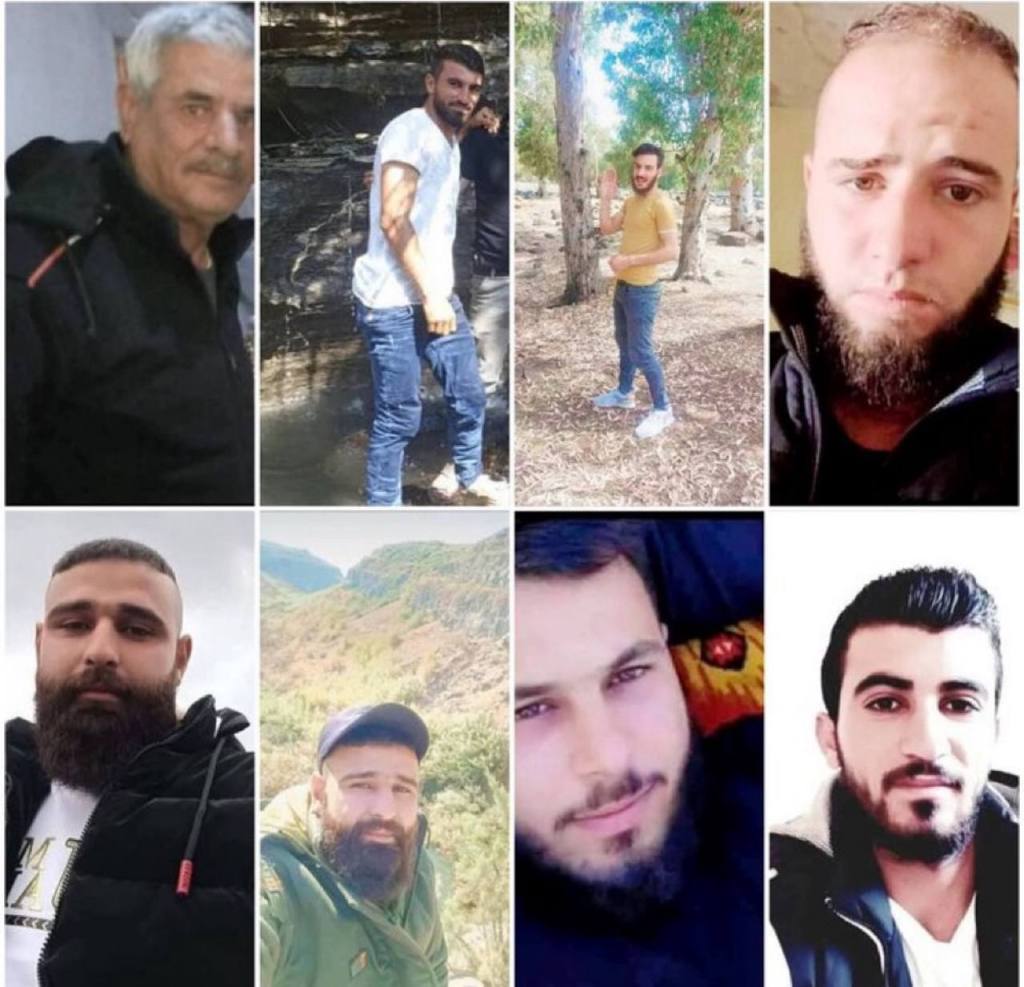
The Cradle Media -
Zionist strikes target ambulances, health centres, prefabricated homes in South Lebanon
A series of new Zionist airstrikes have struck Lebanese civil defense teams, ambulances and a civil defense headquarters in south Lebanon, marking yet another violation of the fragile ceasefire agreement between Zionist enemy and the Arab nation.
IOF said it carried out an airstrike targeting a member of Hezbollah in the area of Alma al-Shaab Thursday, its latest attack on the country in recent days.
Lebanon’s official National News Agency (NNA) reported that one person was wounded in an Israeli drone strike on a car in the village near the border.
It had also reported two wounded in Bint Jbeil in south Lebanon by an Israeli drone strike that targeted a car.
Zionist strikes at dawn Thursday targeted two ambulances, a fire truck, and the destroyed a temporary health center operated by the Islamic Health Association in the town of Naqoura near the border.
“The Israeli enemy targeted the newly established Civil Defense Center of the Islamic Health Association (IHA) in the town of Naqoura at dawn today with three aggressive raids, which led to its complete destruction and damage to two ambulances and a fire truck. Divine mercy prevented any injuries among the paramedics,” the IHA said in a statement.
“This aggression is part of a series of daily violations and attacks by the enemy, completing a series of crimes that it began in its last war on Lebanon, through its deliberate targeting of ambulance crews,” it added.
The Lebanese Ministry of Public Health, in a statement, condemned Israel’s continued targeting of the healthcare sector.
The ministry’s media office said the attack adds to the repeated assaults carried out by the Israeli military on non-military health centers since the start of the aggression.
The ministry reiterated its call on the international community not to overlook the gravity of these violations, which constitute a blatant breach of international laws, humanitarian organization charters, and established norms.This is not the first time that the Tel Aviv regime has breached the truce that went into effect in November last year.
Israel bombed Beirut’s southern suburb on Tuesday, killing several people, including a Hezbollah official and his son..
The Tel Aviv regime has continued to carry out deadly strikes on Lebanese territory since the truce agreement took effect, violating the deal over 1,500 times.
The new attacks came one day after Israel’s minister of military affairs, Israel Katz, visited an Israeli outpost established on Lebanese territory near the town of Markaba.
Katz vowed that Israel’s occupation in south Lebanon would be indefinite. “We are here without a time limit. It doesn’t depend on time. It depends on the situation.”
Israel’s military remains positioned in five locations along the border inside southern Lebanon, where they established themselves following the ceasefire deal in November 2024.
This is aside from the Lebanese land that Israel has already been illegally occupying for decades.
Israel was meant to pull out all its forces from south Lebanon after the ceasefire deal.
Satellite imagery reviewed by the New York Times recently showed Israeli forces have been building a network of military structures and fortifications in south Lebanon.
After enduring substantial losses over almost 14 months of conflict and not achieving its aims in the offensive against Lebanon, Israel had no choice but to agree to a ceasefire with Hezbollah. The ceasefire was implemented on November 27.
Since the initiation of the agreement, the occupying forces have been conducting attacks on Lebanon, violating the ceasefire, which encompasses airstrikes across the Arab nation.
On January 27, Lebanon declared its decision to prolong the ceasefire with Israel until February 18.Al Masirah report
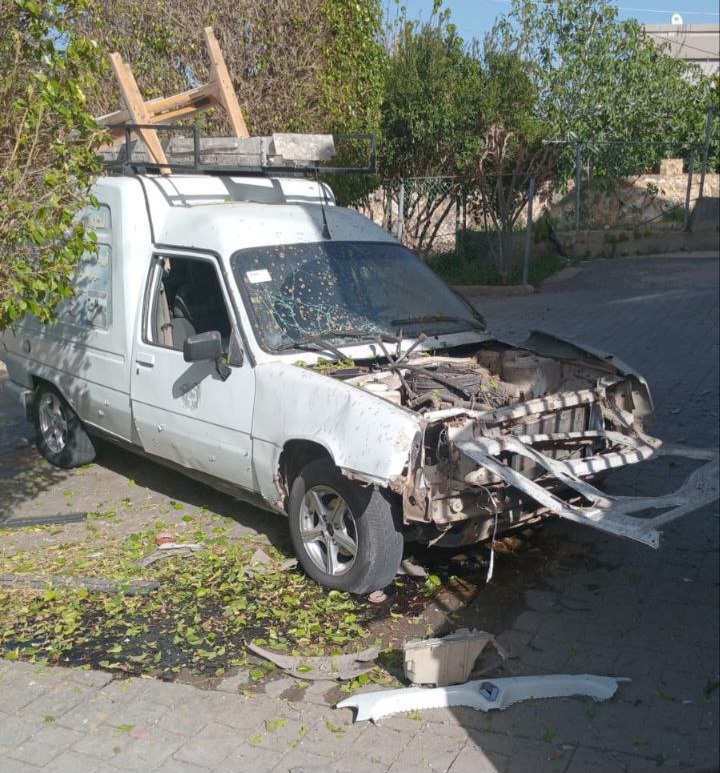
Aftermath of the Israeli airstrike that targeted the prefabricated rooms in the courtyard of Naqoura Municipality, South Lebanon.
Al AkhbarZionist airstrikes targeted residential areas in Naqoura, southern Lebanon. PressTV One person was injured in an Israeli drone attack on a car in the town of Alma al-Shaab, southern Lebanon.
The injured person in Alma al-Shaab is a man from Aita al-Shaab who works in an aluminum installation business and is in charge of one of the workshops in the town of Alma al-Shaab. -
Nineteenth US aggression airstrikes on Saada, a destroyed water reservoir & five civilian casualties
US airstrikes destroy water source for 50,000 Yemenis.
The US military has relentlessly bombed Yemen for over two weeks after Sanaa reimposed a maritime ban on Israeli-linked vessels crossing the Red Sea.US military aircraft bombed a reservoir in the Mansouriya district of Al-Hodeidah Governorate in western Yemen, cutting off water to more than 50,000 people, Al-Masirah TV reported on 2 April.
“As a result of enemy attacks on the Al-Senif water reservoir and the Water Resources Administration building in the Mansouriya area, more than 50,000 citizens were left without water supplies,” the Yemeni channel stated.
Renewed US bombing of Yemen is compounding an already dire situation made worse after US President Donald Trump cut US humanitarian aid to the country.The Cradle Media report
Footage shows the aftermath of today’s US strikes on Yemen. PressTV Scenes from the American enemy’s targeting of the health center in Washha district, Hajjah governorate. Al Masirah video Yemeni Ministry of Health reports five civilians killed and injured in US-led airstrikes on Hodeidah Water Corporation, a civilian facility.
American warplanes bombed a car in Sana’a and carried out 19 airstrikes on Saada, Yemen.
-
U.S. ‘Bunker Busters’ in Yemen: Escalation or Desperation?
The U.S. use of 10-ton “Bunker Buster” bombs in recent raids on populated areas in Sana’a and Sa’ada raises questions about military escalation and its impact on Yemen and the region.
This development comes amid rising tensions and complex political and security dynamics, necessitating a deeper analysis of the motives and potential consequences of this crime—the use of internationally banned bombs in densely populated civilian areas.
Analyzing the Motives
Washington’s resort to using massive blue-and-white “bunker buster” bombs appears to reflect a U.S. desire to inflict devastating damage, given the impossibility of direct ground intervention in Yemen—a country historically known as the “graveyard of invaders.”
This type of weapon is typically used to cause widespread destruction and instill terror among both civilians and combatants, suggesting a strategy aimed at crippling the enemy’s ability to continue fighting.
From another perspective, the U.S. may be deploying these bombs as part of a deterrence message to its regional adversaries, especially amid escalating geopolitical tensions.
This escalation could also be linked to shifts in U.S. policy toward Yemen, particularly as the Biden administration faces mounting domestic and international pressure over its role in the Arab-Israeli conflict and its failure to neutralize Sana’a’s missile and drone capabilities.
Political and Legal Consequences
Domestically: These strikes could fuel further military escalation, potentially pushing Sana’a forces to intensify their operations against Israeli and U.S. interests in the region in retaliation.
Internationally: The use of internationally prohibited bombs raises concerns over serious violations of international law, possibly triggering diplomatic actions against the U.S. in human rights and U.N. forums.
Humanitarian Impact: The raids will likely worsen Yemen’s humanitarian crisis, where civilians already endure dire conditions after a decade of war and blockade, potentially leading to further displacement and straining aid organizations.
A New Phase in the Yemeni-U.S. Conflict
The use of banned bombs in U.S. airstrikes on Yemen reveals shifting dynamics in the conflict, with warring parties attempting to reshape the military balance on the ground. Washington may be seeking leverage to break Sana’a’s unwavering stance on supporting Gaza—regardless of the consequences.
As international condemnations grow, critical questions remain: How will this dangerous escalation impact the prospects for a political solution in Yemen? Will it force Sana’a to reconsider its insistence on ending the aggression against Gaza and lifting the blockade? And could it lead to a broader reassessment of war and peace strategies in the region?
Al Masirah reportThe US attack on a water reservoir in the city of al-Mansouriya has disrupted water services for Yemeni civilians. PressTV
-
Subscribe
Subscribed
Already have a WordPress.com account? Log in now.
 Nascent Yemen