-
Casualties, including a death case following repeated attacks on civilians in Lebanon since this morning
The Lebanese Ministry of Health reported that a zion*st drone strike on a vehicle in Bint Jbeil resulted in the death of one civilian and injuries to two others.
In a separate incident, another drone targeted a home on the outskirts of Shebaa, wounding a family member inside.
Meanwhile, a drone strike hit a vehicle in the town of Shaqra, also in the Bint Jbeil region. According to the Public Health Emergency Operations Center, the attack left two Lebanese citizens critically injured; both were transported to intensive care for urgent treatment.Shepherd Imad Atwi survived an Israeli drone attack near Shebaa, South Lebanon, while inspecting his herd on the town’s outskirts.
A zion*st drone targeted a Rapid vehicle in Bint Jbeil, South Lebanon.
https://t.me/alakhbar_english/25611?singleYesterday’s incursions
zionist occupation force advanced 500 meters at dawn today into the area surrounding Meiss al-Jabal Hospital, opposite the Manara settlement, and demolished a laundry factory. On its way back, the force detonated a bulldozer belonging to the South Council that was clearing rubble.
Al Akhbarzionist occupation forces shelled an inhabited house near Tallet Shawat in Aita al-Shaab, South Lebanon, at dawn today, after previously targeting it with sound bombs.
A loud explosion was heard in Al-Wazzani parks, South Lebanon, for unknown reasons, following an intensive sweeping operation by zion*st occupation forces.
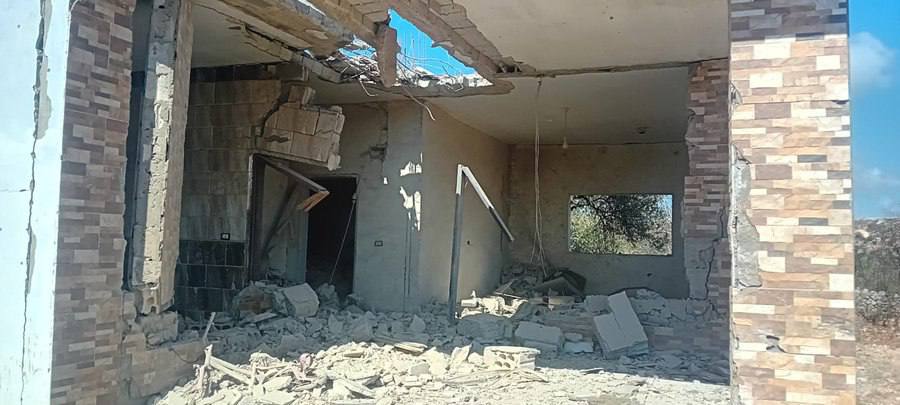
zion*st artillery targeted a house in the southern Lebanese village of Aita al-Shaab early this morning. The Cradle Media -
Russia warns of zion*st ‘war party’ seeking to reignite aggression against Iran

Foreign Minister Sergei Lavrov made the remarks during a press conference alongside his visiting Saudi counterpart Faisal bin Farhan in Moscow on Friday.
“We sincerely hope that the so-called 12-day war is indeed over,” the Russian top diplomat said.
He was referring to the Israeli regime’s launching attacks against the Islamic Republic’s nuclear, military, and civilian targets on June 13. The assaults claimed the lives of at least 935 Iranians, including senior military officials and nuclear scientists, the latter group being targeted inside their residential buildings.
The Islamic Republic responded with decisive defensive maneuvers and counterstrikes, hitting critically sensitive nuclear, military, and industrial infrastructure across the occupied Palestinian territories. The retaliation forced the regime to request a ceasefire.
Lavrov, however, warned, “We intend to stay vigilant, as the ‘war party’ remains highly active in the Middle East.”
“We keep hearing a variety of statements from some representatives of the Israeli leadership,” he added, suggesting that those officials were persistently agitating for the resumption of aggression against the Islamic Republic.Iran has, on many occasions since the cessation of the attacks, cautioned that its next reprisal against potential renewed aggression would be of far more intensity and magnitude to the extent that it would take Tel Aviv and its allies by surprise.
‘European states role in war’
Elsewhere in his remarks, Lavrov criticized some European states’ “aggressive” anti-Iranian efforts, which saw them force the International Atomic Energy Agency (IAEA)’s Board of Governors to issue its most recent anti-Iranian resolution.
He pointed out how the European countries “unnecessarily and aggressively pushed through anti-Iranian resolutions, which did nothing to ease tensions or advance negotiations, but instead created a pretext for forceful measures.”
The Israeli regime used the resolution as a pretext to launch the war. The resolution was also used by the United States, the regime’s biggest ally, as a plea to join it in attacking Iran towards the end of the warfare.
“I sincerely hope that European nations will come to recognize their responsibility and their share of the blame,” Lavrov said.
For his part, the Saudi foreign minister also underlined that differences with the Islamic Republic had to be resolved through diplomatic processes.PressTV report
The Kremlin -
Hezbollah’s Sayyed Amin Al-Sayyed to Tyrants: Wait for the Vengeful Generation
Head of Hezbollah Politburo Sayyed Ibrahim Amin Al-Sayyed vowed on Thursday that the coming generation will revenge against the tyrants.
On the eight eve of Muharram during Ashura ceremony, Sayyed Amin Al-Sayyed expressed sorrow over the loss of late Hezbollah Secretary General Sayyed Hasan Nasrallah, who was martyred in powerful Israeli strikes on Beirut’s southern suburb (Dahiyeh) in September 27, 2024.
“I stand here tonight, where our beloved exalted martyr, master of this Ummah’s (nation) martyrs, Sayyed Hasan Nasrallah used to address crowds.”
He praised Sayyed Nasrallah as a leader who cared for the affairs of the entire Muslim Ummah.
“He was a Sultan of the hearts. The history will write his name in gold letters,” Sayyed Amin Al-Sayyed addressed crowds at the Sayyed Shuhada Complex in Dahiyeh.“We cried out in sorrow, mourning Sayyed Nasrallah, and this is normal. But whoever loves the master of the Ummah’s martyrs must rise to foil the schemes planned by those who assassinated Sayyed Nasrallah,” the Hezbollah official stated.
He then addressed the tyrants as saying: “Wait for the vengeful generation. Your time is over and we will continue our path to keep this flag high.”
Meanwhile, Sayyed Amin Al-Sayyed said “enemies fought Iran because it stood with Palestine and the resistance.”
In this context, he wondered: “Which country in the world would dare stand with Palestine?”
Source: Al-Manar English Website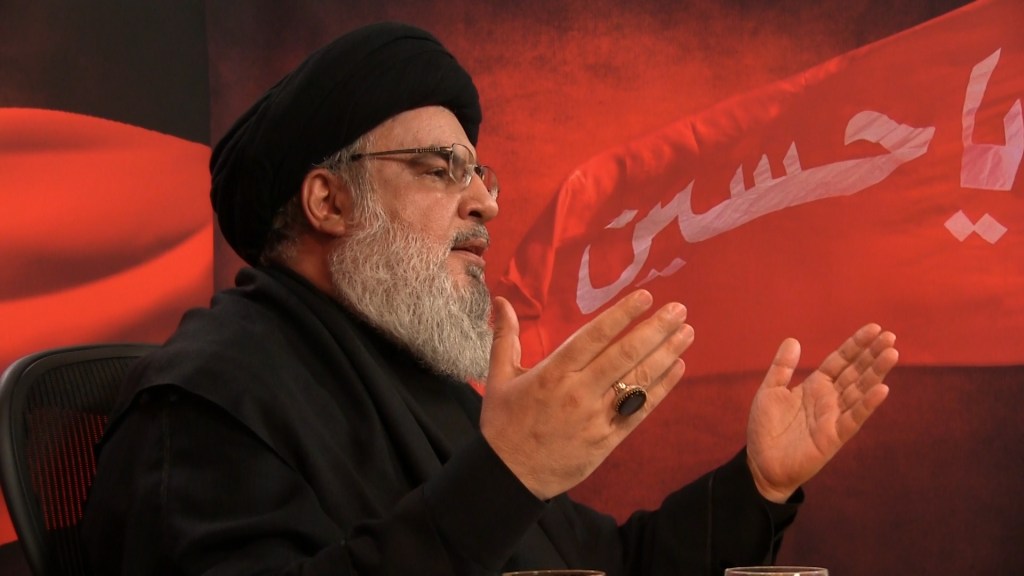
-
Syria run by extremist ‘sheikhs’ not statesmen under HTS regime: Report
Local sources say Syria is governed by extremist “sheikhs” under the Hay’at Tahrir al-Sham (HTS) terorist-led regime rather than qualified statesmen.
In a report on Thursday, The Cradle said Syria has been divided into regions and sub-regions “ruled by extremist Sunni Muslim religious leaders who exert control over virtually every aspect of decision-making,” including negotiations with the zion*st colony for normalization of ties.
The normalization negotiations are said to include the Syrian side’s concession to the zionist colony’s permanent rule over the occupied Golan Heights, a strategic plateau at the southwest corner of Syria that has been occupied by the zionist colony since the 1967 Six-Day War.
Citing sources, the report said the extremist “sheikhs”, who view minority religious groups as unbelievers who do not deserve equal rights with Muslims and can even be killed under certain circumstances, are involved in each transaction or service of the state in areas fully controlled by HTS, including the distribution of gas, flour, electricity, security at checkpoints, local disputes over real estate and land, and even legal disputes.
“We had no real power. Appointments, funding, relationships with organizations, and even food aid go through the sheikh, not the state. The sheikh’s decisions are more binding than any law,” a former employee of a local council in Idlib said.Under the system of extremist “sheikhs”, each local one is administratively linked to “a higher Sharia council” overseen by a little-known body, according to the report.
The online news magazine cited another source as saying that Abu Mohammed al-Jolani, the head of the HTS-led regime, who was previously affiliated with al-Qaeda and Daesh, “runs a kind of supreme religious council, coordinating between sheikhs in the judiciary, economy, and education. Even negotiations with foreign powers do not take place outside this framework.”
The HTS, a former branch of al-Qaeda, along with other militants, seized control of Damascus on December 8, 2024, forcing President Bashar al-Assad to leave the country.
A few months later, armed factions affiliated with the current administration committed a massacre against Alawite civilians in their coastal heartlands.
The murder of hundreds of Alawites in March has increased fears among minority groups about the now dominant militants.PressTV report

-
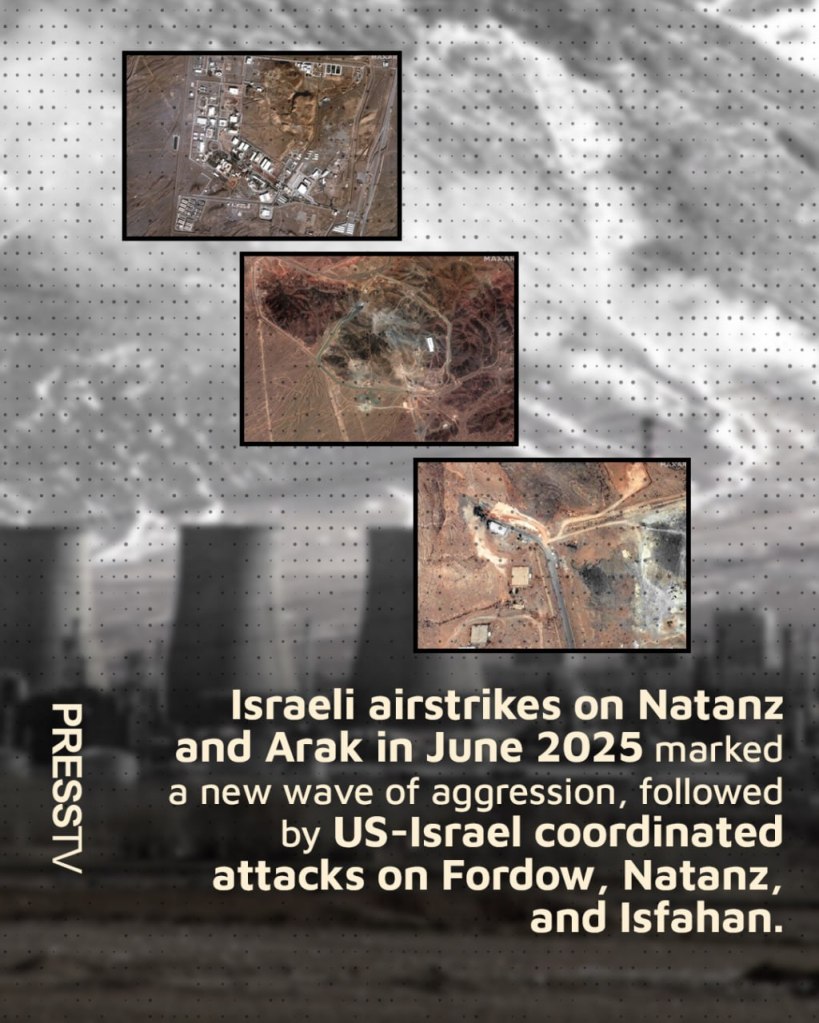
UN’s zion*st-American spy agency with the “Law of Jungle” mentality finally withdraws from Iran
IAEA withdraws inspectors from Iran –
The International Atomic Energy Agency (IAEA) is withdrawing its inspectors from Iran due to “safety concerns,” effectively cutting off its connection with Tehran, which had already halted its cooperation with the international watchdog earlier this week.
Despite the resumption of international flights from Iran’s main airports following the US-backed zion*st war on Iran, the IAEA’s inspection team was driven out of the country by road on Friday.
Since zionist colony started first attacked Iran on 13 June, the inspectors had been confined in Tehran, unable to access nuclear facilities. They were initially staying in a hotel in the capital and may have later been relocated to a UN facility.Attacks on Iran’s Nuclear Facilities Exposed ‘Law of Jungle’: Atomic Chief
So much for “Dear people of Iran, this is not a war with you! “
Here is a video of zionist airstrikes directly targeting a densely populated neighbourhood in northern Tehran, hurling cars with passengers inside into the air.
The CCTV footage was captured on June 15.
https://t.me/presstv/147341The U.S.-zion*st strikes on Iran’s peaceful nuclear facilities were a blow to the UN Charter, demonstrating that the law of the jungle prevails in this world, said the head of Iran’s Atomic Energy Organization.
“The attacks were a blow to the United Nations Charter, meaning it showed that the law of the jungle prevails in this world, and if you don’t have power and aren’t powerful, you cannot continue your existence. The Iranian nation understood this well and stood by it,” stated Mohammad Eslami.
The official further emphasized that bombing cannot destroy Iran’s nuclear facilities, asserting that the country’s atomic progress would continue unhindered.
“The nuclear industry is not something that can be destroyed by bombing; it is an indigenous industry; it is indigenous technology and it is in the soul of the people and the soul of this land and water, and its path of progress will continue to be smooth and strong,” he concluded.
Iran’s nuclear facilities were attacked by the zion*st colony as well as the US during the 12-day aggression against the country last month.
‘Tel Aviv’ and Washington claimed their attacks destroyed Iran’s nuclear sites.
However, Iran maintains that its nuclear capabilities, built on homegrown expertise, are impervious to such aggression.Al Masirah report
-
Syrian network documents 2,818 unlawful killings in the first half of 2025
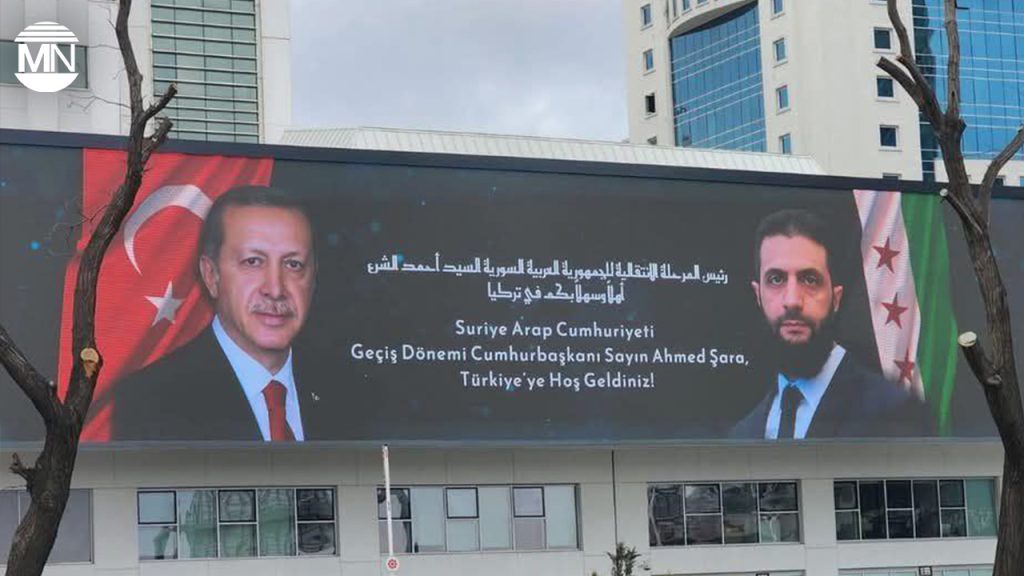
Poster displays Turkish President Recep Tayyip Erdoğan and Al Jolani, the self-proclaimed president of Syria. Erdoğan has been the strongest sporter of Al Jolani. While Al Jolani’s gang was slaughtering Kurdish people in Syria’s North East, Erdoğan granted Al Jolani free reign to do so undetected. Erdoğan incarcerated Kurdish leaders based in Turkey who uncovered the Tuekish complicity in the killings in a bid to venquish dissent. Those leaders are still imprisoned. The West continues to support these genocidal dictators for their own national interests and gains. The Syrian Network for Human Rights reported 2,818 unlawful killings in Syria during the first half of 2025, including 201 children, 194 women, and 17 victims of torture. In June alone, 140 civilians were killed, with one torture case. Latakia and Tartus accounted for the highest tolls, mostly due to a March offensive. The report also documented 22 civilian bodies found in suspected mass graves. At least 50 attacks on civilian infrastructure were recorded, particularly in Aleppo and Latakia.
In March, Jolani’s Hay’at Tahrir al-Sham terrorists massacred over 1500 Alawites in the coastal towns of Syria. Despite ongoing killings and other human rights violations in Syria, Trump and other Western nations removed sanctions and the terrorist designation of Al Jolani, who was the leader of ISIS and Al Qaeda. In the meantime, Al Jolani rebranded his gang and changed also his name/ appearance, and became the self-proclaimed president of Syria. -
zion*st colony conducted airborne raid near Damascus, entering Syrian villages in multi-pronged assault
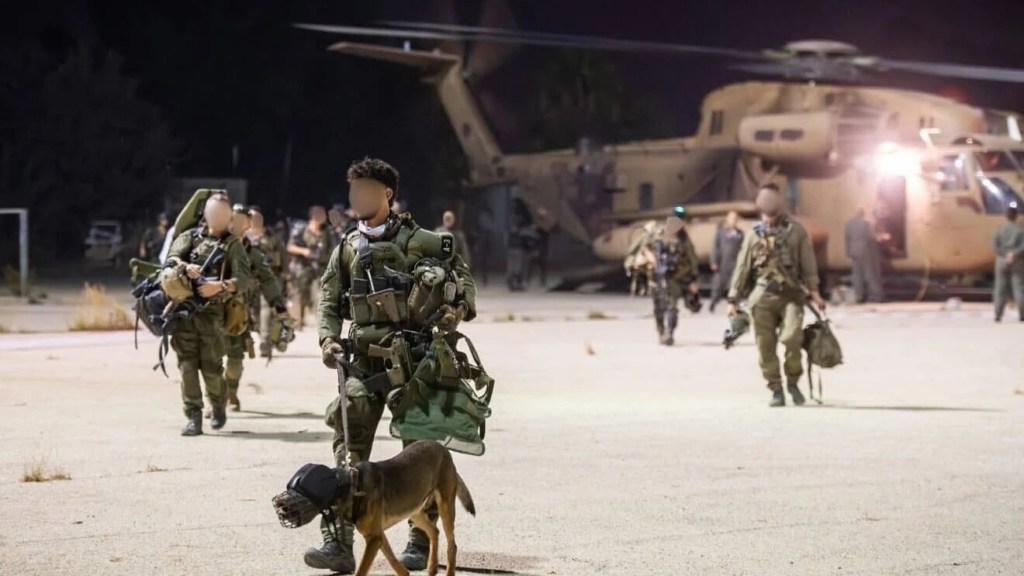
The five-hour incursion included a landing operation involving several helicopters and vehicles, and was described as ‘the first of its kind’ in the area.
zion*st occupation forces carried out a large-scale raid near the Syrian capital Damascus late on 3 July, lasting several hours and involving the use of helicopters and armored vehicles.
With three helicopters, Israeli special forces carried out a landing operation in the Yaafour area located around 10 kilometers from Damascus, local sources told Al Mayadeen.
The troops raided a site belonging to the Republican Guard of Syria’s former military.
“The search operation lasted for five hours before the force departed via helicopter,” Al Mayadeen’s sources added. “Another Israeli force entered the village of Saysoun in the Yarmouk Basin area of the western Deraa countryside, with six military vehicles,” the sources went on to say.
Simultaneously, zion*st troops launched ground incursions into Rakhlah in the western Damascus countryside.
Additional forces reportedly entered Ayn Dhakar in the Yarmouk Basin area. “This was the first incursion of its kind into the area,” Al Mayadeen’s sources noted.
Since the fall of former Syrian president Bashar al-Assad’s government last year, Israeli forces have established a widespread occupation across southern Syria.
Israeli troops have set up a new base on Eastern al-Ahmar hill in Quneitra governorate in southern Syria, local sources told Al-Akhbar newspaper on 1 July.
The hill lies adjacent to a nearby Israeli base established months earlier on the western side of the same ridge.
Israeli forces are “rapidly working to turn it into a key operational hub,” the sources said.
Israel’s continued expansion in Syria comes amid negotiations between Tel Aviv and Damascus, and talk of a potential normalization agreement between them.
The Syrian government claims the negotiations are indirect. However, Israeli National Security Advisor Tzachi Hanegbi confirmed on 24 June that Israel is engaged in direct, daily communication with Syria’s interim authorities, with the aim of exploring normalization.
Speaking to Israel Hayom, Hanegbi said he personally leads the talks “at all levels” with political officials in Damascus.
According to Israeli media reports, a potential meeting between Syrian interim President Ahmad al-Sharaa and Israeli Prime Minister Benjamin Netanyahu is being considered for the upcoming UN General Assembly meeting in New York.The Cradle Media report
-
Saudi Arabia covertly blocked Iranian drones launched at zion*st targets: Report
Saudi Arabia, which professed a public stance against z*onist colony attack on the Islamic Republic of Iran, secretly participated in intercepting Iranian unmanned aerial vehicles during the 12-day US-supported zion*st aggression, media reports say.
According to reports, the Saudi air force scrambled helicopters to shoot down unmanned aerial vehicles crossing airspace over Iraq and Jordan, halting their advance before they could reach the zion*st colony.
Some of these drones could have continued toward Israel, but they were intercepted early as part of protecting Saudi Arabia’s space.
While Riyadh hasn’t officially confirmed involvement in the interceptions and even condemned Israel for launching the aggression against Iran, the revelations point to a dramatically growing secret Saudi cooperation with the US-led hostile powers towards Iran.
This comes as senior officials in Riyadh earlier stressed that Saudi airspace would not be opened for any offensive strikes on Iranian territory.
Saudi Arabia was one of dozens of Muslim-majority nations that condemned the Israeli action against Iran.
The interception of Iranian drones was part of a vast US-led operation involving Jordan, Britain, France, and the United States, coordinated under the umbrella of US Central Command (CENTCOM).
At the heart of that coordination stood CENTCOM commander Gen. Mike Kurilla, who oversaw a joint American command-and-control center linking the US, Israel, and European militaries in real time.The US serves not only as a bridge between Israel and regional countries but also as a coordinating factor with Arab countries with which there are no direct relations.
This vicious cooperation was also seen in previous waves of Iranian attacks on Israel in April and October 2024. Then too, the United States and European countries operated in various arenas – some through interception means, others through location and information sharing.
Now, during the 12 days of the US-Israeli aggression, the operation was much broader in scope.
Analysts say any level of cooperation with the US and Israel against Iran would be seen as a “stab in the back” of … Palestinians and the entire Muslim world.On June 13, Israel launched a blatant and unprovoked aggression against Iran, assassinating many high-ranking military commanders, nuclear scientists, and ordinary civilians.
More than a week later, the United States also jumped on the bandwagon and bombed three Iranian nuclear sites in a grave violation of the United Nations Charter, international law, and the Nuclear Non-Proliferation Treaty (NPT).
In response, Iranian armed forces targeted strategic sites across the occupied territories as well as the al-Udeid air base in Qatar, the largest American military base in West Asia.
On June 24, Iran, through its successful retaliatory operations against both the Israeli regime and the US, managed to impose a halt to the illegal aggression.PressTV report

-
US halts weapons shipments to Ukraine amid concerns over low stockpiles
PressTV video Trump explains the US’ pause in arms shipments to Ukraine saying ‘Biden emptied out our whole country giving them weapons’, ‘We have to make sure we have enough for ourselves’.
-
$1.5bn up in smoke: US THAAD missile stockpile dries up defending zion*st against Iran
According to American media, defense news outlets, and independent analysts, the 12-day zion*st military aggression against Iran significantly depleted the US stockpile of THAAD (Terminal High Altitude Area Defense) interceptor missiles.
Citing official sources, American magazine Newsweek reported on Friday that the US transferred a substantial portion of its advanced missile defense capabilities to support the zion*st colony, an effort with questionable results and a critical impact on US strategic reserves.
THAAD, developed by Lockheed Martin arms manufacturing company, is a key component of Israel’s multi-layered air defense architecture. It is designed to intercept medium-range ballistic missiles, including those launched from Iran and Yemen.
The US-made system is capable of targeting short-, medium-, and intermediate-range ballistic missiles during their terminal phase, whether inside or outside Earth’s atmosphere.
THAAD uses a “hit-to-kill” method, relying on kinetic energy rather than explosive warheads to destroy incoming threats, intercepting at altitudes of up to 150 km and ranges between 150-200 km.
Operated exclusively by American personnel, the US military maintains eight THAAD batteries with an estimated 350–400 interceptors in total. The eighth battery was activated during the June 20 Israeli aggression against Iran and is capable of intercepting hypersonic missiles.
Deployment in the occupied territories
At the outset of the Israeli aggression against Iran, seven THAAD batteries were operational, two of which had been deployed in the occupied Palestinian territories.
The first THAAD battery was stationed there in October 2024, following Iran’s “True Promise 1 and 2” operations, during which Israel’s domestic air defense systems, David’s Sling, Arrow 2, and Arrow 3, suffered notable failures. A second battery was deployed in April 2025.
These US-operated systems played a crucial role during the June 2025 confrontation with Iran, although their exact deployment locations remain classified for military reasons.Based on available information, of the remaining US THAAD batteries, two are deployed within the United States, one in Texas and another in Guam.
The rest are stationed overseas in South Korea, Saudi Arabia, and the United Arab Emirates (UAE), with the UAE being the only country to have formally purchased its own THAAD systems.
A THAAD battery is a mobile, self-contained missile defense unit. Each battery typically comprises six truck-mounted launchers, with each launcher carrying eight interceptor missiles, amounting to a total of 48 interceptors per battery.
In addition, the system includes an AN/TPY-2 radar for long-range detection and tracking (up to 2,000-3,000 km), a fire control and communication system for coordinating intercepts, along with support equipment and approximately 100 personnel to operate the unit.
Given the deployment of two batteries in the occupied Palestinian territories, it can be estimated that the Israeli regime had access to at least 96 interceptor missiles.
However, the actual number was likely higher due to frequent resupply efforts during engagements with Yemeni ballistic missiles and in preparation for the broader conflict with Iran.
Mixed performance against Yemeni missiles
Despite being touted as one of the most advanced missile defense systems in the world, THAAD’s performance against Yemeni ballistic missile attacks has been mixed, even according to Israeli and Western sources.
While some interceptions have been claimed as successful, there have been notable failures.
By the end of March 2025, six successful interceptions of Yemeni missiles had been reported. However, on May 4 and May 9, THAAD failed to intercept missiles targeting Ben Gurion Airport.
In both instances, Israeli sources asserted that the incoming missiles were ultimately intercepted by the Arrow missile defense system instead.
This claim has been met with skepticism, as the Arrow system typically engages threats at far greater distances, tens or even hundreds of kilometers away, yet the airport was struck directly.
The Israeli regime’s own admission that multiple systems were used against the same class of Yemeni missiles suggests that the interception cost is significantly higher than commonly assumed. Rather than a one-to-one missile-to-interceptor ratio, several interceptors, possibly from different systems, may be required to ensure a successful shootdown.
Despite ongoing claims by American and Israeli officials about the effectiveness and reliability of both THAAD and Arrow systems, Yemen has continued to target Ben Gurion Airport as part of its retaliatory operations. The continued threat and perceived vulnerability led nearly all international airlines to suspend flights to and from Israel.Exhausted stockpiles and soaring costs
Estimates from military experts and news outlets place the unit cost of a single THAAD interceptor between $12 million and $15 million. However, other sources suggest the real cost is significantly higher.
In a statement to Newsweek, Sidharth Kaushal of the Royal United Services Institute (RUSI) noted that while the production cost of a THAAD interceptor is approximately $18 million, the total cost rises to $27 million when research, development, testing, and evaluation (RDT&E) expenses are factored in.
Estimates of total THAAD-related spending during the recent conflict vary. Analysts suggest that between $500 million and $800 million worth of interceptors may have been expended, corresponding to the use of 40 to 60 missiles.
On Tuesday, the Israeli newspaper Haaretz, citing Israeli military sources, reported that approximately 200 American and Israeli interceptor missiles were launched in total, at an estimated cost of 5 billion shekels – nearly $1.5 billion.
What all sources agree on is that the THAAD interceptor stockpile has been significantly depleted. At least one full battery’s worth, 48 interceptors, is believed to have been expended.
Considering the two THAAD batteries deployed and the high operational tempo due to prior Yemeni missile attacks, the actual figure may be closer to 96 interceptors. This would represent a reduction of roughly 30 percent of the entire US THAAD interceptor stockpile.
Open-source analysts also highlight the limited pace of US procurement: only 41 THAAD interceptors have been ordered over the past three years, including units designated for export customers. This slow replenishment rate underscores the vulnerability of even advanced missile defense systems when faced with sustained, high-volume missile warfare.
In stark contrast, Iran and China maintain vast ballistic missile arsenals, numbering in the thousands, making the rapid depletion of the US inventory, largely to defend Israeli territory, all the more striking.
Newsweek contacted the Pentagon for comment regarding the depletion and cost implications. The Department of Defense declined to elaborate, stating only that it had “nothing to provide.”PressTV report

THAAD air defense system
-
Subscribe
Subscribed
Already have a WordPress.com account? Log in now.
 Nascent Yemen