-
Updates: ‘Don’t need international law,’ Trump says after Maduro abduction
Trump’s plan to macro-manage Venezuela –
White House says, “we will dictate decisions in Venezuela.”
US seizes two sanctioned oil tankers: ‘Ghost fleet’ vessels linked to Venezuela raided -
Speaker Berri: South Lebanon Needs Army, zion¿st Enemy Hinders Army Deployment
zion¿st occupation drone attack on a car on Bnaafol-Zeita highway, South Lebanon, leaves one martyr: health ministry.
Lebanese Speaker Nabih Berri voiced support on Thursday to Lebanese Army announcement regarding its plan south of Litani River, stressing that it would have been nearly complete were it not for zion¿st attacks.
In a statement, Speaker Berri said Lebanese Army achievements would have been nearly complete were it not for the Zionist entity’s occupation of Lebanese territory, its daily violations through bombardment and destruction, and the obstacles the enemy places in the national army’s path.
The Lebanese speaker also pointed to delay in in the arrival of the promised military capabilities to the Lebanese Army.
Speakr Berri stated that Israeli plots and ambitions in the south include, most recently, targeting UNIFIL forces and calling for an end to their presence, warning that the move threatens UN Security Council Resolution 1701 and its implementation.
Moreover, the House Speaker stressed that the south has repeatedly affirmed its need for the Lebanese Army’s presence and protection.He concluded the statement by addressing the Israeli enemy assaying: “Leave our land, vacate our skies, and Allah has spared the believers the evil of fighting.”
Earlier on Thursday, the Lebanese Army announced in a statement that its plan to confine weapons has entered an advanced phase after achieving the objectives of the first stage on the ground, noting that the Israeli violations negatively impact the implementation of the plan.
Source: Al-Manar English Website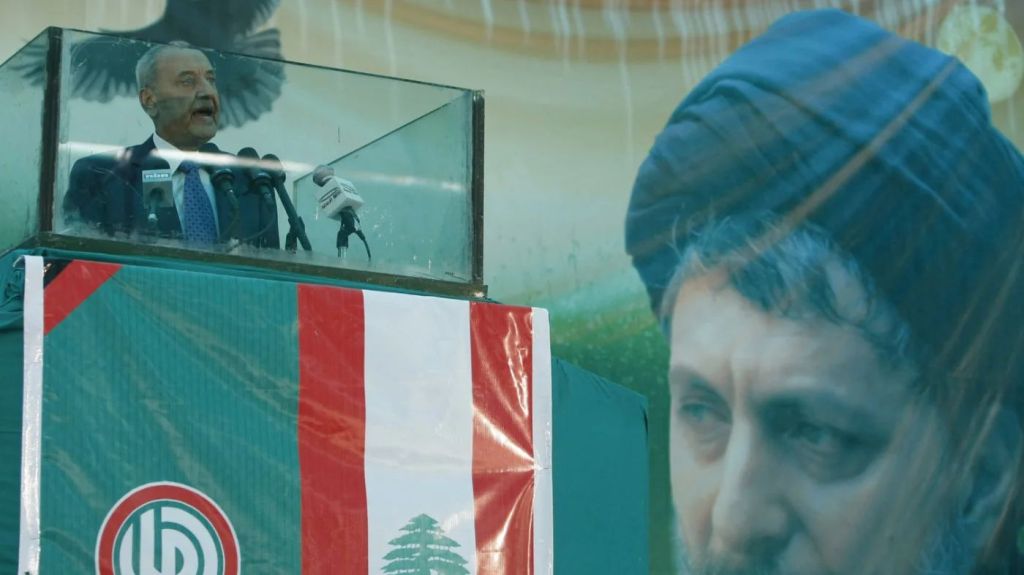
Nabih Berri giving a speech -
Deadly Clashes Hit Aleppo as Two US-Backed Sides Battle for Control – SDF vs HTS
The scale of destruction has been severe, with civilians continuing to bear the brunt of the fighting.
More than 300 houses have been completely destroyed or partially destroyed in Kurdish neighbourhoods.
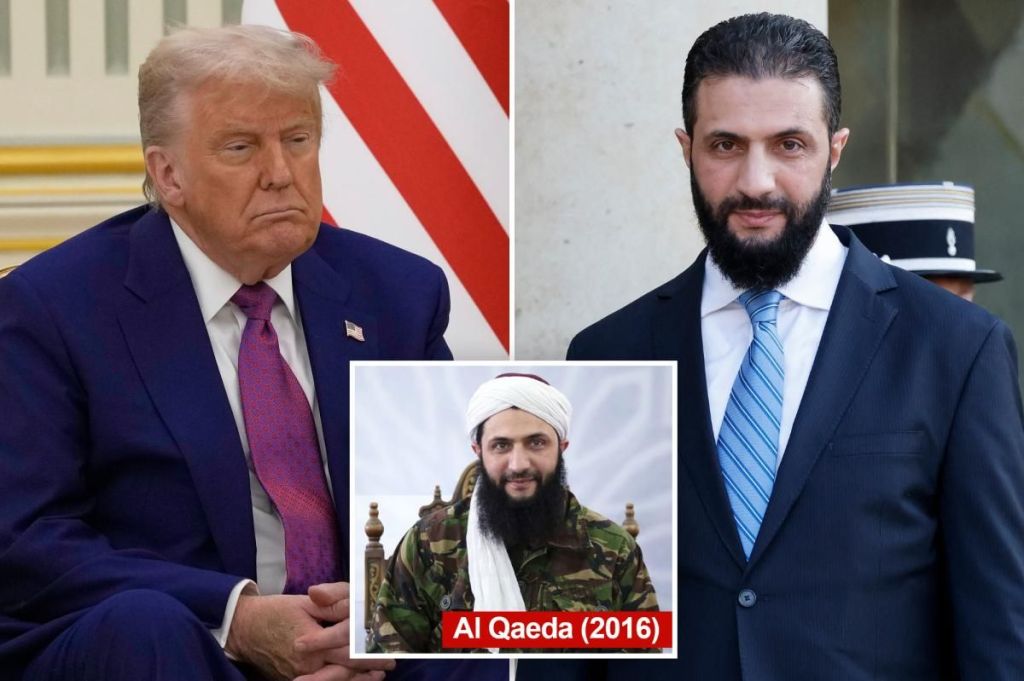
Jolani’s Hay’at ’at Tahrir al-Sham (HTS) terrorists have carried out a large-scale offensive against Aleppo’s Kurdish neighborhoods controlled by the US-backed Syrian Democratic Forces (SDF), as insecurity persists across the Arab country a year after the ouster of former president Bashar al-Assad.
HTS forces launched a major assault on Aleppo’s predominantly Kurdish neighborhoods of Ashrafieh and Sheikh Maqsoud on Thursday, as clashes with SDF fighters entered their third day.
The confrontations underscore the continued failure to integrate the SDF forces into those of the HTS, as well as the heavy toll inflicted on civilians caught in the crossfire.
Damascus announced “concentrated operations against SDF positions in the neighborhoods of Sheikh Maqsoud, Ashrafieh, and Bani Zeid after 1:30 p.m.,” alongside a curfew beginning at the same time “until further notice.”
Heavy attacks over the past three days have so far displaced thousands of people and killed at least 12 individuals, including two civilians on Thursday morning.
The SDF, the main US partner in the Arab country, reportedly targeted the positions of Syrian regime forces on the outskirts of Ashrafieh using drones. Some Kurdish sources said a number of regime forces had been captured inside Aleppo’s al-Suryan neighborhood.
The sources also spoke of a heavy counterattack by SDF forces against the regime troops on the outskirts of Ashrafieh, resulting in the retreat of forces affiliated with Syria’s regime.
Despite earlier claims by Syrian regime forces that no major offensive had begun, Kurdish security forces reported attempts by tanks and armored vehicles to break through the neighborhoods.
The scale of destruction has been severe, with civilians continuing to bear the brunt of the fighting.
“More than 300 houses have been completely destroyed or partially destroyed. All types of weapons have been used in this war, including bombs and tanks. The intense fighting is ongoing in both neighborhoods,” said Nouri Sheikho, the co-chair of the council administering Sheikh Maqsoud and Ashrafieh.
HTS-linked media, however, claimed that HTS forces were assisting civilians fleeing alleged SDF fire, a narrative rejected by Kurdish officials amid mounting civilian losses.
The violence reflects the breakdown of negotiations between Damascus and the SDF over a March agreement to integrate the Kurdish force into HTS forces.
The March agreement stipulated full integration by the end of 2025, and some SDF fighters left Aleppo neighborhoods in April under the deal as officials in Damascus reported no tangible progress after Sunday’s talks.
Disputes have centered on the SDF’s demand to remain under Kurdish command, enter as a bloc rather than be dissolved and conscripted, and preserve a decentralized system granting autonomy in north and east Syria.
Clashes have flared intermittently for months, with mutual accusations of obstruction. Last month, Damascus proposed absorbing the SDF’s roughly 50,000 fighters as intact divisions and brigades, in exchange for relinquishing parts of its command structure and allowing Syrian army units into oil-rich, US-occupied northern and eastern Syria.
The SDF reportedly rejected the offer, stating earlier this year that talks produced no “tangible results.”
The intense clashes underscore both Washington’s destabilizing influence in Syria and the ongoing civilian suffering caused by Kurdish forces and those loyal to former al‑Qaeda member Abu Mohammad al‑Jolani, who now leads the current HTS‑led regime in Damascus.Al Masirah report
-
US Airstrike Destroys Dialysis Supplies in Venezuela’s La Guaira

THE US STRIKES HAVE KILLED OVER 80 IN VENEZUELA -
US forces have bombed a medical supplies distribution center in Venezuela’s La Guaira state, destroying a warehouse of life-saving materials for dialysis patients and putting at least 9,000 kidney patients at immediate risk.
During its January 3 military aggression on Venezuela that led to the abduction of Venezuelan President Nicolas Maduro, the United States struck a medical supplies distribution center in La Guaira port, obliterating warehouses belonging to the Venezuelan Social Security Institute (IVSS).
According to Venezuelan authorities, the destroyed facility stored supplies for a national nephrology program serving patients undergoing hemodialysis and peritoneal dialysis.
The IVSS said the attack wiped out essential materials destined for renal patients in the country’s main port and condemned the “terrorist character of the US government” for targeting healthcare infrastructure.
Local health officials warned that the destruction directly affects at least 9,000 kidney patients, many of whom depend on uninterrupted dialysis to survive.
“The US bombed a medical supplies distribution center in La Guaira during its terror attack on Venezuela, destroying a warehouse which stored supplies for a nephrology program for patients undergoing hemodialysis and peritoneal dialysis, affecting at least 9,000 kidney patients,” said Camila Escalante, a Press TV correspondent in Latin America, in a post on X on Wednesday.
Escalante attached some footage of the destroyed warehouse.According to Nelare Bermudez from La Guaira state’s healthcare authority, three months’ worth of medicines for renal patients were lost in the bombing, though she pledged that authorities would work to prevent disruptions in care.
Venezuela has an estimated 16,000 people suffering from chronic kidney disease. Officials warned that the US attack has compounded an already dire situation.
The loss of critical medical supplies comes on top of years of damage inflicted by US sanctions, which have restricted Venezuela’s ability to import medicines and medical equipment due to prohibitions, delays, and inflated costs.
A 2018 CEPR report found that 300,000 Venezuelans with heart and other serious conditions were placed at risk by US economic coercive measures. During the Covid-19 pandemic, sanctions also caused delays in vaccine procurement, deepening the South American country’s public health crisis.
In response to the bombing, the Brazilian government announced on Tuesday that it would send medical equipment and medicines to Venezuela.
Brazilian Health Minister Alexandre Padilha said his country was mobilizing dialysis supplies “after this distribution center was targeted,” citing humanitarian and regional health concerns, and recalled Venezuela’s shipment of oxygen to Manaus during Brazil’s 2021 coronavirus crisis.
The announcement followed Brasília’s strong condemnation of the US strikes, which have reportedly killed 80 people in Venezuela, as well as Washington’s broader campaign of military pressure and regime-change threats against Caracas.Al Masirah report
-
zionist occupation Abduct Four Young Syrians After Incursion into Syria’s Quneitra; Jolani unfazed
zionist occupation military forces abducted four young Syrian men during a fresh incursion into Syria’s southwestern province of Quneitra, near the border with the Israeli-occupied Golan Heights.
The Syrian Arab News Agency (SANA) reported on Thursday that an Israeli unit comprising five military vehicles set up a checkpoint at the al-Kasarat junction on the road linking Jbata al-Khashab and Ain al-Bayda.
According to the report, Israeli forces stopped civilians, checked their identities, and detained four men from Jbata before taking them to the village of al-Hamidiyah.
The abductions followed three separate Israeli incursions into the Quneitra countryside earlier on Tuesday.
The development came amid growing political engagement between Hay’at Tahrir al-Sham (HTS) and the Israeli regime as an HTS delegation recently held a new round of talks with Israeli officials in Paris, under US coordination and mediation.
SANA announced on Monday that the Syrian delegation was led by Asaad Hassan al-Shaibani, the foreign minister of the HTS regime, along with general intelligence director Hussein al-Salama.
“The discussions are primarily focused on reactivating the 1974 Disengagement Agreement to ensure Israeli forces withdraw to their positions prior to December 8, 2014, within the framework of an equitable security agreement that prioritizes full Syrian sovereignty and guarantees the prevention of any form of interference in internal affairs,” an informed source said.
The two parties have been involved in intermittent discussions aimed at achieving a “security agreement” for several months; however, no agreement or substantial advancement has been reported.
Following the downfall of Bashar al-Assad’s government in Syria last December, the Israeli military has been actively launching airstrikes aimed at military installations, facilities, and arsenals that were once under the control of the now-defunct Syrian army.
Israel has come under strident criticism for terminating the 1974 ceasefire agreement with Syria and exploiting the turmoil in the war-stricken country to grab land.
Armed Conflict Location and Event Data (ACLED), a US war monitoring organization, has recently disclosed that the Israeli military has conducted over 600 attacks in Syria within the last year.
Even with the HTS expressing a commitment to collaborate with Tel Aviv, Israel has shown no intention of pulling back its presence from Syria.Al Masirah report

-
‘Foolish’: Trump Withdraws US from 66 International Organizations
US President Donald Trump has ordered the United States to withdraw from 66 international organizations, accelerating Washington’s retreat from multilateral cooperation in a move critics say weakens global institutions.
Trump signed a memorandum on Wednesday directing the administration to exit dozens of international bodies he claims no longer serve US interests, triggering sharp criticism from experts and former officials who warn the decision risks undermining diplomacy and collective problem-solving.
Under the order, Washington will halt funding and participation in 35 non-United Nations organizations and 31 UN entities.
The move follows an earlier directive requiring a broad review of all international organizations, treaties, and conventions involving the United States, signaling a systematic retreat from multilateral engagement.
The White House said the withdrawals would free up taxpayer money allegedly wasted on what it called “ineffective or hostile” agendas, claiming the funds could be better used to advance the administration’s domestic priorities.
It claimed many of the targeted bodies focus on climate policy, global governance, and programs that conflict with Washington’s pursuit of unilateral power.
The decision is the latest expression of Trump’s long-standing skepticism toward international cooperation, rooted in his “Make America Great Again” slogan, which has increasingly translated into disengagement from forums where global rules and standards are negotiated.
US officials claim they plan to allocate the funds freed from the cuts on expanding US influence in UN standard-setting bodies where the US competes with China, including the International Telecommunications Union, International Maritime Organization, and International Labor Organization.
Trump initiated the US withdrawals by pulling the United States out of the World Health Organization and the UN Framework Convention on Climate Change — the 1992 treaty underpinning the Paris climate agreement- making the US the only country outside the global climate framework.
On the day of his inauguration in January 2025, he also signed an order to notify the Organization for Economic Co-operation and Development that he aimed to withdraw.
In reaction to the move, head of UN affairs at the International Crisis Group, Daniel Forti, said Trump’s approach to global matters represents “the crystallization of the US approach to multilateralism, which is ‘my way or the highway.’”
Meantime, the UN has responded to the US funding cuts by reducing staff and limiting its programs, while numerous nongovernmental organizations have closed projects after Trump slashed foreign assistance through USAID.
Trump signed an order just weeks after his return to office last year, stating he US’s withdrawal the UN Human Rights Council (UNHRC) and prohibiting any future funding for the United Nations Relief and Works Agency for Palestine Refugees in the Near East (UNRWA), among others including the Carbon Free Energy Compact, United Nations University, International Cotton Advisory Committee, International Tropical Timber Organization, Partnership for Atlantic Cooperation and International Lead and Zinc Study Group.
The administration has already suspended support for the World Health Organization, UNRWA, the UN Human Rights Council and UNESCO. It has adopted what officials describe as an “à la carte” approach to UN funding, supporting only operations aligned with Trump’s agenda.
Meanwhile, former White House national climate adviser Gina McCarthy said Trump’s decision was “shortsighted, embarrassing and foolish.” She warned the US was forfeiting its ability to influence trillions of dollars in climate investments and policies.
Chairman of the Global Carbon Project, Rob Jackson, said the US withdrawal from the Paris climate agreement “gives other nations the excuse to delay their own actions and commitments” on reducing greenhouse gases.
Niranjali Amerasinghe, executive director of ActionAid USA, insisted, “The people of the US and the international community must come together to stop the Trump administration from dismantling the structures and tools we have fought for and won – imperfect though they may be – to advance climate justice and global justice.”Al Masirah report

Trump supporters -
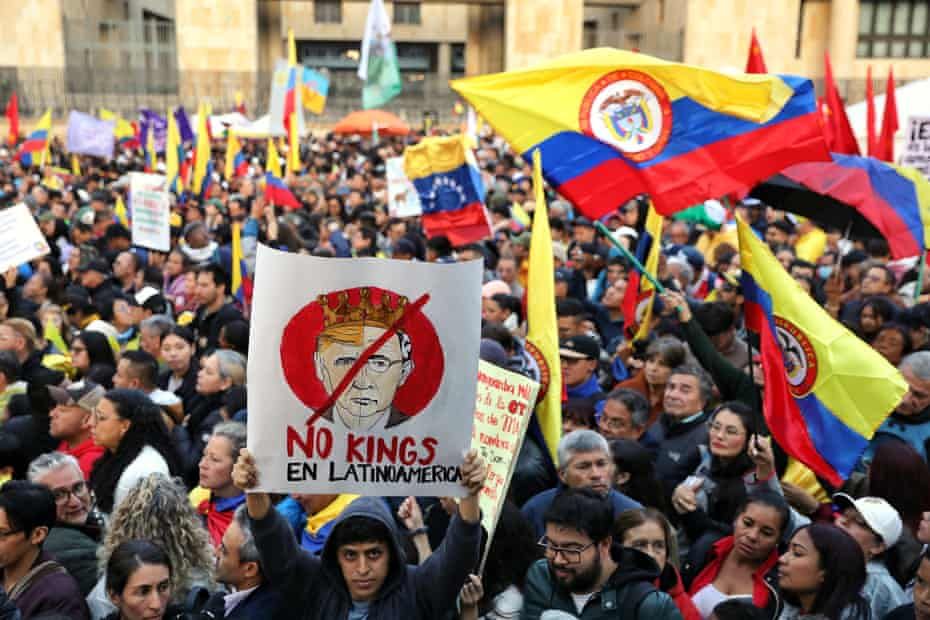
Colombia shouts ‘Out with the Yanks!’
Thousands protest in Colombia as anger builds over Trump’s intervention in Venezuela.
President Gustavo Petro called for demonstrations after Trump said he was interested in military action in Colombia
The Guardian report -
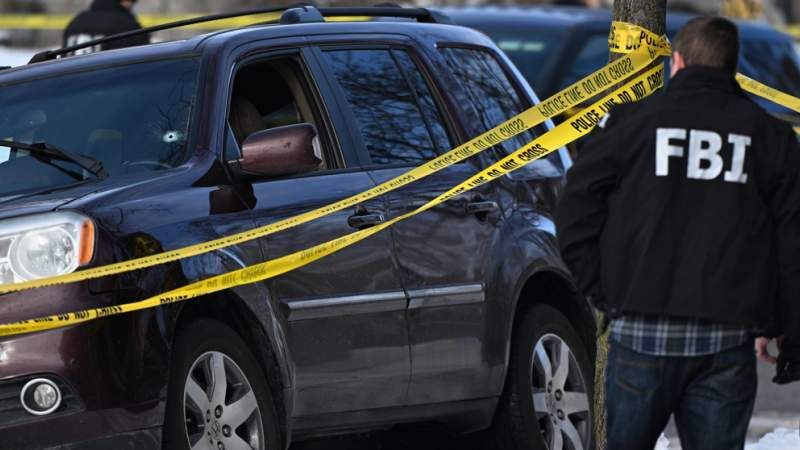
Protests Sweep US as Trump Administration Defends ICE Agent in Fatal Shooting of Woman
Mass protests have spread across the United States after an Immigration and Customs Enforcement (ICE) agent killed a woman in Minneapolis, as Vice President JD Vance publicly defended the federal agency’s actions.
Demonstrations and vigils were held on Wednesday in Minneapolis and in major cities nationwide, drawing thousands of protesters condemning the killing and opposing ICE’s expanded enforcement operations.
The protests were triggered by the killing of Renee Nicole Macklin Good during an ICE operation in Minneapolis, part of a nationwide crackdown on immigrants that has intensified under the current administration.
In Minneapolis, marches and vigils took place in several parts of the city as some outraged residents condemned the shooting and called for ICE to leave. Protesters shouted “Go arrest ICE,” demanding that local law enforcement forces detain the ICE agent who killed the woman.
The main gathering was near the scene of the shooting, which is about one mile from where George Floyd was murdered in 2020 by a city police officer, sparking worldwide anti-racism protests.Protest rallies were reported in other major US cities, including New York, New Orleans, Miami, Seattle and other cities nationwide.
In Los Angeles, dozens gathered at Placita Olvera to call for an end to immigration raids that have brought terror to American communities.
Minneapolis Public Schools announced that classes were cancelled for the rest of the week, “due to safety concerns”. It comes after federal agents reportedly made arrests outside a high school on Wednesday.
Macklin Good, 37, was a US-born citizen from Colorado who had recently moved to Minneapolis and never been charged with anything involving law enforcement beyond a traffic ticket.
Trump and the US Department of Homeland Security, which oversees ICE, have claimed that the woman was trying to run over the agent with her vehicle, which DHS called “an act of domestic terrorism,” but videos circulating online and witness accounts to reporters have undermined those statements.
Vance blamed the killing on the woman. “A tragedy of her own making,” Vance said in a post on X, defending the ICE agent in Minneapolis for shooting the woman in self-defense.
Vance said he wanted ICE agents to know that he and the entire Trump administration, the president included, supported ICE’s brutal conduct and stood behind them. He assured the immigration law enforcement agents that “we’re going to work even harder to enforce the law.”
The Trump administration has been trying to frame the mother of three as a radical pro-immigration activist, describing Macklin Good as a domestic terrorist who had attempted to ram federal agents with her car. Her ex-husband said she was no activist and that he had never known her to participate in a protest of any kind.
The ICE crackdown operation began in Los Angeles in June and later expanded to Washington, DC, Chicago, Memphis, Portland, Charlotte and other major US cities.
The protesters opposed to the crackdown have been called rioters by the Trump administration.
The anti-immigration protesters allegedly attacked federal agents, prompting Trump to send in thousands of National Guard troops to ICE’s help.
Meanwhile, eyewitnesses at the scene told media that Macklin Good posed no real threat to the ICE agents who killed her, shooting her in the face at point-blank range through the windshield, and not allowing first-responder medics to treat her after the incident.
One of Macklin Good’s neighbors told CNN she was at home when she heard the ICE agents outside. She said she heard the agents shouting at Macklin Good, who was driving an SUV, then one agent tried to open her car door, and the driver went into reverse and began pulling away.
“An ICE agent stepped in front of her vehicle and said, ‘Stop!’ and then – I mean, she was already moving – and then, point blank, shot her through her windshield in the face,” she told the US news network.
Minnesota State Governor Tim Walz dismissed the Trump administration’s accounts of the incident as lies.
“Don’t believe this propaganda machine,” Walz wrote in response to a Department of Homeland Security post about the shooting.
“The state will ensure there is a full, fair, and expeditious investigation to ensure accountability and justice.”
Top Democrats, including former vice president Kamala Harris and House minority leader Hakeem Jeffries, also released statements. Harris called the Trump administration’s version of events “gaslighting”.
Minneapolis Mayor Jacob Frey said he had watched videos of the shooting that show it wasn’t self-defense and was avoidable.
Frey slammed the federal deployment of more than 2,000 officers to the Twin Cities of Minneapolis and St. Paul. “They’re ripping families apart. They’re sowing chaos on our streets, and in this case, quite literally killing people.”Al Masirah report
-
Video Shows ICE Agent’s Fatal Shooting of Civilian in Minneapolis
Video from the scene of the Minnesota ICE shooting contradicts DHS’s narrative that locals were rioting and threatening agents’ lives.This Isn’t the First Killing by ICE — and It Won’t Be the Last – The Intercept – video
-
US Says It Will Control Venezuela Oil Exports Indefinitely
“We’re just going to get that crude moving again and sell it,” Wright said. “We’re going to market the crude coming out of Venezuela – first this backed-up stored oil and then indefinitely going forward we will sell the production that comes out of Venezuela.”
The plan comes as the Trump administration is pushing for US energy companies to rebuild Venezuela’s decaying oil infrastructure and revive its flagging production. The US is also selectively rolling back sanctions on Venezuela’s oil sector as part of the effort, the Energy Department said.President Donald Trump said Tuesday evening that Venezuela would relinquish as much as 50 million barrels of its oil for the US to sell, valued at about $2.8 billion at current market prices.
The US has already begun marketing Venezuelan crude, White House Press Secretary Karoline Leavitt said during a briefing Wednesday.
Revenue from the sales will be held in US Treasury accounts, a move that would protect the proceeds from Venezuela’s creditors, a person familiar with the matter said. The funds will benefit the American and Venezuelan people, Leavitt said.
“We’re not stealing anyone’s oil,” Wright said during an interview with CNBC. “We’re going to restart the selling of Venezuelan oil on global crude markets, put it in accounts in the name of Venezuela and bring those funds back into Venezuela for the benefit of the Venezuelan people.”Proceeds from Venezuela oil sales will not initially be used to repay Exxon Mobil Corp., ConocoPhillips and other US companies whose assets were nationalized by Maduro’s predecessor, Hugo Chávez, in the mid-2000s, Wright said. He added that those companies will need to be compensated but characterized it as a “long term issue.”Venezuela’s state oil company, Petroleos de Venezuela SA, said in a statement that it’s in negotiations with Washington over crude sales through a framework that would be similar to its arrangement with Chevron Corp., the only US oil major still operating in the country.Earlier, US forces seized two more sanctioned oil tankers, including one flying a Russian flag, as the Trump administration pushes to control all exports of Venezuelan crude. One was seized in the Atlantic Ocean south of Iceland, and the other was apprehended in the Caribbean region.
Trump is pushing for US oil companies such as Chevron, ConocoPhillips and Exxon to rebuild Venezuela’s infrastructure and revive production now that the US has removed former President Nicolás Maduro. The administration has already had conversations with multiple oil companies, according to an official. The president is set to meet with energy executives on Friday, Leavitt said.
“It’s just a meeting to discuss, obviously, the immense opportunity that is before these oil companies right now,” she said.
Secretary of State Marco Rubio also may attend the sit-down that’s being planned, according to people familiar with the matter.The Full Bloomsbury report

An oil refinery in the Maracaibo lake in Maracaibo, Venezuela. Photographer: Federico Parra/AFP/Getty Images
-
Subscribe
Subscribed
Already have a WordPress.com account? Log in now.
 Nascent Yemen