-
Video Shows ICE Agent’s Fatal Shooting of Civilian in Minneapolis
Video from the scene of the Minnesota ICE shooting contradicts DHS’s narrative that locals were rioting and threatening agents’ lives.This Isn’t the First Killing by ICE — and It Won’t Be the Last – The Intercept – video
-
US Says It Will Control Venezuela Oil Exports Indefinitely
“We’re just going to get that crude moving again and sell it,” Wright said. “We’re going to market the crude coming out of Venezuela – first this backed-up stored oil and then indefinitely going forward we will sell the production that comes out of Venezuela.”
The plan comes as the Trump administration is pushing for US energy companies to rebuild Venezuela’s decaying oil infrastructure and revive its flagging production. The US is also selectively rolling back sanctions on Venezuela’s oil sector as part of the effort, the Energy Department said.President Donald Trump said Tuesday evening that Venezuela would relinquish as much as 50 million barrels of its oil for the US to sell, valued at about $2.8 billion at current market prices.
The US has already begun marketing Venezuelan crude, White House Press Secretary Karoline Leavitt said during a briefing Wednesday.
Revenue from the sales will be held in US Treasury accounts, a move that would protect the proceeds from Venezuela’s creditors, a person familiar with the matter said. The funds will benefit the American and Venezuelan people, Leavitt said.
“We’re not stealing anyone’s oil,” Wright said during an interview with CNBC. “We’re going to restart the selling of Venezuelan oil on global crude markets, put it in accounts in the name of Venezuela and bring those funds back into Venezuela for the benefit of the Venezuelan people.”Proceeds from Venezuela oil sales will not initially be used to repay Exxon Mobil Corp., ConocoPhillips and other US companies whose assets were nationalized by Maduro’s predecessor, Hugo Chávez, in the mid-2000s, Wright said. He added that those companies will need to be compensated but characterized it as a “long term issue.”Venezuela’s state oil company, Petroleos de Venezuela SA, said in a statement that it’s in negotiations with Washington over crude sales through a framework that would be similar to its arrangement with Chevron Corp., the only US oil major still operating in the country.Earlier, US forces seized two more sanctioned oil tankers, including one flying a Russian flag, as the Trump administration pushes to control all exports of Venezuelan crude. One was seized in the Atlantic Ocean south of Iceland, and the other was apprehended in the Caribbean region.
Trump is pushing for US oil companies such as Chevron, ConocoPhillips and Exxon to rebuild Venezuela’s infrastructure and revive production now that the US has removed former President Nicolás Maduro. The administration has already had conversations with multiple oil companies, according to an official. The president is set to meet with energy executives on Friday, Leavitt said.
“It’s just a meeting to discuss, obviously, the immense opportunity that is before these oil companies right now,” she said.
Secretary of State Marco Rubio also may attend the sit-down that’s being planned, according to people familiar with the matter.The Full Bloomsbury report

An oil refinery in the Maracaibo lake in Maracaibo, Venezuela. Photographer: Federico Parra/AFP/Getty Images -
‘Outright piracy’: Moscow slams US seizure of Russian-flagged oil tanker in North Atlantic
Russia has condemned the US capture of a Russian-flagged oil tanker in the Atlantic as a violation of the UN Convention on the Law of the Sea.
The US European Command announced the seizure of the Marinera, previously known as the ‘Bella 1’, linked to Venezuelan oil, on Wednesday for alleged “violation of US sanctions.”
Russia’s Transport Ministry confirmed the seizure, saying contact with the vessel had been lost after US naval forces boarded it “in the high seas outside the territorial waters of any state”.
“In accordance with the 1982 UN Convention on the Law of the Sea, freedom of navigation applies in the high seas, and no state has the right to use force against vessels duly registered in the jurisdictions of other states,” the ministry said in a statement.
Two US officials, speaking on condition of anonymity, told Reuters that the seizure took place while Russian military vessels, including a submarine, were in the general vicinity.
The ministry added that it has been “closely monitoring” the situation around the tanker, urging the US to ensure “humane and dignified treatment” of the Russian crew members and to “allow them to return home as quickly as possible.”
The vessel evaded the US Coast Guard in the Atlantic Ocean late last year after reportedly trying to approach Venezuela.
“On December 24, 2025, the Marinera received a temporary permit to fly the Russian flag, issued in accordance with Russian and international law,” the Russian ministry said.US President Donald Trump announced in December a “total and complete blockade” of sanctioned oil tankers entering and leaving Venezuela.
The blockade was part of a US pressure campaign against Venezuela that culminated in the US military abducting Venezuela’s President Nicolas Maduro and his wife from Caracas on January 3 and transporting them to New York to face “drug-related charges.”
“After a ‘law enforcement operation’ that killed several dozen people in Venezuela, the US has engaged in outright piracy on the high seas,” Andrei Klishas, a lawmaker from the ruling United Russia party, posted on Telegram on Wednesday.
After the kidnapping of Maduro, Trump said Venezuela “will be turning over” up to 50 million barrels of oil to the US.
The oil will be sold at its market price, Trump wrote on social media, adding he would control the money raised.PressTV report

This undated handout photo released on January 7, 2026, by the US European Command’s X account shows what US European Command says is the seizure of the Marinera, previously known as Bella 1, oil tanker in the northern Atlantic Ocean. (Via AFP) -
The Bank of England’s refusal to release £1.4bn Venezuelan gold

Imperialist Britain sits on Venezuelan wealth –
After the kidnapping of Maduro, global attention has largely focused on the South American country’s vast oil wealth – believed to be the largest reserves of any nation in the world. However, Venezuela also has significant gold holdings – including bullion worth at least $1.95bn (£1.4bn) frozen in Britain.
For years the gold bars have been the subject of a tussle in the London courts, entangling the Bank and the UK government in Venezuelan politics and a geopolitical battle that is now taking a fresh twist.
Venezuela has about 31 tonnes of gold held in the vaults of Threadneedle Street, equivalent to about 15% of its total foreign currency reserves. UK court documents put the value in 2020 at about $1.95bn. However, the gold price has more than doubled since, meaning the bars are probably worth considerably more.
Held in London since the 1980s, the practice of governments storing bullion in Britain is not unusual: the Bank keeps about 400,000 bars on behalf of governments and institutions worldwide, as the second-largest global storage hub after the New York Federal Reserve.Since 2018, however, Caracas has been blocked from repatriating the gold amid pressure on Maduro, after the disputed outcome of Venezuela’s presidential elections that year – including Donald Trump imposing US sanctions during his first term in the White House.
Britain, along with dozens of other countries, did not recognise Maduro as the country’s legitimate leader. Opposition figures at the time urged the Bank not to hand over the money, arguing his administration would either steal the gold or use it to finance his dictatorial government.
A memoir by Trump’s former national security adviser John Bolton also later revealed that the UK Foreign Office agreed to block the gold transfer at the request of the US.
In 2020, Venezuela sued in the London courts to recover the gold, and the Maduro government argued it needed money for its pandemic response. However, the then opposition leader, Juan Guaidó, also claimed control – with an ensuing legal battle complicated after the UK government formally recognised Guaidó as interim head of state.
Despite multiple twists, and with Guaidó no longer recognised, the legal case remains unresolved.
Venezuela’s interim leader after Maduro’s deposition, Delcy Rodríguez, has previously struck a defiant tone – labelling the Bank’s refusal to release the gold bars as “blatant piracy” during her time as Maduro’s vice-president.In 2020, she was involved in a scandal in Spain that became known as “Delcygate” involving the alleged sale of $68m of gold bars, after a surreptitious flight to Madrid to meet Spain’s transport minister despite an EU travel ban.
While Rodriguez has taken a conciliatory stance since Maduro’s capture, offering to work with the US, Yvette Cooper, the UK foreign secretary, told MPs in the Commons on Monday that Britain continued not to officially recognise the Venezuelan administration because it was “important that we have the pressure in place to have a transition to a democracy”.
“Obviously there are independent decisions for the Bank of England to take but our principles are about maintaining and pursuing the stability and the transition to a democracy and that is what is guiding our approach to recognition,” Cooper said.
The immobilisation of sovereign reserves is not isolated to Venezuela, yet is becoming increasingly contentious amid fractious geopolitical conditions – with more countries seeking to repatriate their overseas holdings. Analysts believe this is one of the driving factors behind gold’s recent rally – amid growing international mistrust of the US under Trump and a breakdown of the rules-based global order.
After Vladimir Putin’s 2022 full-scale invasion of Ukraine, western governments led by the US – including the UK and the EU – froze about $300bn in Russian central bank assets. Most were held at Euroclear in Brussels, leading to pressure on the Belgian government from Moscow last month.
The first case of international sanctions on central bank assets is thought to be the 1918 Soviet confiscation of gold shipped to Moscow by Romania during the first world war. Axis powers during the second world war also had their assets targeted by Washington. Others include North Korea and Egypt in the 1950s, and Vietnam, Cambodia and Iran in the 1970s.
The Bank of England declined to comment.The Guardian report
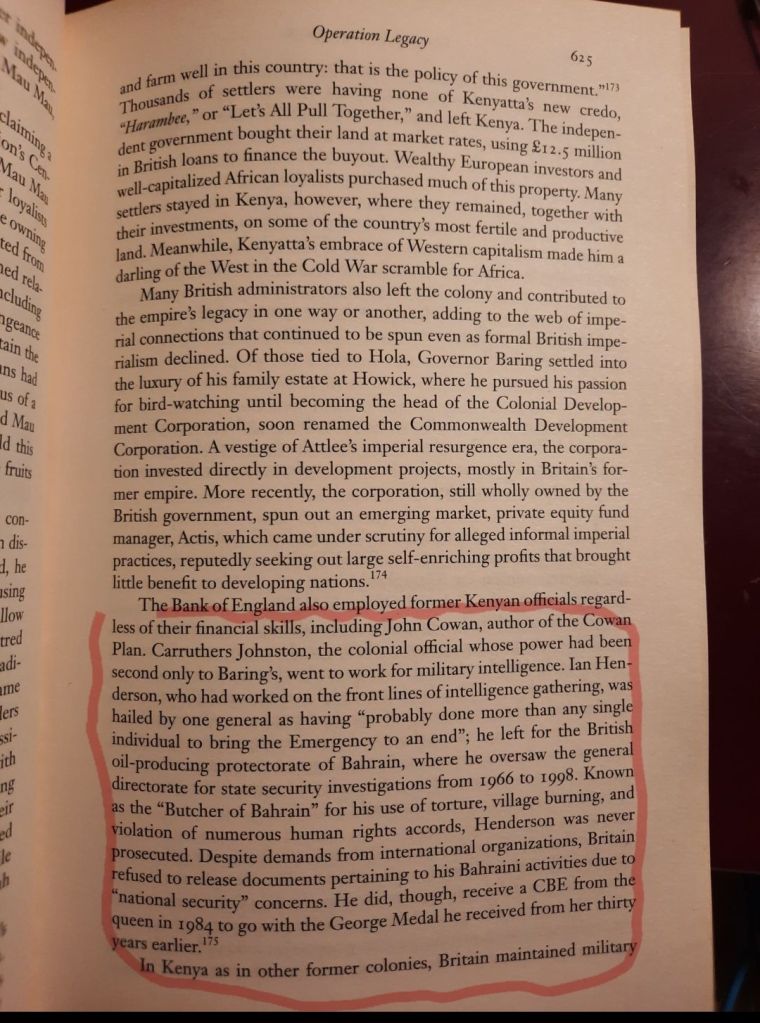
Book Legacy of Violence -
Rajab Friday in Old Sana’a: Celebrations reflect the depth of faith-based belonging
In the month of Rajab, the month of faith-based identity, the Old City of Sana’a—with its ancient Islamic and historical landmarks—turns into an open destination for those celebrating Rajab Friday, the anniversary of Yemenis’ entry into Islam. The scene reflects deep faith and the authenticity of history.
Visitors flock to Sana’a’s most prominent Islamic historical landmarks, foremost among them the Great Mosque, the Mosque of Imam Ali (peace be upon him), and Souq Al-Halaqa. These sites stand as enduring testimonies to the noble and honorable history of the people of faith and wisdom since the dawn of the Islamic call, and to their lasting role in supporting the religion, the Great Messenger, and confronting the enemies of God and Islam.Since the beginning of Rajab, Old Sana’a has witnessed large-scale marches and mass festivals involving thousands from the districts of the Capital Secretariat, celebrating Rajab Friday amid a warm reception by the Secretariat and district leadership, social figures, and local residents.
These celebrations painted a unique Yemeni faith-inspired tableau, featuring speeches, cultural and poetic segments, chants, anthems, and folk performances—all expressing joy and celebration of this religious occasion that holds a special place in the hearts of Yemenis.
Participants expressed gratitude to God Almighty for the blessing of guidance to Islam, reaffirming adherence to the Book of God, the Holy Qur’an, and to the faith-based identity. They renewed their commitment to follow the upright Qur’anic path in confronting the enemies of Islam and Muslims—the Zionists and criminal Americans.The Old City also saw official and popular visits by state leaders, directors and employees of executive offices, schools, and districts, recalling one of the most significant phases in Yemeni history and their deep connection to Islam, the Great Messenger (peace and blessings be upon him and his family), Imam Ali (peace be upon him), and the luminaries of guidance.
The Great Mosque holds exceptional significance as an Islamic landmark built by order of the Prophet Muhammad (peace and blessings be upon him and his family) and constructed by Imam Ali (peace be upon him) when the Prophet sent him to Sana’a to call the Yemenis to Islam. It is considered one of the oldest Islamic mosques and the first mosque built in Yemen, occupying a profound historical and spiritual status and symbolizing the faith-based identity, in honor of what the Prophet bestowed upon the Yemenis.
As a scientific and religious center, the Great Mosque hosts circles of remembrance, Qur’an memorization and recitation, and scholarly gatherings addressing the roles of Yemenis in supporting Islam, carrying its banner across the world, and the sacrifices they made in this cause. Discussions also focus on the importance of this religious occasion and its role in reinforcing faith-based identity, creating a scene that blends spirituality with deep belonging.On this great religious occasion, scholars and preachers highlight the virtues of the people of Yemen, the Prophetic hadiths concerning them, and their esteemed status with the Messenger of God (peace and blessings be upon him and his family). They also emphasize Yemenis’ courage and readiness to aid those in distress, and the faith-driven and heroic stances they demonstrate today in support of their brothers in Gaza and Palestine, who are facing genocide and starvation before the eyes of Arabs, Muslims, and the entire world.
The library of the Great Mosque also witnesses a large influx of visitors eager to explore its valuable books, manuscripts, and works across various fields, including a Qur’an manuscript written in the hand of Imam Ali (peace be upon him), along with other rare manuscripts that represent a precious Islamic heritage and embody Sana’a’s prominent place in Islamic history.
The Mosque of Imam Ali and Souq Al-Halaqa—where Yemenis gathered around Imam Ali ibn Abi Talib (peace be upon him), the envoy of the Prophet (peace and blessings be upon him and his family), declaring their voluntary acceptance of Islam in response to the Prophet’s message—stand as further testimonies documenting one of the brightest chapters in Yemeni and Islamic history.With the advent of the blessed month of Rajab, mosques and neighborhoods in Old Sana’a are adorned, while the skies echo with traditional muwashshahat and Prophetic praises distinctive to the city. The spiritual atmosphere reflects the status of Rajab in the Yemeni collective consciousness and their steadfast attachment to faith-based identity, in fulfillment of the saying of the Messenger of God (peace be upon him and his family): “The people of Yemen have come to you; they are the most tender-hearted and softest of hearts. Faith is Yemeni, and wisdom is Yemeni.”
The anniversary of Rajab Friday represents an important moment to renew loyalty to God Almighty and His Noble Messenger through adherence to the teachings of Islam and the Holy Qur’an—the eternal Book of God—and to translate that into reality by continuing jihad, sacrifice, and steadfastness in confronting the enemies of the Islamic nation, and in supporting its causes, foremost among them the Palestinian cause.
It is also an educational milestone aimed at fortifying generations against the dangers of soft warfare, linking them to the history of their forefathers—the Ansar—and their honorable roles in Islamic conquests and in supporting the oppressed and wronged among the الأمة in confronting forces of arrogance and tyranny.In the month of faith-based identity, the people of Yemen renew their affirmation of a steadfast, faith-driven stance in support of the brotherly Palestinian people, in defense of the causes and sanctities of the Islamic nation—foremost the Holy Qur’an—affirming that they will remain people of support, faith, and wisdom until the Day of Judgment.
SabaNews report

Imam Ali Mosque -
Three Civilians Wounded by Saudi Enemy Fire in Sa’adah
Three civilians were wounded today by fire from the Saudi enemy in Sa’adah Governorate.
Almasirah correspondent in Sa’adah reported that one person was injured in the Shada border district, while two others were hit by shrapnel near the Al-Sheikh area in the Manbah border district.
Earlier, a civilian was wounded on Monday by Saudi enemy fire near the Al-Raqwa area, also in Manbah, part of repeated attacks on populated border areas.
Sa’adah ’s border districts continue to experience periodic assaults, underscoring the Saudi enemy’s persistent targeting of unarmed civilians, amid international silence over these ongoing crimes.
Saada’s northern border districts regularly face attacks from the Saudi enemy, including artillery and airstrikes on civilians. These repeated assaults have caused casualties and damage, worsening the humanitarian crisis, while international inaction allows the aggression to continue.Al Masirah report

After the Saudi-led coalition airstrikes in Al miqni Minabih, Saada, september 19, 2015 -
‘Bullying act’: China slams US demand for exclusive Venezuela oil partnership
China has denounced as a “typical bullying” act Washington’s demand that Venezuela form an “exclusive partnership” in the oil sector with the United States.
“The United States’ brazen use of force against Venezuela and its demand for ‘America First’ when Venezuela disposes of its own oil resources are typical acts of bullying,” Chinese Foreign Ministry spokesperson Mao Ning said at a press conference on Wednesday.
ABC News reported that the administration of US President Donald Trump has told Venezuela’s interim President Delcy Rodriguez it “must meet the White House’s demands,” including that Caracas “must agree to partner exclusively with the US on oil production and favor America when selling heavy crude oil.”
Washington has also demanded that Caracas “must kick out China, Russia, Iran, and Cuba and sever economic ties”, according to the report.
“These actions seriously violate international law, gravely infringe upon Venezuela’s sovereignty, and severely damage the rights of the Venezuelan people,” Mao stated.
The spokeswoman said China and other countries have “legitimate rights in Venezuela, which must be protected”.PressTV report
-
Russia deploys submarine as US attempts to seize oil tanker in Atlantic
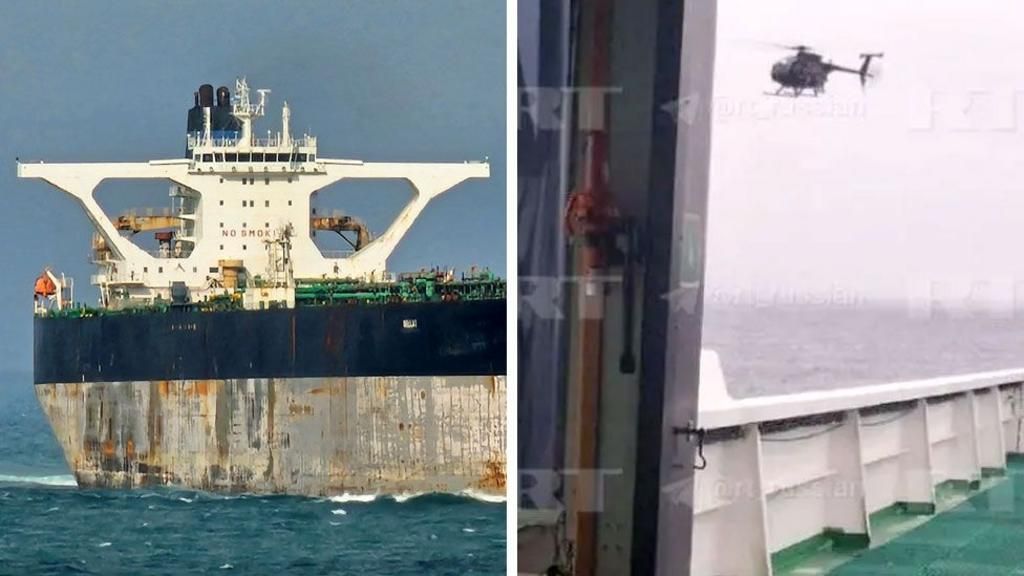
Russia has reportedly dispatched a submarine and several naval vessels to escort an oil tanker being pursued by the US Coast Guard in the North Atlantic on Wednesday.
According to reports, the tanker is en route to the Russian port of Murmansk.
US military aircraft were tracked over the North Atlantic earlier in the day, moving towards the tanker, identified as the Marinera.
Two US officials told CBS News that American forces were preparing to board the vessel, with Washington preferring seizure over sinking the vessel.
Footage released by Russia Today, reportedly filmed onboard a tanker, shows a vessel in the distance resembling a US Coast Guard Legend-class cutter.
The ship is currently sailing between Iceland and the British Isles. Washington has accused the vessel of violating US sanctions by transporting Iranian oil.
The tanker’s transit into European waters has coincided with the arrival of around 10 US military transport aircraft and several helicopters in the United Kingdom, raising concerns over a broader military escalation.
Formerly known as Bella 1, the tanker has been renamed Marinera and reportedly reflagged from Guyana to the Russian Federation. The vessel has previously transported Venezuelan crude oil, though it is currently reported to be empty.
Russia’s Foreign Ministry said in a statement that it is “monitoring with concern” the situation surrounding the tanker.
“At present, our vessel is sailing in international waters of the North Atlantic under the state flag of the Russian Federation and in full compliance with international maritime law,” the ministry added,
“For reasons unclear to us, the Russian ship is being subjected to increased and clearly disproportionate attention by the US and NATO military, despite its peaceful status,” it said, adding that Moscow expects Western states to respect freedom of navigation.
Under international law, vessels sailing under a national flag fall under the protection of that state.PressTV report
-
Historic Hospital Leveled in Quneitra Amid z¿onist Incursions into Syria; terrorist Jolani does not bother
zion¿st occupation forces have reportedly destroyed a historic hospital in the city of Quneitra as part of their systematic aggression against Syrian sovereignty.
Local sources reported on Tuesday that zionist army bulldozers completely demolished the historic Jolan Hospital.
Reports from Al‑Ikhbariya and Al‑Mayadeen networks indicate that Israeli patrols also stormed the town of Al‑Rafid in the southern countryside of Quneitra.
These incursions have become a daily reality for local residents, often accompanied by arbitrary detentions and the establishment of illegal checkpoints, fueling widespread public anger and resentment.
The destruction of this medical landmark is viewed as a direct violation of international humanitarian law, which strictly prohibits the targeting of healthcare facilities and cultural heritage sites.
The move comes as the Zionist regime continues to exploit the current phase in Syria to tighten its illegal military grip on the region.
Since the fall of the previous Syrian administration in December 2024, Israel has unilaterally declared the collapse of the 1974 Disengagement Agreement.
Under this pretext, Zionist forces have advanced deep into Syrian territory, far beyond the UN‑monitored buffer zone.
While the current HTS‑led administration, headed by former Al‑Qaeda member Abu Mohammad al‑Jolani, has repeatedly stated that it poses no threat to Tel Aviv, the Israeli military has continued its provocative airstrikes and ground incursions.
These attacks have not only targeted military warehouses but have also resulted in civilian deaths and the destruction of essential urban infrastructure.
The destruction in Quneitra coincides with reports of US‑mediated talks in Paris between Syrian and Israeli delegations.
Damascus, represented by Foreign Minister Asaad al‑Shibani and intelligence chief Hussein al‑Salama, is reportedly pressing for a security agreement that would require a full Israeli withdrawal to pre‑December 2024 lines.Al Masirah report

-
Trump Envoy Morgan Ortagus Facing Dismissal Over Alleged Affair with Lebanese Banker
No morals, no ethics, lack of integrity; corrupted Americans plenty –
Morgan Ortagus, the Trump administration’s special envoy, is reportedly facing dismissal following allegations of a romantic relationship with a controversial Lebanese businessman.
According to US right-wing political activist Laura Loomer, Ortagus has been placed on “administrative leave” amid increasing scrutiny over an alleged affair with Lebanese banker Antoun Sehnaoui.
Loomer said the White House had taken the step after learning of Ortagus’s relationship with Sehnaoui.
Ortagus, who is married and has two children, previously drew attention for her hardline positions on West Asia, including a public call for Israel to bomb the funeral of late Hezbollah Secretary-General Hassan Nasrallah.
Further controversy emerged after an alleged receipt was leaked online showing over $50,000 in jewelry purchased from Tiffany & Co., with Sehnaoui listed as the cardholder and Ortagus as the recipient.
While neither party has publicly commented on the authenticity of the document, it has fueled speculation about the nature of their relationship.
Sehnaoui is the chairman of the SGBL Group, a prominent Lebanese banking institution. In 2017, he amassed over one billion dollars in profits, reinvesting his wealth to expand his bank, acquire a French banking group, and fund a political project.
That project came into full view in 2025, when Anton Sehnaoui openly declared his Zionism, a first in modern Lebanese history.
Before him, no Lebanese figure, including those who collaborated with Israel, publicly embraced the label, instead hiding behind claims of nationalism and sovereignty.
His declaration did not emerge in a vacuum, as powerful political currents in Lebanon, backed by American and Saudi interests, are pushing the country toward normalization.
Yet while he is not alone, Sehnaoui stands out as the most explicit figure, openly financing and promoting Lebanon’s integration into the Zionist project.
The latest allegations have raised concerns about potential ethical and national security implications, particularly given Ortagus’s diplomatic role and Sehnaoui’s controversial profile.
As of Tuesday, the Trump administration has not issued an official statement confirming or denying Ortagus’s reported administrative leave.Al Masirah report

-
Subscribe
Subscribed
Already have a WordPress.com account? Log in now.
 Nascent Yemen