-
More zion*st attacks on South Lebanon recorded
Al-Manar correspondent in South Lebanon reported that a zion*st drone strike on Ainatha town left one martyr.
In details, a zion*st drone on Saturday targeted a car on Ainatha-Aitaroun road with five missiles.Al-Manar correspondent in south Lebanon reported on Friday a drone strike targeting a Rapid vehicle in the southern town of Ansariyeh.
The strike left one martyr, the Lebanese Health Ministry announced.
It is worth noting that the Zionist enemy has escalated its attacks on Lebanon since the Lebanese government approved a decision to disarm the Resistance without providing any plausible alternative for the national defense.
Since the ceasefire took into effect on November 27, 2024, the Israeli enemy had violated the indirect agreement 4301 times (1934 ground violations, 2241 aerial violations, and 126 maritime violations, leaving 240 martyrs and 491 injuries.
Source: Al-Manar English Website
-
Remembering 43 young schoolbus martyrs with ascending Yemeni butterflies
On August 9, 2018, the Saudi-Emirati-led and US-British-backed coalition bombed a schoolbus in Saada’s Dayhan, annihilating more than 43 young lives aged between 4-14 years.
The bomb hit the bus on a crowded marketplace in broad daylight, killing more than 22 market visitors, injuring many more.
The coalition called the bombing of the schoolbus carrying children to summerschool a legitimate military target.
There were worldwide repercussions in the form of protests or political ventures, and many lawmakers and senators released tweet after tweet condemning the schoolbus bombing.
As with the previous vile bombings on Yemen, this, too, subsided, and the kids became another statistic in the Yemen War toll of the UN protocols; nameless, faceless.
With this post, I will attempt to give the children faces and names and honour their parents who lost too much.
Each year, in preparation to remember this tragedy, I start by the question, ‘How to commemorate a child’s death?’
The previous times, my research led me to many creative and thoughtful ideas. In the past years, on this day, the idea to release colourful environmentally friendly balloons seemed very sensible, and the previous year, it was the soaring of beautiful and poetic lanterns.
This year is butterfly themed.
Last year, I discovered an intriguing scientific homepage that focuses on Yemeni butterfly species, proving once again that everything about Yemen is awesome.
The butterflies, as shown in the colourful pictures, are another of Yemen’s many unique features.
How would a Yemeni mother deprived of her cub in a Saudi Arabian bombing view the idea of releasing butterflies to commemorate and releave the anguish?

Butterflies of Yemen – INaturalist A Chinese poem depicting the grief of a couple losing their baby boy to disease likened the child to an invaluable pearl between two leaves. Those parents used to let sleep their only child in between themselves at night.
I loved that poem that much. It will remain in my heart and mind like Yemen does, and in the way the Dayhan massacre children suffused all cavities.
Does life feel futile after an experience of this magnitude?
A father who had lost two young sons in the attack professed that he objected to sending his children to the summer school in that bus. He said there was a bad omen and dark thought hovering above.
His mind was preoccupied with the premonition of an impending catastrophe.
The father objected and recognised the futility in the faces of his excited sons. The father barely uttered his peace and blessings after the departing bus, 100 meters away, the bomb had cought the spirited young souls.

Al-Manar TV Lebanon
Yemeni children martyred after their vehicle was hit in Saada’s Dayhan town.
(Thursday, August 9, 2018)Grieve can render speechless and powerless.
Following the bombing, unrecognizable bodies blackened by the explosives and covered in blood were loaded on top of each other on the back of a pick-up truck to enable the passage to the families and the loved ones.
To claim his child’s body and to end the dispute with fellow fathers, a man provided the denture prints of the deceased 10-year-old son.
They cought on camera the father’s breaking voice and tearful eyes while narrating the tragedy of identifying own blood and flesh amoung piled-up bodies.
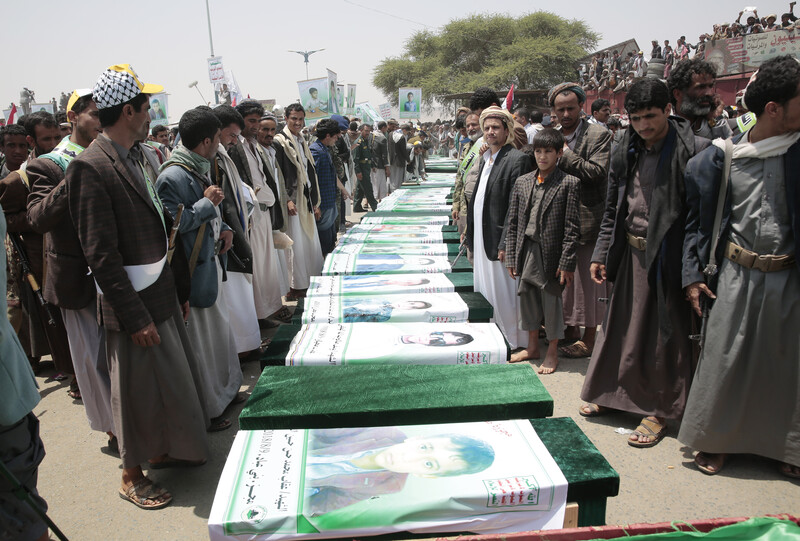
Mourners attend a mass funeral for victims, mainly children, of a Saudi-led coalition airstrike in Saada, northern Yemen, in August 2018. At least 50 were killed when warplanes targeted a busy market on 9 August 2018.
Electronic Intifada reportOver 40 little graves were carved out for young bodies robbed of life. The skeleton of the schoolbus was erected and protected to remember the darkness of the human core.
Others have survived with little scar-covered faces or sacrificed limbs, lost dreams, and hopes.
Some returned back to the new school year with a cavity on their side instead of a student filling the desk and chair.
Others like Mokhtar drowned in trauma, unable to cope, refused the return to the classroom half of it placed in the grave yard.
Every Friday, families, friends, loved once meet at the place of their rest to pay respect, to place fresh colourful fragrant flowers, to lament and to complain about failed justice.

Little Mokhtar at the side of the destroyed schoolbus. Bellincat report
France24 report
Jacobin report
BBC report
-
Nagasaki Part 3
The five-ton plutonium bomb plunged toward the city at 614 miles per hour. With colossal force and energy, the bomb detonated. A superbrillant flash lit up the sky visible ten miles away.
At its burst point, the centre of the explosion reached temperatures higher than at the centre of the sun, and the velocity of its shock wave exceeded the speed of sound. Directly beneath the bomb, infrared heat rays instantly carbonised human and animal flesh and vaporized internal organs.
A half kilometer in all directions from the blast nearly all buildings were demolished, and bodies were disintegrated or burned beyond recognition.
Hundreds of men and women who had climbed out of the factory rubble staggered a cross the ground, half naked, their blistered skin falling off their bodies; many held their arms stretched out in front of them – probably, one survivor guessed, to keep the ski that had peeled off their arms and hands from dragging on the ground. “They all looked gray,” one woman remembered. “No, not even gray; they were simply colorless, dusty figures with two blank holes for eyes, a stubby nose, and another hole for a mouth.” A mother cradled her her headless infant and wailed.
“The city was burning …,” Taniguchi [a severely injured teenage survivor of the Nagasaki bombing] remembered, “illuminating the skyline a midnight sun.” A plane flew overhead and sprayed the area with machine-gun fire. Bullets hit a rock near Taniguchi’s face and bounced into the bushes, but Taniguchi could do nothing to protect himself.
Later in the night, a drizzling rain fell. Lying facedown and unable to move, Taniguchi noticed some bamboo leaves hanging low to the ground just a few inches away. Desperately thirsty, he pulled his head up, stretched his neck out as far as he could, and strained to such the raindrops off the leaves before setting his head down and waiting in darkness for someone to come.
Before the atomic bomb was dropped, occasionally, american planes approached the city, turned their engines off to avoid detention, and flew low over the shipyards, pelting them with machine-gun fire.
It was there that Dō-oh [another tenage surviver] finally realised the gravity of her injuries: The whole left side of her body was badly burned, a bone was sticking out of her right arm at the elbow, hundreds of glass splinters had penetrated most of her body, and blood was streaming down her neck. Too dazed to cry, she reached back to the base of her head and left a wide and deep horizontal gash stretching from one ear to the other, filled with shards of glass and wood. “Daddy!” she cried. “Please come! Please help me!”
As she lay on the embankment, a plane flew at very low altitude – so close, Dō-ho remembered, that she could see the pilot. Panicked at the idea of possible machine-gun fire, she crawled to a fallen tree and squeezed her body under one of its libs as the plane flew over a second time. Nearly invisible, desperately thirsty, and surrounded by disfigured strangers – some silent and others crying out for their loved ones – Dō-oh felt completely alone.
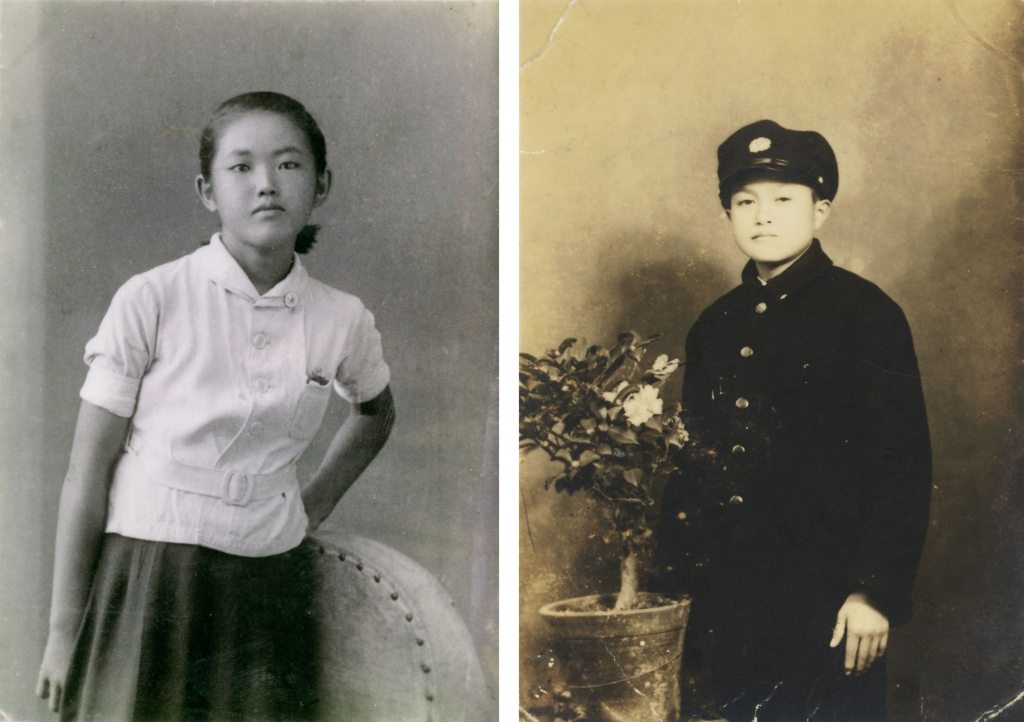
Dô-oh Mineko at the age of 14 and Taniguchi Sumiteru in his post office uniform at the age of 15. The two were survivors of
the atomic bomb that was dropped on Nagasaki. NG report | 74,000 people died in Nagasaki.Before the atomic bombing, Nagasaki was subjected to the american bombings a few times compared to other major Japanese cities, which were annihilated.
The uninterrupted economic and cultural connection to the outer world and its reputation as a bustling advanced city coupled with the presence of an american POW centre made it unlikely for Nagasaki to become ground zero.
Nagasaki inhabitants trusted their city’s prestigious and privileged status and did not even consider their city to be bombed massively with conventional methods like other cities, let alone the implementation of the atomic bomb.
Explanations and pretext for the use of the atomic bomb
During the Tokugawa shogunate in the 17th century, Japan assumed a long period of national isolation.
Japanese citizens were prohibited from leaving the country, and foreigners were forbidden to enter.
What had started already in the 16th century under Toyotomi Hideyoshi, a lord who had taken control of southern and western Japan and who later unified the nation of Japan, to curtail the infiltration of Christian ideology and preserve national identity and the concentration of power, was in the coming centuries implemented throughout the whole country.
Trade with the outer world was confined to China and the Netherlands only with the sole condition not to infiltrate the Christian doctine, with Nagasaki serving as the buzzling centre.
For more than two centuries, Nagasaki served as Japan’s sole window to the outside world.
In the early to mid-1800s, Russia, France, Britain, and the US began pressuring Japan to revers its seclusion policies.
The US coerced by waging war on Japan the re-opening.
In the ensuing period, Japan became a powerful industrial nation.
Before the atomic bombings, Nagasaki had the third largest ship building industry worldwide.
Becoming immensely powerful, Japan emulated the deeds of Western colonisers and invaded China’s Manchuria and Taiwan.
The Japanese nation went on under the Emperor to occupy French-Indo-China, which were Western colonies.
They had also occupied Korea, the Philippines, and other countries in far East Asia.
The Japanes army killed, raped and maimed many civilians and combating forces in the occupied nations and conscripted Korean and Chinese people to fight for the Japanese or to work in the weapons manufacturing industry.
Naturally, the Westerners were not happy to see their ‘assets’ being forced-transfered into the hands of an Asian nation.
In their opinion, only the white race had the right to occupy, exploit on, and kill ‘the lesser race,’ and not vice-versa as the Japanese did.
The ‘biestly creatures’ must be prevented from assuming world leadership over the white supremacist race.
As in the previous centuries under different leaders and dynasties, pre-war Japan aspired economic independence and national sovereignty free from Wetern infiltration, and indoctrination.
During the war, Japanese citizens were encouraged to purge themselves of “evils of European and American thought.”
A policy of total embargo and annihilation of Japan took shape, led by the US, and followed up on by the rest of the world.
These policies starved many Japanese people. There are accounts stating that the consumption of rice was rationed to two cups per month, per person.
Russia was in the peace negations committee and supposed to be neutral.
However, shortly before the bombings, Russia, too, declared war on Japan.
The Japanese Parliament was negotiating the conditions of surrender when the atomic bombs hit the cities. Other sources claim that Japan had already capitulated but the US had not accepted or chose to ignore it.
The americans would have pursued their goal of the annihilation of the cities anyway, as even the dates had been preset.
However, it must be noted energetically that at no point was the Japanese Parliament notified about the possible deployment of the atomic bomb.
Before bombing Hiroshima and Nagasaki, the Manhatton Project team had test-bomed New Mexico in the United States. The health implications arising from the radiation that inflicted the inhabitants in the surroundings is a topic for another discussion.
Certainly, the american government could not use the bomb on its own ground to test the true destructive power.
Identifying Japan as the testing ground to render it Ground Zero must have appeared the ‘ideal solution,’ and simultaneously to teach them a lesson not to interfere with Western dominance.
A large majority of American settler colonialists, including political and military leaders, scholars, are convinced that the use of the atomic bomb was of peaceful nature and that it ended the war.
They believe that the Japanese deserved it because of the bombing of the US military base of Pearl Harbour in Hawaaii and the occupation of Indonesia, Philippines, etc.
The fact that the bombs eclipsed hundreds of thousands of civilian lives, obliterated two entire cities, and imposed radiation-related illnesses on generations to come remains trivial.
Some anti-nuclear survivors who gave speeches at events in the US were coerced to apologise for the Pearl Harbour bombing.
There was a social media post picturing Nelson Mandela talking about the use of the atomic bombs on Hiroshima and Nagasaki.
Mandela inferred that the implementation of the atomoc bombings was an american message to Russia.
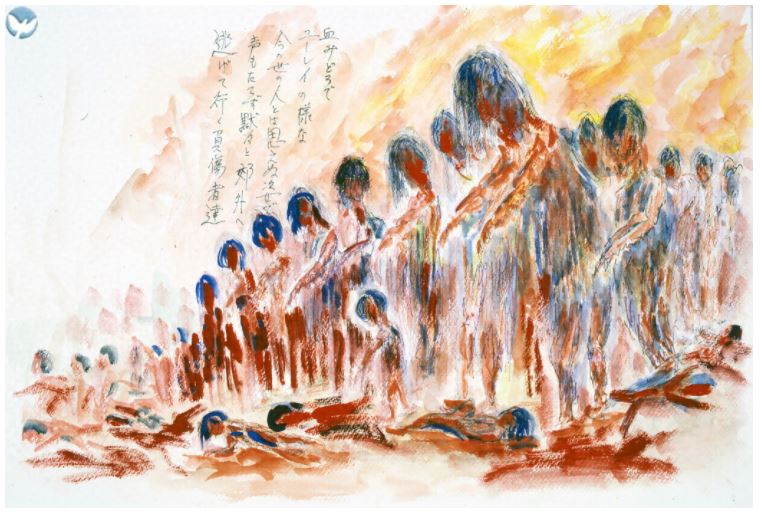
Japanese Survivor Artwork From the Nuclear Bombings of Hiroshima and Nagasaki Based on Susan Southhard’s Nagasaki Life After Nuclear War
-
zion*st Enemy Proceeds Aggression on Lebanon: Another Martyr in Drone Strike on South
zion*st occupation army presses on with its attacks across Lebanon, showing open disregard for the ceasefire agreement and the international resolutions.
According to the latest Al-Manar reports, a Zionist drone attacked and incinerated a bulldozer in Aitaroun border town, South Lebanon.Al-Manar correspondent also reported that a zion*st drone dropped flammable material on the outskirts of the town of Al-Jebbein, which led to a fire breaking out in the area.
The occupation military launched a drone strike on a town in south Lebanon on Friday, killing a citizen, a day after it launched several strikes in Lebanon’s Bekaa, leaving a number of martyrs and injuries.
Al-Manar correspondent in south Lebanon reported a drone strike targeting a Rapid vehicle in the southern town of Ansariyeh.
The strike left one martyr, the Lebanese Health Ministry announced.Local media identified the martyr as Mohammad Shehade, a Lebanese citizen.
Earlier on Thursday two zionist strikes on Kfardan – west of Baalbek – and Anjar-Masnaa highway killed six people, including two Syrian citizens and wounded ten others.
The Israeli attacks came as the Lebanese Government approved on Thursday “objectives” of a US plan to disarm Hezbollah, yielding to US and Israeli pressures.
Thursday’s cabinet session followed another session on Tuesday, in which the Lebanese Government tasked the Lebanese Army with drafting a plan to confine all weapons to the State by the end of the year.
The Lebanese State is subjected to unprecedented pressure by the United States, the first sponsor of the Zionist entity, to tackle the issue of disarming Hezbollah.
Hezbollah issued a statement on Wednesday, in which it declared that the resistance party will deal with the decision “as if it does not exist.”
The statement maintained that the decision weakens Lebanon’s capabilities and position in the face of ongoing US-Israeli aggression, and grants zionist colony what it failed to achieve through its war on Lebanon. It added that the decision contradicts with the National Pact, President Joseph Aoun’s inauguration speech, and the ministerial statement.
zionist enemy continues to bomb Lebanon, mainly the country’s south, almost daily and maintains occupation over five posts along the southern border, in violation of a ceasefire deal reached following a brutal 66-day Israeli war between September and November 2024.
At least 230 Lebanese people have been martyred in the Israeli attacks since the ceasefire took effect on November 27, 2024.
Source: Al-Manar English Website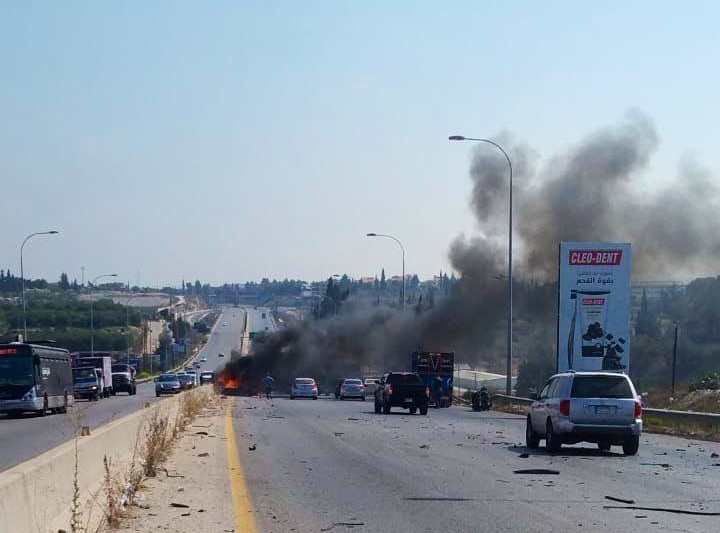
zionist drone strikes a vehicle on Zahrani Highway near the southern Lebanese town of Ansariyeh leaving one martyr (August 8, 2025). -
Sudan downs UAE plane carrying mercenaries to war-torn Sudan’s opposition RSF
Sudan says the UAE banned its aircraft from entering the country after Khartoum shot down an Emirati plane carrying Colombian mercenaries.
The UAE also barred a Sudanese airliner from taking off from Abu Dhabi airport, a Sudanese authority said Thursday.
The flight ban, not yet officially announced by the UAE, marks a significant escalation in the deteriorating relationship between Khartoum and Abu Dhabi.
Sudan’s air force on Wednesday destroyed an Emirati aircraft reportedly carrying Colombian mercenaries as it was landing in an airport in Darfur controlled by the paramilitary Rapid Support Forces (RSF).
Army-aligned state TV reported that the aircraft had taken off from an airbase in the Persian Gulf, carrying dozens of foreign fighters and military equipment intended for the RSF, which controls nearly all of Darfur.
A UAE official told AFP Thursday that the “unfounded allegations” were “entirely false” and not supported by any evidence.
However, Sudan’s army-aligned government said it had positive evidence to prove it. The Sudanese army, led by Abdel Fattah al-Burhan, has repeatedly complained that the United Arab Emirates is sending RSF mercenary troops and advanced weaponry, including drones, via Nyala Airport in Darfur.
The reports of UAE sending weaponry and fighters to Darfur date back to late 2024 and have been confirmed by the United Nations.
Meanwhile, Colombia has expressed regret “for the participation of some of its citizens in the war.”
Colombian mercenaries, many former soldiers and guerrillas, have appeared in other global conflicts and were previously hired by the UAE for operations in Yemen and the Persian Gulf.
In a post on Wednesday, Colombian President Gustavo Petro said he was moving to ban mercenary activity, calling it “a trade in men turned into commodities to kill.”
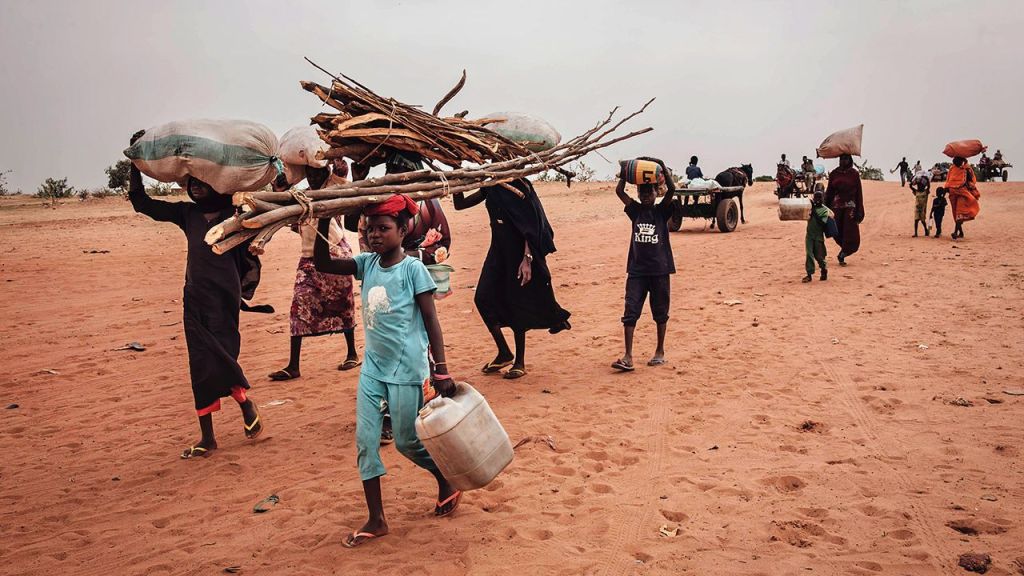
As fighting continues, thousands of families trapped in the besieged city of el-Fasher are at “risk of starvation”, the UN’s World Food Program (WFP) has warned.
An outbreak of cholera in the North Darfur state, of which el-Fasher is the capital, has further added to the misery.
Fighting in Sudan between the two generals running the Army and RSF forces, now in its third year, has left tens of thousands of people dead.
About a fourth of the country’s 50.5 million population has been forced to flee their homes, plunging the country into poverty and starvation.Al Masirah report
-
Remembering the atomic bombings of two Japanese cities Part 2
Throughout its short history, american settler colonialists have committed grave crimes against humanity, on which they pride themselves profusely.
In the US, both ignorance of the effects of the bombings and celebration of the bombs’ use remained common.
In 1976, a US group called the Confederate Air Force (CAF) performed an air show in Texas before an audience of more than forty thousand people. In the finale, a tribute to those who brought the Pacific War to its close, Paul Tibbers – the lead pilot of the Hiroshima mission – flew a B-29 overhead. As the narrator’s voice over loudspeakers proclaimed that the bomb had ended “some of the darkest days of american’s history,” a device detonated on the ground beneath the plane to generate a rising mushroom cloud.
There are many american atonic bombing themed military museums that are solely trying to accommodate veterans’ views.
At a June 1995 press conference for the opening of the scaled-down NASM exhibit, Smithsonian Secretary Heyman responded to a question about why he had omitted the realities of the atomic bombs’ unprecedented destruction and human suffering. His answer: “I really decided to leave it more to the imagination.”
However, without further due, here are selected vile anecdotes following the atomic bombings.
Within a year, the United States would test the world’s first deliverable hydrogens bomb – an event that would ignite international outrage, give birth to Japan’s first nationwide campaign for the elimination of nuclear weapons, and bring national attention to the haunting realities of high-dose radiation exposure on hibakusha.
The nuclear test took place just before down on March 1, 1954, at the United States’ Pacific Proving Grounds, located at the northern edge of the Marshall Islands, a 750.000-square-mile-region in the South Pacific dotted with more than 1.200 tiny island with a total combined landmass if only 70 square miles.
The Hydrogene bomb explodes on Bikini Atoll, a narrow, 3-square-mile crescent-shaped series of minute coral islands around a large lagoon.
The bomb’s force equaled fifteen million tons of TNT – almost seven hundred times more powerfully than the bomb dropped on Nagasaki.
The Japanese fishing boat Daigo Fukuryu Maru was floating 100 miles east of Bikini Atoll when the test was carried out.
A white ash covered the boat, and the men who were on deck. The deck, they remembered, was covered “thickly enough to show footprints.”
Three Japanese fishermen died, and others suffered lasting implications from the radioactive exhaust.
The ABCC long-term scientific study for US military purposes had been criticised by the Japanese people without outcome.
The US offered numerous pretexts for its no-treatment policy.
The conditions of the Hiroshima and Nagasaki survivors were not covered by Japan’s national health insurance plan. Further, a clause in the San Francisco Peace Treaty barred Japan from suing the United States for damages.
Surveys statistically confirmed higher occurance rates for hibakisha medical conditions and disabilities compared with victims of traditional bombings. Families with a member suffering an atomic momb-related physical disability incurred medical costs 3.5 times higher than the national average.
A 1965 treaty between South Korea and Japan barred Korean hibakusha from pressing for reparations against the Japanese government.
To that time, there were thousands of foreigners, primarily Korean, living in Japan due to the enforced removal from their home counties under Japanese occupation.
Tens of thousands of foreign hibakusha, following the capitulation, had remained in Japan and were barred from Japanese citizenship.
Many became destitute due to their high medical costs and the absence of extended families to turn to for support.
It is not good we have two home countries.
Kim Masako, a Korean survivor who was twenty-four years old at the time of the bombingMany survivors of the atomic bombings have dedicated their lives to spreading the word, sharing their experience in conferences, meetings, events, etc.
Others have expressed their pain through the medium of art.
In 2009, US President Barack Obama gave a major speech in Prague addressing the state of nuclear weapons in the world and the United States’ moral responsibility to lead disarmament efforts. “Today,” Obama said, “I state clearly and with conviction America’s commitment to seek the peace and security of a world without nuclear weapons.” Taniguschi and thousands of hibakusha throughout Japan felt more optimistic than they had in decades.
“I am counting on this new President Obama, ” Taniguchi said. “Although previous US presidents never worked on reduction and elimination of nuclear weapons, President Obama actually presented a plan to approach nuclear weapons reduction.
We have prayed for the when we can say it was good for us to live this long.”
Within two years, however, Taniguchi’s hope for significant weapons reduction had deflated.
He rails at Obama for continuing to modernize US nuclear weapons for war readiness after receiving the 2009 Nobel Peace Prize for his antinuclear stance.
“What happened to that speech in which he called for a world without nuclear weapons.
Taniguchi demands.
“Just how long is he going to continue these nuclear tests that trample on the feelings of hibakusha?”
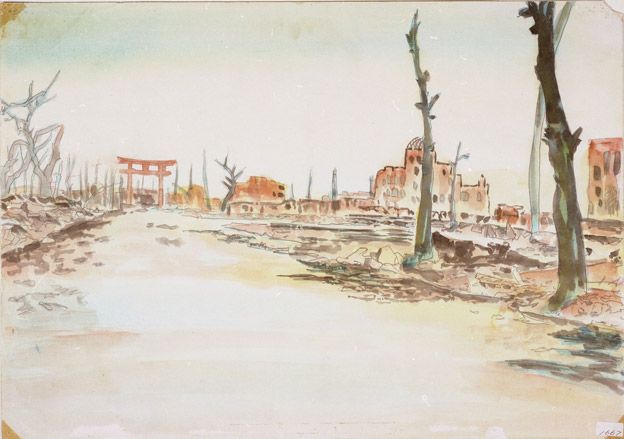
The artwork of an atomic bomb survivor via Trauma blog Based on Susan Southhard’s Nagasaki
Live After Nuclear War
-
MSF Gaza report: This is not aid. This is orchestrated killing
“In MSF’s nearly 54 years of operations, rarely have we seen such levels of systematic violence against unarmed civilians.”
An analysis of Médecins Sans Frontières / Doctors Without Borders (MSF) medical data, patients’ testimonies, and first-hand medical witnessing at two MSF clinics in Gaza, point to both targeted and indiscriminate violence by Israeli forces and private American contractors against starved Palestinians at food distribution sites run by the so-called Gaza Humanitarian Foundation (GHF).
MSF calls for the immediate dismantling of the GHF scheme; the restoration of the UN-coordinated aid delivery mechanism; and calls on governments, especially the United States, as well as private donors to suspend all financial and political support for the GHF, whose sites are essentially death traps.A new MSF report, This is not aid. This is orchestrated killing, documents the horrors witnessed by MSF staff at two clinics that regularly received mass influxes of casualties following violence at sites run by the GHF, an Israeli-US proxy that has militarised food distribution.
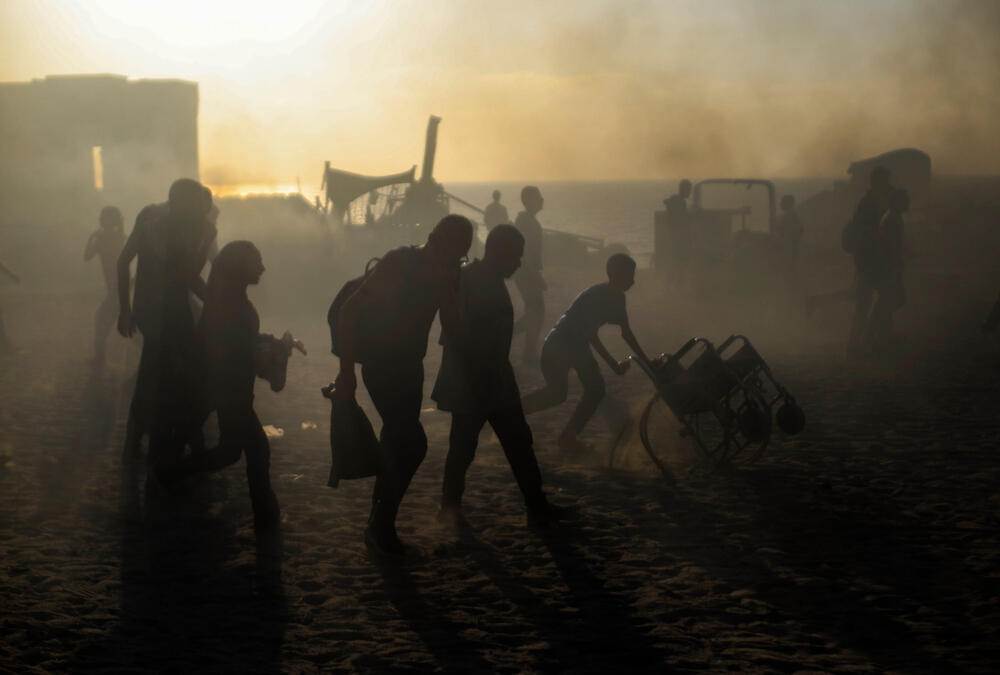
Between 7 June and 24 July 2025, 1,380 casualties, including 28 dead, were received at MSF’s Al-Mawasi and Al-Attar clinics in southern Gaza, located near the GHF-run distribution sites. During those seven weeks, our teams treated 71 children for gunshot wounds, 25 of whom were under the age of 15.
Faced with no alternatives to find food, starved families frequently send teenage boys into this lethal environment, as they are often the only males in the household physically able to make the journey.
Patients have also included a 12-year-old boy hit by a bullet that had passed all the way through his abdomen, and five young girls, one of whom was only eight years old and suffered a gunshot wound to her chest.“A laboratory of cruelty”
“Children shot in the chest while reaching for food. People crushed or suffocated in stampedes. Entire crowds gunned down at distribution points,” says Raquel Ayora, MSF General Director.
“In MSF’s nearly 54 years of operations, rarely have we seen such levels of systematic violence against unarmed civilians.”
“The GHF distribution sites masquerading as ‘aid’ have morphed into a laboratory of cruelty,” says Ayora. “This must stop now.”
An initial analysis of the gunshot wounds among patients arriving at the Al-Mawasi clinic found that 11 percent of the gunshot injuries were to the head and neck, while 19 percent were to areas covering the chest, abdomen, and back.
By contrast, people arriving from the Khan Younis Distribution Centre were far more likely to arrive with gunshot wounds to the lower limbs.
The distinct patterns and anatomical precision of these injuries strongly suggests the intentional targeting of people within and around the distribution sites, rather than accidental or indiscriminate fire.
“We’re being slaughtered. I’ve been injured maybe 10 times,” says Mohammed Riad Tabasi, a patient who was treated at the MSF Al-Mawasi clinic. “I saw it with my own eyes, about 20 corpses around me. All of them shot in the head, in the stomach.”Dehumanisation by design
In May, Israeli authorities sought to dismantle the UN-led humanitarian response and replace it with a militarised food distribution scheme operated by GHF. All four GHF-run distribution sites are in areas under full Israeli military control, and “secured” by private American armed contractors.
The GHF has been touted by the Israeli and US governments as an “innovative solution” – a supposed answer to their unproven claims of aid diversion in Gaza and unfounded accusations of UN failure.
The sites are nothing but a deadly scheme, institutionalising the Israeli authorities’ starvation policy of Gaza that started on 2 March, with the full siege they imposed on the Strip as part of their ongoing genocidal campaign.
The way this scheme operates attempts to strip people of their dignity. Over the seven weeks, MSF teams treated 196 patients with injuries following chaotic scrambles at the GHF distribution sites.
Patients included a five-year-old boy with severe head injuries and a woman who died of asphyxiation, likely caused by the suffocating crush of a crowd.People who manage to secure any food rations at the sites often face the risk of violent looting and theft of aid by other starved people. Our medical teams were required to add a new acronym to their patient registry: BBO – Beaten By Others.
This refers to people injured either in the crush of the crowd or by being beaten and robbed of their supplies immediately after receiving them. It is dehumanisation by design.
“On 1 August, the same day the US special envoy to the Middle East visited GHF sites, 15-year-old Mahmoud Jamal Al-Attar was killed around the Al-Shakoush GHF site while trying to get food,” says Aitor Zabalgogeazkoa, MSF emergency coordinator in Gaza.
“He arrived at the MSF Al-Mawasi clinic after being shot in the chest.
“We treat only a fraction of the total number of people killed and injured at these sites. There is no other way to describe the murder of children as anything but intentional.
“Despite the condemnations and calls for dismantling it, the global inaction to stop GHF is baffling.”
Between 27 July – 2 August, 186 people with wounds from gunshots, shrapnel or assault and stabbing were treated in MSF’s Al-Mawasi or Al-Attar clinics after being wounded at GHF sites. Two of them died. On 3 August MSF clinics received three more wounded people, one who had been shot in the neck and two with shots to the head.MSF report
-
Nearly 10,000 killed since Western-backed terrorists seized power in Syria: Report
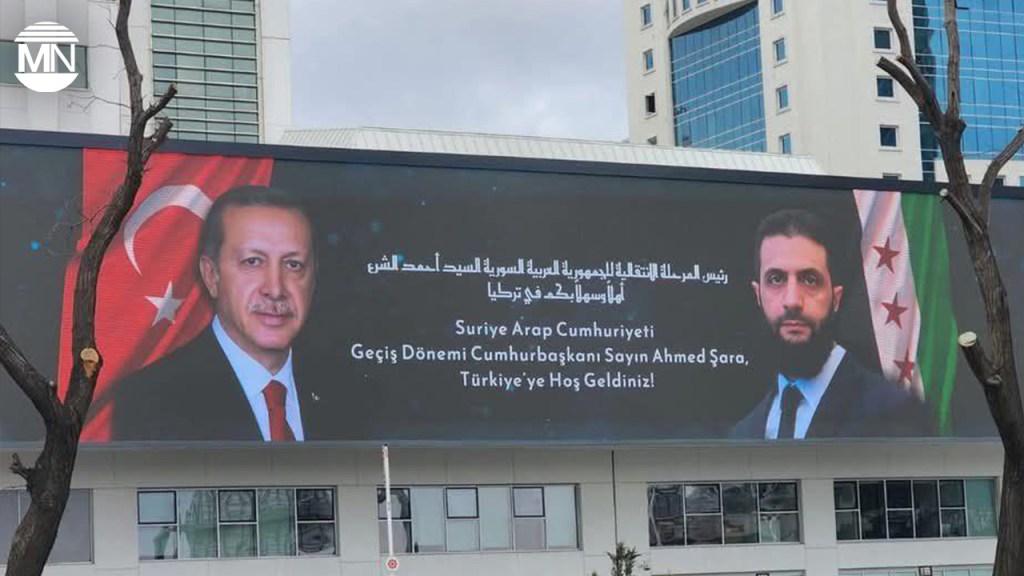
The Syrian Observatory for Human Rights (SOHR), a UK-based monitor, has documented the violent deaths of nearly 10,000 people in Syria since Western-backed Abu Mohammed al-Jolani, once affiliated with al-Qaeda and Daesh, was installed as president in Damascus.
The SOHR reported on Thursday that “due to ongoing violence by local and foreign militants,” at least 9,889 people had been killed since 8 December 2024, the day Damascus fell under the controversial rule of Hay’at Tahrir al-Sham (HTS) militant group.
The SORH said that 7,449 civilians were among the victims, including 396 children and 541 women.
It also stressed that there has been no accountability for killings carried out by members of HTS-affiliated armed factions.
This is while “in some cases, perpetrators are being covered up and facts are being distorted.”
The SOHR noted, for example, that the fact-finding committee formed to investigate the massacre of roughly 1,600 Alawite civilians in Syria’s coastal regions in March “did not provide results consistent with the facts.”
This happened while HTS-led forces and affiliated factions were carrying out new massacres of Druze civilians in Suwayda.
At the same time, pro-HTS media campaigns have been launched to deflect from the massacres by calling Alawites “remnants” of the former government of President Bashar al-Assad.In many videos posted online, HTS-affiliated militants regularly refer to both Alawites and Druze as “pigs” before executing them in their homes and on the street.
The UK-based monitor stated as well that thousands of detainees – who have not had a proper trial or been allowed to appear before a judge – remain in prison.
Among the detainees are people arrested after the fall of former President Assad, and others who were arrested during raids or at security checkpoints.
Many of these detainees have no clear charges against them and are being arbitrarily detained without due process.
Media reports earlier said that families of kidnapped civilians renewed calls for HTS authorities to reveal the fate of young Alawite men taken from their homes without charges during the massacres on the coast in March.
The missing detainees are from the villages of Hmeimim, Bustan al-Basha, Al-Qabo, and Al-Sanober.
Families said activists say that armed groups stormed houses and took the young men to an unknown location without explaining the reasons or issuing official arrest warrants.
Since then, HTS-led authorities have provided no information about their fate despite repeated demands from their families.
The tragic report comes after several recent incidents of violence targeting religious minorities, including massacres of Alawites along the country’s coast, clashes with the Druze community in the south and a bombing at an Orthodox church in Damascus.
Since December last year, Jolani’s security forces have gone on a killing spree targeting Syria’s minority groups.
The massacres have raised concerns for the safety of religious and ethnic minorities in the country.
According to several reports, Syrian forces, dominated by the HTS and other militant groups, have continued to carry out sectarian killings, kidnappings, and persecution across Syria, targeting Alawites and other minorities.
The HTS militant group seized control of Damascus on December 8, 2024, culminating a swift offensive that had begun in the northwestern province of Aleppo just two weeks earlier and ultimately brought an end to President Bashar al-Assad’s 24-year rule.
The HTS administration has since been involved in flagrant violations of human rights in Syria, particularly against minorities, drawing widespread condemnations from the international community.
The Druze minority and Alawite community had a history of supporting the Assad government and standing against Israeli occupation and expansionist policies, including in the occupied Golan Heights.
The UK and EU states have been gradually lifting Syria sanctions since the start of this year.
After the collapse of the al-Assad government last December, Jolani was widely praised by the Western media. An article in the UK’s Telegraph described his armed group, the former al-Qaeda affiliated HTS, as “diversity-friendly militants.”
US President Donald Trump recently announced a decision to lift all sanctions against the al-Jolani administration in exchange for normalizing ties with Israel.
Jolani has assured the US-led Western countries that Syria will “normalize relations” with Israel, recognize the regime, and exchange ambassadors by the end of 2026.
The HTS-led regime will reportedly hand over the occupied Golan Heights to Israel as part of a looming normalization deal with the illegal entity.Al Masirah report
-
zion*st Enemy Expands Aggression on Lebanon as Government Mulls Hezbollah Disarmament
zion*st occupation strikes left five martyrs and 10 injuries in less than 48 hours.
zion*st enemy escalated Thursday its aggression on Lebanon, launching air raids on Anjar and Baalbek and claiming several martyrs.
The Zionist escalation came while the Lebanese government was discussing all the means of disarming the Resistance and yielding to the US-Saudi pressures.
During its session, the Lebanese government approved the objectives of the US proposal which do not give Lebanon any guarantee regarding the halt of the zionist aggression.In details, the Lebanese ministry of public health announced that zionist drone strike on a car in Kfardan, west of Baalbek, left one martyr.
The ministry also revealed that a Zionist drone attack on a car on Anjar-Masnaa highway left five martyrs, including two Syrians and three Lebanese, as well as 10 injuries.
Source: Al-Manar English Website
-
Massive gatherings of Hezbollah and Amal supporters to protest the government decision on Resistance arsenal
The Lebanese government approved the objectives of the US proposal submitted by the envoy Thomas Barrack pertaining to the ceasefire agreement, according to the Information Minister Paul Morcos who addressed the reporters after a stormy session.
Morcos claimed that the US proposal stipulates the withdrawal of the zionist occupation forces from the positions they still hold in South Lebanon, the support for the Lebanese Army, and the dismemberment of the non-governmental parties.However, a detailed study of Barrack’s paper affirms that the zionist enemy is not obliged by the proposal to abide by commitments related to the withdrawal and halt of attacks.
The Lebanese cabinet had tasked on Tuesday the Army with devising a plan to confine the weapons to the state before the year end. The plan should be ready to be approved on August 31.
In objection to President Joseph Aoun’s and PM Nawaf Salam’s rejection of postponing the discussion of the US proposal and cancelling the timeline approved during Tuesday’s session, all the Shia ministers–Tamara Al-Zein, Rakan Nassereddine, Mohammad Haidar and Fadi Makki left the session.
Accordingly, the ministerial session lost its constitutional legitimacy, knowing that, during the previous session, Hezbollah and Amal Movement ministers quit the meeting.
The zionist enemy launched, during the Lebanese ministerial session aimed at disarming the Resistance, two air raids on Baalbek and Anjar, killing six civilians and injuring 10 others.
Source: Al-Manar English WebsiteHezbollah and Amal ministers withdraw from Lebanese cabinet session on the issue of weapons.
Al-Manar correspondent:
“The reason for the withdrawal of the Shia ministers is the government’s failure to amend its decision, cancel the timeline, and its insistence on discussing the US proposal.”Supporters of Hezbollah and the Amal Movement take to the streets in various Lebanese towns and cities, including Beirut and areas in south Lebanon and the eastern Bekaa region, in protest against the cabinet’s decision on the resistance’s weapons.
https://t.me/thecradlemedia/40703?single
-
Subscribe
Subscribed
Already have a WordPress.com account? Log in now.
 Nascent Yemen