-
Afghanistan unveils 5-year plan to replace poppy farming, close chapter on US-era drug economy
The Taliban-led government has approved a five-year program to replace poppy cultivation with sustainable crops, marking another blow to the US-fueled heroin trade that flourished during Washington’s two-decade occupation of the Asian country.
In a statement on Monday, Afghanistan’s ministry of agriculture announced a five-year national plan to replace poppy cultivation with sustainable and legal farming alternatives, aiming to support nearly 150,000 farmers with $71 million in funding.
“This plan is designed to provide legal and sustainable economic opportunities for farmers in the sectors of agriculture, livestock, natural resources, and irrigation,” Sher Mohammad Hatami, spokesperson for the ministry, announced.
The initiative, which promotes crops such as saffron, cotton, wheat, and asafoetida, also includes programs for orchard development, livestock expansion, irrigation improvements, and farmer training.
According to Afghan officials, the goal is to provide farmers with stable livelihoods after the Taliban’s ban on poppy cultivation in 2021, when the armed group took over Afghanistan following a chaotic US military withdrawal.
For decades, Afghanistan was the world’s largest producer of opium poppies, the raw material for heroin, for consumption in Europe and elsewhere. Poppy farming had surged during the 20-year US occupation, when drug lords tied to the CIA and the US-backed Afghan government flourished under Washington’s watch.The new policy comes as Afghan farmers say the poppy ban has left them struggling to survive and are calling for genuine support to transition to alternative crops.
“We were forced to grow this crop, and now the government doesn’t help us even once a year,” said Barat, a farmer from Badakhshan told the Kabul-based TOLO News.
Azim, another farmer from Badakhshan, also said that they “want support in finding alternatives to drug cultivation, because farmers in this province are in need.”
The US and its allies, under the pretext of a “War on Terror,” invaded Afghanistan in 2001 not only to install a puppet regime but also to revive the lucrative narcotics trade that funneled billions into Western financial systems.PressTV report

An Afghan man works on a poppy field in Nangarhar province, Afghanistan, April 20, 2016. (Photo by Reuters) -
Sudan’s unseen genocide: El Fasher carnage turns spotlight on UAE-zionist colony nexus
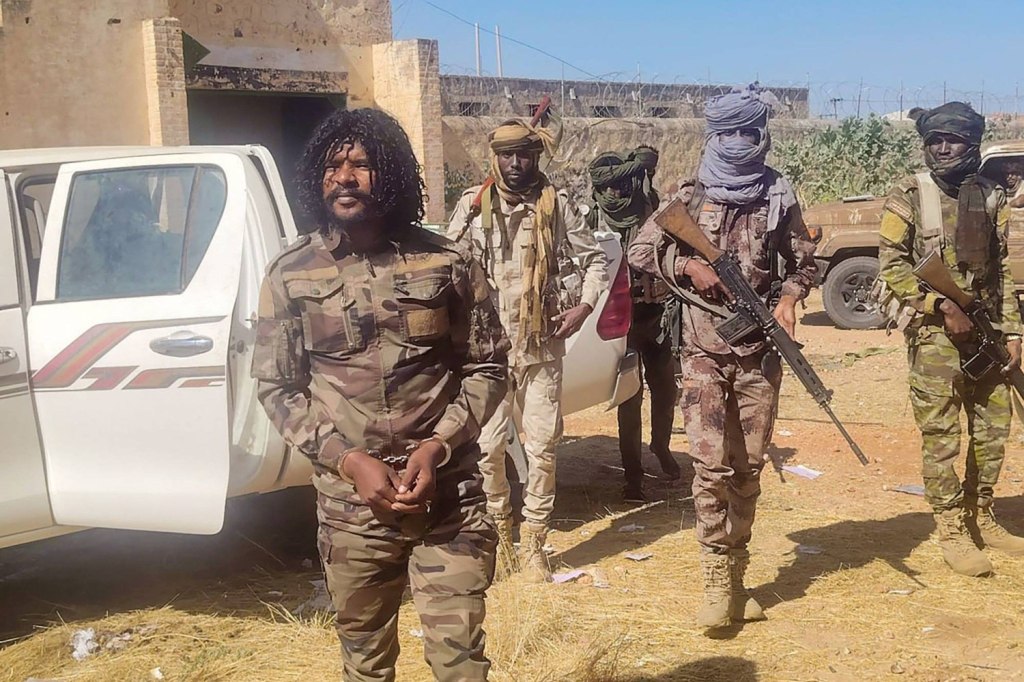
Shocking images of brutal killings and massacres of thousands of civilians in El Fasher, western Sudan, toward the end of October, appear to have awoken the world to a largely under-reported genocide ongoing for more than two years.
The horrific reality of an escalation in the gruesome war became evident as satellite images revealed the scale of the atrocities. Victims included women, children, and the elderly.
Though Sudan has been engulfed in one of Africa’s bloodiest wars since April 2023, much of the world, including African countries, has opted to remain unmoved.
This allowed the painful suffering of millions to endure while the battle waged by the Rapid Support Forces (RSF) led by Mohamed Hamdan Dagalo (Hemedti) has turned the country into a hellhole of death and destruction.
Reports indicate that as of late 2025, the war in Sudan has killed tens of thousands of people and displaced over 12.6 million Sudanese, making it the world’s largest displacement crisis today.
Tragically also the health and economic systems have also completely collapsed, and the capital, Khartoum, remains divided between rival forces.
Militias dominate Darfur and Kordofan, while the army struggles to maintain control in the east and the Red Sea ports.
However, if the layers of convoluted information are stripped of propaganda, we find that underpinning this grim scenario are regional and international actors reshaping the architecture of governance and control.
It extends to reshaping the balance of power in the Horn of Africa and, not surprisingly, involves Israel and the United Arab Emirates (UAE).Haaretz noted in August 2025 that Israel was exploiting Sudan’s war to justify military expansion in the Red Sea under the banner of “protecting global shipping lanes from Houthi threats.”
Haaretz also reported that Israel has leveraged the crisis to deepen its political footprint in
Ethiopia and Eritrea, as part of its broader plan to contain Iranian influence extending from Tehran to Sana’a and Khartoum.
According to a study in Tehran Times, Tel Aviv’s growing engagement in Sudan cannot be separated from its mounting anxiety over Yemen. Since the Yemeni government, led by the Ansarallah resistance movement, seized control of Yemen’s western coast, the balance of deterrence in the Red Sea has shifted decisively.
It cites a report by Israel’s Institute for National Security Studies (INSS), which claims that Houthi control of the Bab al-Mandeb Strait since 2021 has “redefined the Israeli maritime threat,” as Yemeni missiles and drones struck Eilat and disrupted Suez Canal shipping routes.
Israel has begun treating the Red Sea as a primary security arena, second only to the Mediterranean. Within this evolving strategy, Sudan functions as a forward buffer zone.
“With the US and UAE active in East Africa, Tel Aviv has found a convenient pretext for expansion, cloaking its military buildup in the rhetoric of international maritime security. The chaos in Sudan has become both a justification and a cover for Israel’s growing Red Sea presence”.
Against this background, the latest series of massacres by the RSF coincides with the revelation that documents seen by the UN show that UK military equipment exported to the UAE has been found in the hands of the RSF.
Reports by Campaign Against Arms Trade (CAAT) confirm that there has been overwhelming evidence over the past two years of UAE arms supplies to the RSF, but this is the first time UK equipment has been found in Sudan via the UAE.The findings have again prompted scrutiny over Britain’s export of arms to the United Arab Emirates (UAE), which has been repeatedly accused of supplying weapons to the paramilitary RSF in Sudan, as per media reports.
During April 2025, Sudan held hope that the International Court of Justice (ICJ) would make a finding against the United Arab Emirates (UAE), which it accused of being complicit in acts of genocide by arming and aiding the paramilitary Rapid Support Forces (RSF).
The case, formally titled Application of the Convention on the Prevention and Punishment of the Crime of Genocide in Sudan (Sudan v. United Arab Emirates), was initiated when Sudan filed an application instituting proceedings against the UAE.
Regrettably, the ICJ rejected the application, saying it “manifestly lacked” jurisdiction to rule on the case and threw it out.
Failure by Africa’s leaders and institutions, as well as impotency by international forums such as the UN and the ICJ, has resulted in the killings of at least 150,000 people, forced more than 12 million to flee their homes and left nearly 25 million facing acute hunger.PressTV report
International Criminal Court: Atrocities in El Fasher may amount to war crimes and crimes against humanity in Sudan
https://almanar.com.lb/article/315877/?s=tg -
AI-powered drones used in Gaza genocide monitor US cities: Report
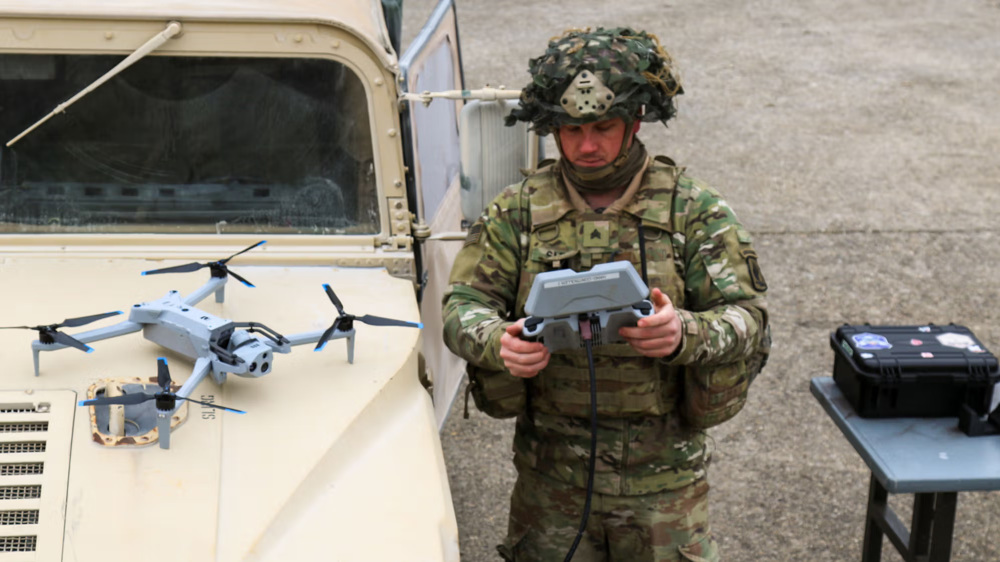
AI-powered quadcopter drones deployed by the Israeli regime’s armed forces to commit genocide in Gaza have been reportedly operating over American cities, surveiling protesters and automatically uploading millions of images to a centralized evidence database.
A report published by the Grayzone news outlet on Sunday reveals that AI-powered drones manufactured by a company called Skydio are monitoring the majority of cities in the US.
According to the report, Skydio provided the original drone models to the Israeli armed forces immediately after the regime launched its genocidal assault on Gaza on October 7, 2023, during which it killed at least 68,858 Palestinians and wounded 170,664 others, most of them women and children.
The Israeli regime extensively deployed the drones in its attacks on Palestinians, sending operational data back to Skydio to refine the technology.
Skydio maintains an office in the occupied Palestinian territories and partners with DefenSync, an Israeli military drone contractor that acts as an intermediary between drone manufacturers and the regime’s armed forces.
The company has also raised hundreds of millions of dollars from Israeli-American venture capitalists and funds extensive investments in the Occupied Lands.
Since 2023, Skydio has transformed from a relatively obscure startup into a multi-billion-dollar conglomerate and the largest drone manufacturer in the US.
The report states that Skydio now holds contracts with more than 800 law enforcement and security agencies across the country, up from 320 in March last year as its drones are being deployed hundreds of times daily to monitor citizens in towns and cities nationwide.
Nearly every major American city has signed a contract with Skydio in the past 18 months, including Boston, Chicago, Philadelphia, San Diego, Cleveland, and Jacksonville.In Miami, Skydio drones are reportedly being used to surveil protesters and students, while in Atlanta, the company has partnered with the Atlanta Police Foundation (APF) to establish a permanent drone station within the new Atlanta Public Safety Training Center, also known as the Cop City.
Detroit recently spent nearly $300,000 on 14 Skydio drones, according to a city procurement report.
A spokesperson for the New York Police Department (NYPD) recently told a drone news website that the NYPD launched more than 20,000 drone flights in less than a year, which translates to around 55 drone launches per day.
Last month, US Customs and Border Protection (ICE) purchased an X10D Skydio drone, which can automatically track and pursue a target. ICE has acquired 33 of these drones since July.
The AI system powering Skydio drones relies on Nvidia chips and allows them to operate without human control.
The drones are equipped with thermal imaging cameras and can function in GPS-denied environments. They can reconstruct buildings and other infrastructure in 3D and reach speeds of more than 30 miles per hour.PressTV report
-
UPDATED: Unabated zionist aggression on southern Lebanon

Two martyrs and seven injured following two separate zion¿st strikes in Lebanon. One martyr and seven injured resulted from a strike targeting the town of Duwayr. A second martyr fell after a zion¿st drone targeted a motorcycle in Aita Al-Shaab. Glory to the martyrs.
https://t.me/PalestineResist/83328?single
A drone strike targeted a bulldozer near the health authority center in Khiam, southern Lebanon. The Lebanese Ministry of Health reports one killed and 7 injured in the zionist drone strike on Dweir, southern Lebanon. 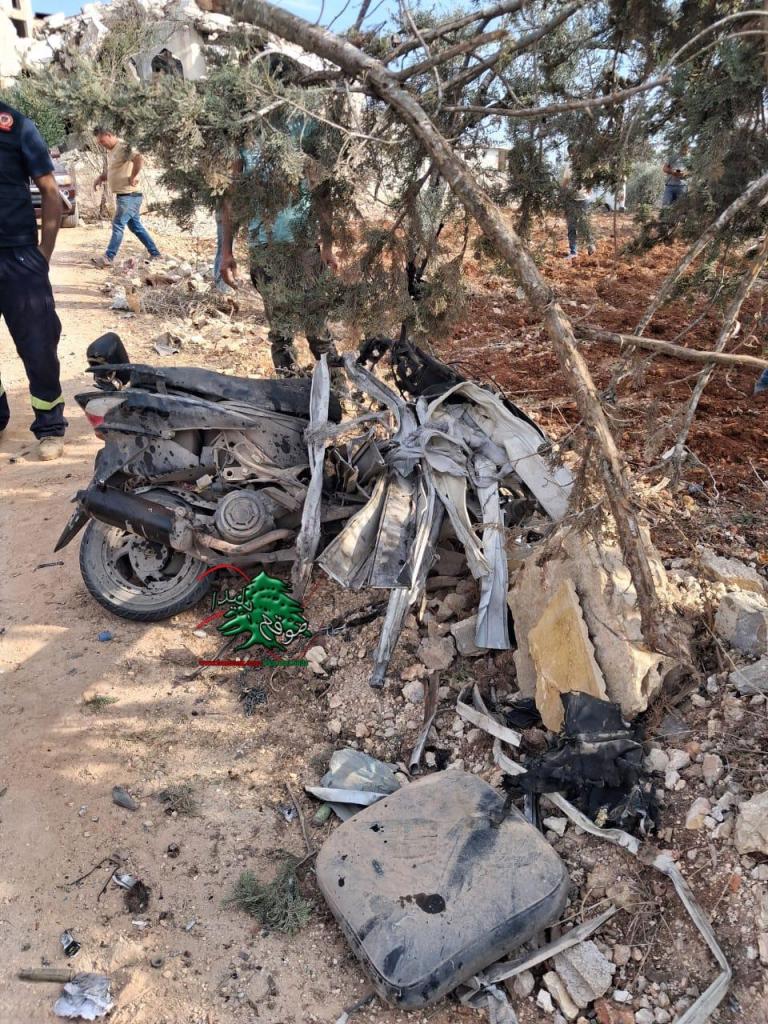
One killed in a zionist drone strike that targeted a motorcycle in the town of Aita al-Shaab, southern Lebanon.
https://t.me/thecradlemedia/45515zionist surveillance balloon was spotted flying over the village of Khiam in southern Lebanon.
zionist aerial aggression targeted several villages in southern Lebanon on Sunday.
zionist warplanes launch fresh aerial aggression targeting Wadi Zefta area in Nabatieh, south Lebanon
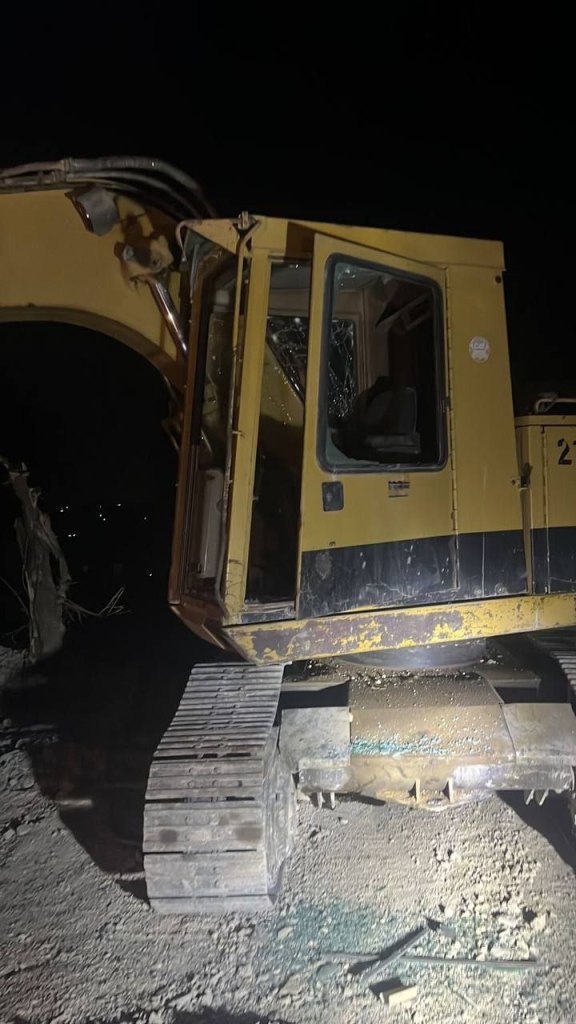
A drone strike targeted a bulldozer near the health authority center in Khiam, southern Lebanon. -
How Turkey dries out Arab neighbours by exploiting the Euphrates River on occupied Kurdish land
Turkiye has built multiple dams allowing it to limit the flow of water desperatedly needed to keep Iraq’s rivers from drying up.Iraq and Turkiye plan to sign an agreement regarding the joint management of water resources, Iraqi News Agency (INA) reported on 2 November, following a meeting between the two countries’ foreign ministers in Baghdad.
“The main topic of the Turkish Foreign Minister’s (Hakan Fidan) visit was about water. We held extensive meetings in Ankara, and we reached understandings that were turned into a document, which will be signed within hours,” stated Iraqi Foreign Minister Fuad Hussein during a joint press conference.
The Iraqi Foreign Minister added that “the first agreement of its kind between Iraq and Turkiye will regulate water management and relations between the two parties in this field.”
“We will sign the first water agreement between the two countries with Iraq, and we hope that it will open the door to the development of Iraqi water infrastructure,” Fidan stated, while thanking Iraqi Prime Minister Mohammed Shia al-Sudani.
In May 2025, Iraqi Minister of Water Resources Awn Dhiab Abdullah announced an agreement between Iraq and Turkiye to release 500 cubic meters per second of water from the Euphrates River each day.
Abdullah explained during a press conference that joint committees with Turkiye and Iran are continuing to work to ensure Iraq’s water quotas.
The minister pointed to “Iraq’s commitment to the framework agreement with Turkiye, which includes the implementation of infrastructure projects in the irrigation sector and ensuring the continuity of water releases.”
On Saturday, Iraq’s Parliamentary Committee on Agriculture and Water warned that the country is facing an environmental crisis, including worsening drought, water shortages, and rising pollution levels, which pose a direct threat to Iraq’s food and social security.
Ankara has built several massive dams on the Tigris and Euphrates rivers, causing water levels downstream in Iraq to drop significantly in recent years.
Baghdad has long accused Turkiye of unfairly withholding water flowing to Iraq, which relies heavily on the rivers for agriculture and everyday use.
Iraq’s Ministry of Water Resources has predicted that unless urgent action is taken, the country’s two main rivers will be dry by 2040.
Ankara has justified withholding the amount of water it does by accusing Baghdad of wasting the resource.
The Cradle Media reportSyria, who has been deprived of his crucial water resources by the thieving zionist-Jews, too, has been massively affected by Turkey’s immoral, egocentric hogging.
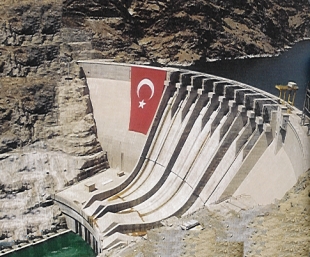
The Ataturk Dam is built on Kurdistan’s soil. With that, the Turks exploit on the rights of the Kurdish. -
US debt trap: How libertarian Javier Milei is selling Argentina to Wall Street – for $82 billion
The Trump admin is propping up Argentina’s libertarian President Javier Milei with $82 billion in US dollar-denominated debt that can’t be paid, ensuring the IMF and Wall Street will control the country’s economic policies.
The United States is propping up Argentina’s failing libertarian President Javier Milei and his ultra-neoliberal “anarcho-capitalist” experiment with $82 billion in debt.
In fact, Trump basically bought Milei a victory in the October 2025 legislative midterm elections with this money. It was a successful US form of election meddling.
People in Argentina now say openly that Milei is turning their country into a “colony of the US”.
The US empire has clearly ensnared Argentina in a devastating debt trap. Milei has gleefully overseen the abrogation of his nation’s sovereignty, while cynically portraying himself as a “rebel”.
This enormous new dollar-denominated debt taken on by Milei is close to the value of all of Argentina’s exports in one year.
This new debt represents a staggering 12% of Argentina’s GDP at market exchange rates (or 5.5% of GDP measured at purchasing power parity, PPP).
This $82 billion in new debt consists of $40 billion from the Trump administration and an additional $42 billion from so-called “international financial institutions” that are in reality controlled by the US. These include:
$20 billion swap line with the US Treasury,
$20 billion in private-sector loans facilitated by the Trump administration,
$20 billion from the International Monetary Fund (IMF),
$12 billion from the World Bank,
$10 billion from the Inter-American Development Bank (IDB).
Before Milei took power, Argentina already owed $43 billion to the IMF — which was more than any other country, by far.
Argentina’s IMF debt is projected to reach 1352% of its quota by 2026, according to internal documents. 1,352 percent. That is not a typo.Hi, what are you looking for?
Search
Geopolitical Economy Report
Latin AmericaUS debt trap: How libertarian Javier Milei is selling Argentina to Wall Street – for $82 billion
The Trump admin is propping up Argentina’s libertarian President Javier Milei with $82 billion in US dollar-denominated debt that can’t be paid, ensuring the IMF and Wall Street will control the country’s economic policies.
ByBen NortonPublished3 days ago
Donald Trump with Argentina’s US-funded libertarian President Javier Milei
TwitterFacebookWhatsAppTelegramWeChatEmail
The United States is propping up Argentina’s failing libertarian President Javier Milei and his ultra-neoliberal “anarcho-capitalist” experiment with $82 billion in debt.
In fact, Trump basically bought Milei a victory in the October 2025 legislative midterm elections with this money. It was a successful US form of election meddling.
People in Argentina now say openly that Milei is turning their country into a “colony of the US”.
The US empire has clearly ensnared Argentina in a devastating debt trap. Milei has gleefully overseen the abrogation of his nation’s sovereignty, while cynically portraying himself as a “rebel”.
This enormous new dollar-denominated debt taken on by Milei is close to the value of all of Argentina’s exports in one year.
This new debt represents a staggering 12% of Argentina’s GDP at market exchange rates (or 5.5% of GDP measured at purchasing power parity, PPP).
This $82 billion in new debt consists of $40 billion from the Trump administration and an additional $42 billion from so-called “international financial institutions” that are in reality controlled by the US. These include:
$20 billion swap line with the US Treasury,
$20 billion in private-sector loans facilitated by the Trump administration,
$20 billion from the International Monetary Fund (IMF),
$12 billion from the World Bank,
$10 billion from the Inter-American Development Bank (IDB).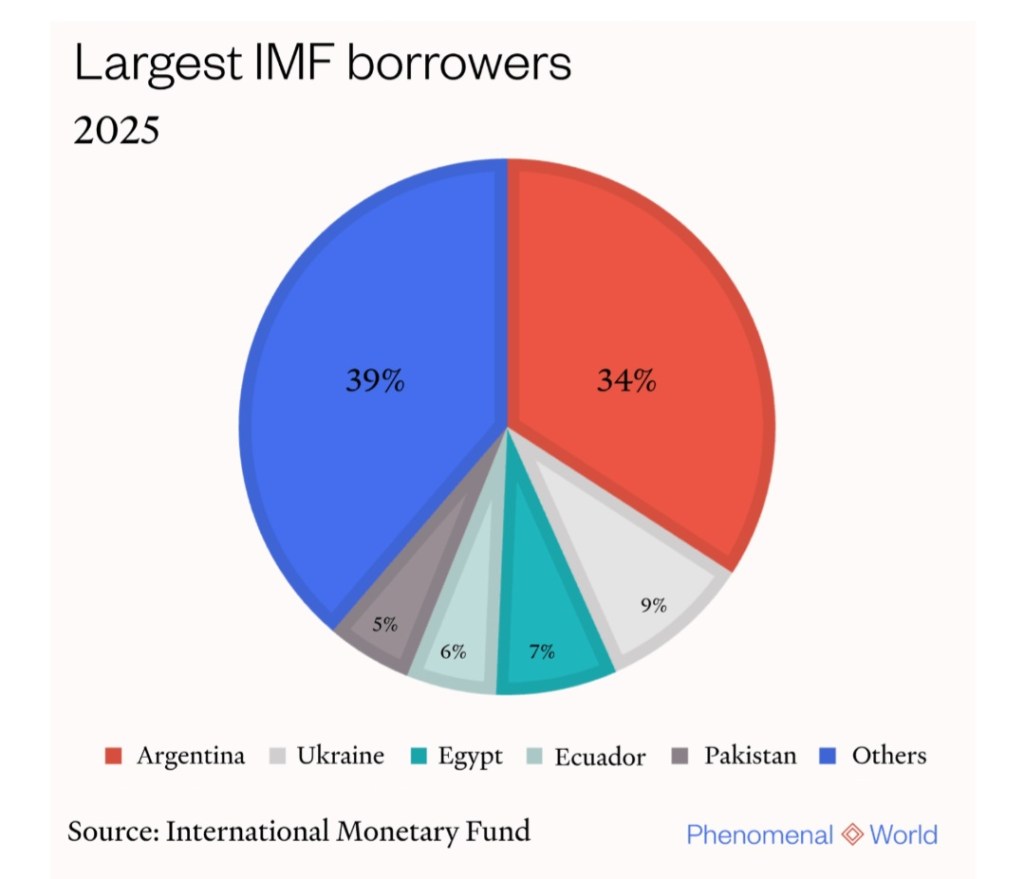
Before Milei took power, Argentina already owed $43 billion to the IMF — which was more than any other country, by far.
Argentina’s IMF debt is projected to reach 1352% of its quota by 2026, according to internal documents. 1,352 percent. That is not a typo.
This was because the first Trump administration ordered the US-controlled IMF to give the South American nation’s previous right-wing multimillionaire President Mauricio Macri the biggest IMF loan in history, $57 billion, to try to help him win Argentina’s 2019 elections — although that time the US meddling was unsuccessful.
The $43 billion that were ultimately disbursed were used by Macri and his cronies to sustain the carry trade for rich investors and provide the exit liquidity needed to facilitate capital flight for oligarchs (in violation of the IMF’s supposed rules).
It is impossible for Argentina to earn enough foreign currency to pay off this dollar-denominated debt. It is unpayable. Period. It will not be paid. (And it should not be paid; it is politically motivated, odious debt.)
However, this debt taken on by Milei and Macri — and by the JPMorgan veterans who ran their Ministry of Economy — will guarantee that the US-controlled IMF will govern Argentina and control its fiscal policies for the foreseeable future.
The US empire is doing to Argentina what it did to its colony Puerto Rico, with its notorious, unelected Financial Oversight and Management Board, known as La Junta, which governs the occupied archipelago without the input of the Puerto Rican people.
What this means is that there can be no real democracy in Argentina; the IMF (read: the US) will run Argentina by and for the wealthy stockholders and bondholders.
This is what Milei’s libertarian/ancap project truly represents: rule by Wall Street.Geopolitical Economy report
-
US Military Strikes Another Caribbean Vessel, Kills Three
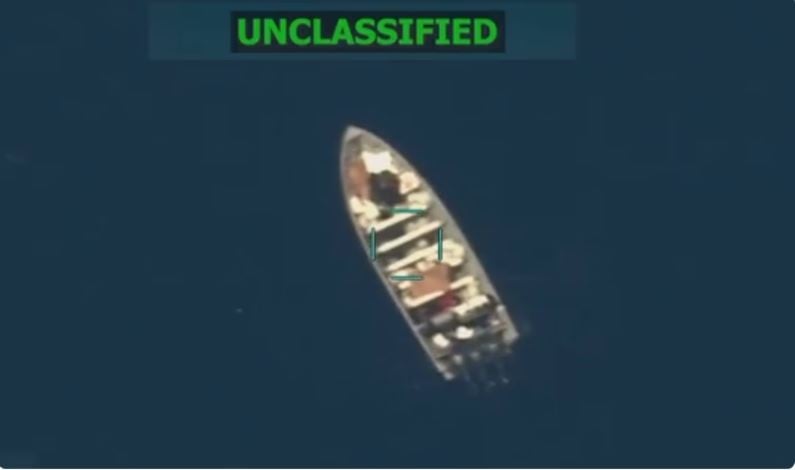
The US military forces stationed in the Caribbean have conducted yet another strike on a ship, leaving at least three men dead.
In a statement posted on the social media platform X on Saturday (local time), US Secretary of War Peter Brian Hegseth announced that the US Southern Command has carried out a deadly strike on what he claimed was a drug-smuggling vessel.
“This vessel, like EVERY OTHER, was known by our intelligence to be involved in illicit narcotics smuggling, was transiting along a known narco-trafficking route, and carrying narcotics,” Hegseth declared, without offering any evidence to substantiate the claim.
He added that the operation, “carried out in international waters,” had been launched under the direct order of US President Donald Trump.
The Southern Command has conducted at least fifteen such assaults in the Caribbean or eastern Pacific since early September, killing at least 61 individuals in total.
The frequency of these attacks has risen sharply in recent days, escalating from one strike every few weeks to two assaults on passing vessels within the past three days.
The US military escalation in the Caribbean and near Venezuelan waters began in August, involving 6,000 personnel, several destroyers, anti-submarine aircraft, battleships, nuclear submarines, and F-35 squadrons.
On October 24, the Pentagon announced the deployment of Carrier Strike Group Twelve (CSG-12) to the Southern Command in the Caribbean, claiming it aimed solely to “detect, monitor, and interdict illicit activities that threaten the security and prosperity of the United States.”The arrival of CSG-12, led by the USS Gerald R. Ford, the world’s largest aircraft carrier, will increase the number of US military personnel in the region to roughly 10,000.
On October 15, Trump stated that he had authorized CIA operations in Venezuela and was weighing the possibility of ground operations in the country.
“We have almost totally stopped it by sea. Now we will stop it by land,” Trump said, referring to what he called drug trafficking.
This growing military presence has intensified concerns about an imminent attempt by Washington to destabilize or even invade Venezuela under fabricated pretexts.
In response, the Venezuelan government has declared a national emergency, strengthened its armed forces, and mobilized the national militia to confront Washington’s “unprovoked military aggression.”
On October 24, President Nicolás Maduro, in a national broadcast, stated that the Trump administration is manufacturing “a new eternal war.”
“They promised they would never again get involved in a war, and they are fabricating a war that we will avoid,” Maduro said.
“They are fabricating an extravagant narrative, a vulgar, criminal, and totally fake one,” he continued, adding, “Venezuela is a country that does not produce cocaine leaves.”
In addition to accusing Maduro of drug trafficking without evidence, Trump has made similar unsubstantiated claims against Colombia’s President Gustavo Petro.
The US has also suspended USAID funding to Colombia on the pretext that the country serves as a major hub for narcotics entering the United States.
Officials in the Trump administration, notably Secretary of State Marco Rubio, have repeatedly indicated that Washington might expand its military operations in the Caribbean to include Colombia as well.
In a post published on X on Friday, Colombian President Gustavo Petro said his government was considering submitting a proposal to the United Nations to end US airstrikes against alleged drug-trafficking vessels in the Caribbean.
Highlighting the “illegal” nature of these operations, Petro questioned how Caribbean nations and their citizens perceive such aggression.
“Colombia must submit a proposal to the United Nations calling for an end to the aggression against the Caribbean,” he wrote.Al Masirah report
https://t.me/almanarnews/227285 -
zionist occupation kills 4 in yet another major ceasefire violation
According to the Lebanese Ministry of Health the number of martyrs that have ascended following the zion¿st raid on Kafr Rumman in Lebanon has been raised to 4 martyrs and 3 wounded.
RNN -
Everything that blinks gold
Doctors Without Borders warns of the fate of thousands of civilians in El Fasher as massacres continue.

Al Manar English report The conflict was guaranteed to endure, being fueled by the country’s resource exports, especially gold, which became even more lucrative than before the fighting began. These exports funded a constant flow of advanced weaponry for both sides, all while 25 million Sudanese people are facing acute food insecurity.
To their great misfortune, this battle for power and resources has been inflamed and sustained by the intervention of regional powers, which have turned Sudan into a proxy battleground for their rivalries. General al-Burhan, a member of the traditional ruling elite class, has received support from Egypt, under Field Marshal Abdel Fattah el-Sissi, and from Saudi Arabia. His opponent, who hails from Darfur tribes, which are often marginalized in ruling circles, has benefited from decisive military aid supplied by the United Arab Emirates, led by Mohammed bin Zayed.
The full Le Monde report
-
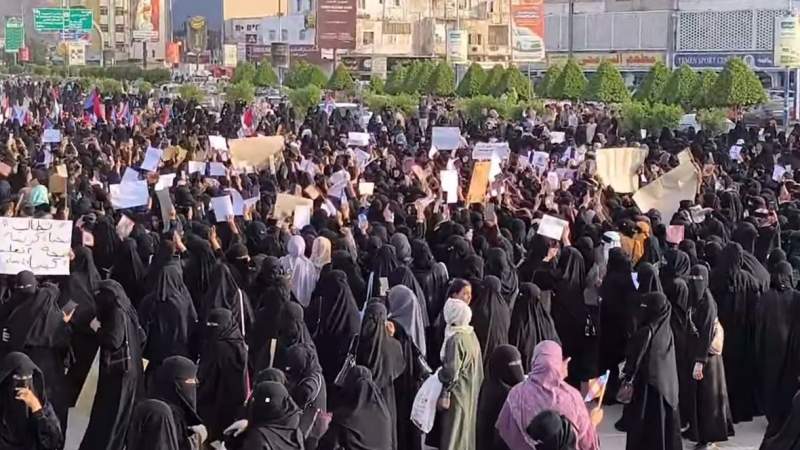
Worsening Humanitarian Crisis Sparks Unprecedented Protests in Southern Occupied Aden
Saudi- UAE occupied Aden is facing a mounting wave of public unrest as a severe collapse in living conditions and essential services fuels widespread anger against the internationally-recognized government and its local authorities.
Protests have escalated in recent days, with hundreds of women taking to the streets to demand the provision of basic necessities such as food, electricity, and potable water, alongside calls for social justice, payment of salaries, and healthcare.
According to a report by The New Arab, the deteriorating situation in Aden is the result of a decade of war, a de facto blockade, and institutional collapse. The report alleges that these factors have deepened corruption in southern and eastern provinces. It further claims that over past years, the Khor Maksar district has witnessed campaigns of assassination, arrest, kidnapping, and extortion by UAE-backed STC-aligned forces, targeting activists, journalists, and lawyers critical of the de facto authorities.
One activist participating in the demonstrations told the news site, “Our state is unbelievably corrupt… We took to the streets today as we did yesterday, and we will continue to protest until our legitimate demands are met.”
The current women-led protests follow earlier demonstrations by men, which were met with suppression and arrests. In response, local militia in Aden have reportedly formed a female police unit, trained with direct support from Abu Dhabi in recent years, to disperse women’s gatherings.
Eyewitnesses reported that these female security forces, affiliated with the STC, used violence against the demonstrators, preventing them from reaching the protest square. They also carried out pursuits and arrests in several neighborhoods in an attempt to contain the protests and prevent them from spreading.
Observers note that these developments reflect an unprecedented level of public frustration in Aden and occupied southern provinces, driven by a worsening economic crisis, the collapse of the local currency, soaring prices, and prolonged power outages.
Experts warn that the continuation of corruption and exclusionary policies by the Saudi-backed government and the UAE- backed STC could trigger wider unrest in Aden and other southern regions. This is exacerbated by a widespread public perception that officials live abroad with their families, enjoying dual privileges and foreign nationalities, while ordinary citizens are left to face poverty, unemployment, and a near-total absence of public services.
Analysts confirm that Aden, once known as the “Bride of the Arabian Sea,” has become a symbol of escalating human suffering and political turmoil, with no clear path in sight to rescue the city from collapse.
Southern governorates in Yemen have been under the occupation since the US-Saudi aggression was waged in 2015. The southern port city of Aden serves as the temporary headquarters of the Saudi-backed Yemeni government. However, power in the south is contested by the Southern Transitional Council (STC), a secessionist group backed by the United Arab Emirates (UAE), which is a key member of the coalition. This has created a fragmented and often chaotic governance structure in and around Aden.Al Masirah report
-
Subscribe
Subscribed
Already have a WordPress.com account? Log in now.
 Nascent Yemen