-
CEO of US-ZIONIST aid scheme announces resignation, citing ethical concerns
The GHF said the resignation was ‘disappointing’ and condemned those who have been critical of the controversial plan, which aims to further displace Palestinians in Gaza
Jake Wood, the executive director of the controversial Zionist-led aid distribution plan for Gaza, announced his resignation on 26 May due to the impossibility of implementing the initiative without violating “humanitarian principles of humanity.”
Wood stressed that upon assuming his role, the plan was still a “loose constellation of various ideas and concepts” which he sought to establish “as a truly independent humanitarian entity.”
“I am proud of the work I oversaw, including developing a pragmatic plan that could feed hungry people, address security concerns about diversion, and complement the work of longstanding NGOs in Gaza,” the Gaza Humanitarian Foundation (GHF) director added.
“However, it is clear that it is not possible to implement this plan while also strictly adhering to the humanitarian principles of humanity, neutrality, impartiality, and independence, which I will not abandon,” he went on to say.
Wood said he was “horrified and heartbroken” by the hunger crisis in Gaza, and urged Israel to “significantly expand the provision of aid into Gaza through all mechanisms.” He also called for all stakeholders to pursue “innovative new methods for the delivery of aid, without delay, diversion, or discrimination.” Earlier this month, Wood had been urging the UN to participate in the plan, and vowed that he “will not be a part of anything that forcibly dislocates or displaces the Palestinian population.”
In a statement, the GHF said it was “disappointed” by the resignation and criticized those who “have been more focused on tearing this apart than on getting aid in.”
Since being unveiled earlier this month, GHF has faced widespread criticism from UN agencies and other international organizations, which have argued that the plan aims to propel Israel’s goal of further displacing the people of Gaza. The UN has rejected participation in the plan.
GHF relies on the use of private US contractors who will be in charge of several distribution centers in south and central Gaza. Palestinians in other areas who have had their homes destroyed and have already been displaced multiple times will have to travel across the strip under bombardment to secure aid, while forfeiting the right to return home.
The plan also includes the use of facial recognition technology aimed at screening Palestinians in exchange for humanitarian aid, which the UN has said “contravenes basic humanitarian principles” and is designed to “reinforce control over life-sustaining items as a pressure tactic.”
Israel says the plan aims to prevent Hamas from stealing humanitarian aid – a claim which the UN says there is no evidence for. Meanwhile, Tel Aviv continues to turn a blind eye to the aid-looting gangs who operate in the strip.
GHF was conceived at the very start of Israel’s genocidal war on Gaza. While US Ambassador to Israel Mike Huckabee said when the plan was unveiled this month that it would be “inaccurate” to call it an “Israeli plan,” the project has its roots in Tel Aviv.
According to the New York Times (NYT), the details of the plan were first discussed by a group of officials and businesspeople with ties to the Israeli government, called the Mikveh Yisrael Forum, who came up with an idea that aims to bypass the UN and all other humanitarian groups in Gaza.
The plan was supposed to be launched on Sunday but was delayed due to “logistical obstacles,” according to Hebrew media reports. Israel’s Prime Minister Benjamin Netanyahu announced on Monday morning that GHF has been launched as of 26 May.
This comes after Israeli media cited suppliers as saying last week that nobody is able to fulfill the plan’s “huge” requirements.
Israel has continued to prevent sufficient amounts of aid from entering Gaza. Authorities in the strip say what is entering amounts to less than one percent of what the population desperately needs.
Meanwhile, Tel Aviv has taken control of more than 75 percent of the strip and continues to carry out indiscriminate attacks.
At least 20 people were killed on 26 May in an Israeli strike targeting a school sheltering displaced people in Gaza City. The victims, including children, were burned alive.The Cradle Media report
Palestinian children on the brink of starvation. -
Zionist colony deliberately prolongs Gaza aid crisis: US-based aid contractor
Zionis colony’s Netanyahu has no intention of alleviating the humanitarian catastrophe in Gaza, a US-Zionist businessman has said.
The businessman described the Zionist colony’s aid plan as a “deception.”
Following more than two months of Zionist colony ’s total blockade on humanitarian aid to Gaza, the regime claimed it was allowing limited shipments of assistance through US-based security contractors.
But Moti Kahana, head of the logistics firm GDC, which was initially chosen to manage the distribution of desperately needed aid in Gaza, told Radio Al-Nas that his firm was “suddenly replaced by a fake company claiming to be American, when in fact it is affiliated with the Israeli occupation.”
Calling the arrangement an “Israeli deception,” Kahana said Netanyahu’s regime “has no intention of solving the humanitarian crisis in Gaza and is working to keep chaos ongoing while people die every day.”Zionist media also confirmed on Sunday that Netanyahu selected an “obscure” and “inexperienced” US firm to manage aid delivery, without the knowledge or input of Zionist agencies.
UN agencies and experienced aid groups, which have overseen the distribution of food aid in the territory, have repeatedly warned that the regime’s plan appears to be a scheme to “weaponize” aid.
On Saturday, Hamas reiterated that despite Israel’s public claims of allowing aid into Gaza, the reality on the ground is far different. Only about 100 trucks of aid have entered recently, less than 1 percent of what is urgently required, deepening the humanitarian catastrophe for Gaza’s civilians.
According to aid organizations, dozens of aid trucks remain stranded at crossings or are rerouted onto unsafe routes by Israeli forces. Several reports suggest some convoys have been targeted by Israeli drones or intercepted by armed groups inside Gaza.PressTV report

Children sit with plastic buckets as displaced Palestinians collect water in Gaza City, on May 20, 2025. (AFP) Four-year-old Mohammad Mustafa Yassin has died in Gaza City from prolonged, severe malnutrition as a result of Zionist colony’s total blockade of the occupied Gaza Strip.
His death brings the number of Palestinians who have died from hunger-related causes to 58 over the past 80 days.
Many other children in Gaza are suffering from acute malnutrition and face the risk of dying under Zionist colony’s ongoing and barbaric siege.
The Cradle Media -
Renewed Gaza conflict drives the Zionist colony’s budget deficit to billions
Haaretz reveals that the ongoing war on Gaza created a substantial budget deficit estimated between 15 and 25 billion shekels, invalidating the original financial plans for the year.
This deficit threatens to trigger tax hikes, cuts in social services, and a deeper fiscal imbalance. The strain results from reservist mobilization, extended mandatory service, and increased spending on ammunition.
Sources report escalating friction between the Finance and Defense ministries, with Finance Minister Bezalel Smotrich accusing military officials of acting without coordination during budget talks.
Projections warn the deficit could soar to tens of billions if the Gaza conflict persists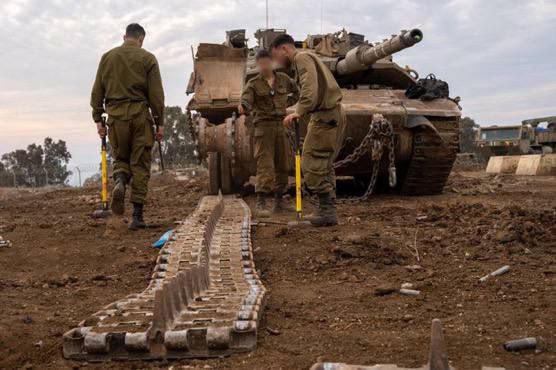
Israeli occupation soldier plays sadistic games with toys of Gaza children (video) MEMO -
Ansar Allah expresses solidarity with Lebanon & congratulates on the anniversary of the resistance and liberation
Yemen’s Ansar Allah movement reaffirmed its support for Lebanon against ongoing Zionist aggression, emphasizing that Lebanon’s strength lies in its resistance.
In a statement, Ansar Allah’s political office congratulated Hezbollah and the Lebanese people on the 25th anniversary of the resistance and liberation, marking the humiliating defeat and expulsion of Zionist forces from southern Lebanon in 2000.
The movement described Hezbollah’s 2006 victory as a strategic turning point in the Arab-Zionist conflict, renewing its commitment to Hezbollah and the legacy of fallen leaders, especially Sayyed Hassan Nasrallah.
Ansar Allah condemned continued Israeli violations of Lebanese sovereignty and called on Lebanese factions to draw strength from history, highlighting that Lebanon’s power remains rooted in its resistance and its deterrent capabilities.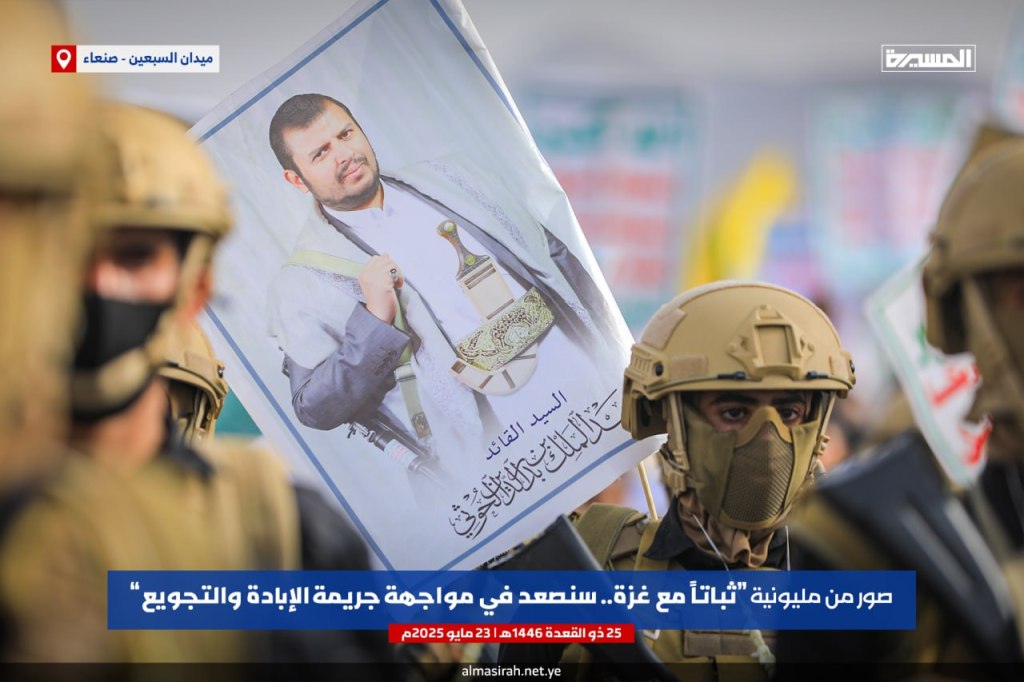
Photos of the military march of Yemeni Special Forces units that arrived at Sab’een Square during the million-man march (Steady with Gaza… We will escalate in the face of the crime of genocide and starvation) Al Masirah media -
25 years on: South Lebanon’s liberation, Khiam’s legacy, and enduring spirit of resistance
May 25, 2000, remains etched in Lebanon’s collective memory as a day of triumph and resilience—a day when the long-occupied lands of South Lebanon were finally liberated from Zionist occupation.
The people returned to their villages, Hezbollah flags fluttered triumphantly in the wind, and victory signs were raised by those who had endured decades of suffering.
What began as a modest resistance movement in 1982 had, by then, grown into a formidable force—Hezbollah had evolved from an underestimated paramilitary group into a powerful symbol of steadfastness and national pride.
This victory not only redefined the identity of southern Lebanon but also sent a resounding message across the Arab world: occupation can be overcome.
Yet this year’s Liberation Day carries a different weight. For the first time, it arrives without the visible presence of Hezbollah’s Secretary-General, Sayyed Hassan Nasrallah.
His absence on such a symbolic day raises pressing questions about the shifting dynamics of the battlefield, both military and psychological.
The shadow of Khiam: A prison of pain and resistance
To truly grasp the significance of Liberation Day, one must revisit the horrors of Khiam Prison. Originally constructed in the 1930s by the French Mandate as a military barracks, Khiam later served the Lebanese Army before falling under the control of the South Lebanon Army (SLA), Israel’s proxy militia.
Under Zionist occupation, it became one of the most notorious detention centers in West Asia.Over 5,000 Lebanese resistance fighters, supporters, and civilians—including women—were imprisoned in his dark cells. The torture methods inflicted there remain a dark stain on the conscience of international law:
Brutal beatings with cables, batons, and fists lasting for hours.
Electric shocks often applied to sensitive areas of the body, including the genitals.
Prolonged solitary confinement in pitch-black, airless cells lasting weeks or months.
Sleep deprivation aimed at breaking both body and spirit.
Threats of sexual violence, especially against female detainees.
The “punishment cell”—a damp, lightless box where prisoners were left for days in their own waste, exposed to extreme weather, and given barely enough food or water to survive.
While the SLA carried out much of the daily torment, the prison itself remained under Israeli command. As liberation approached, Khiam became one of the first powerful symbols of occupation to fall, freed two days before the final Israeli withdrawal on May 25.
That day marked not only the reclaiming of land but also the restoration of dignity for the Lebanese people.
Khiam Today: Memory and martyrdom
Though no longer funcitonal, the ruins of Khiam Prison still exist—haunted by the memories of those who passed through its gates.
In 2006, during the war between the Zionist entity and Hezbollah, enemy warplanes bombed the site, destroying large sections of the facility. Many believe this was done to erase evidence of the crimes committed within its walls.
Yet, the legacy of Khiam endures. The town itself, nestled among southern Lebanon’s rolling hills, continues to thrive in its quiet way. Known for its agriculture—olives, figs, za’atar, and dairy products—Khiam represents a rebirth, a defiant return to life after trauma.
On August 19, 2000, just months after the liberation of South Lebanon, Sayyed Hassan Nasrallah, alongside Sheikh Nabil Qawuk, visited the haunting grounds of Khiam Prison—specifically, the very cell where Suha Beshara had been held in brutal captivity.
Today, Khiam Prison stands not as a place of fear, but as a living museum of memory and resilience. Its gates, once closed to the world, are now open for all to walk through the echoes of history—to see, to remember, and to bear witness.Inside, remnants of the occupation remain untouched: rusted enemy tanks, tattered clothing, discarded armor, and the haunting cells where Lebanese detainees were once tortured. The tools of oppression have been frozen in time, no longer weapons of fear but artifacts of truth.
What was once a chamber of pain has become a classroom of remembrance. The Lebanese people, in turning this place of trauma into a monument of endurance, have transformed their suffering into strength. They did not bury their wounds, they built from them.
Khiam now stands as a solemn reminder that even in the face of brutal occupation, the spirit of resistance cannot be broken.
A Liberation Day without Sayyed Hassan Nasrallah
This year, South Lebanon’s Liberation Day feels undeniably different. The absence of Sayyed Hassan Nasrallah, who was martyred in September 2024, casts a heavy shadow over the celebrations. His voice, once the thunder of defiance and the calm of reassurance, no longer echoes through our commemorations.
And while the weight of his absence is deeply felt, it does not strip the day of its meaning. Victory must still be celebrated. In May 2023, Sayyed Hassan Nasrallah himself reminded us:
“Those who think that the battle with the Israeli enemy has ended are delusional, as there is still a part of our land under occupation. Some seek to devalue the achieved victory, and we must prevent that. All generations, all the Lebanese people, must be reminded that the victory we achieved did not come just like that; rather, it was the fruit of many years of sacrifices.”
This liberation—this victory—was not accidental. It was carved out through decades of sacrifice, strategy, and steadfastness, much of which was shaped by the wisdom and leadership of Sayyed Hassan Nasrallah.
Alongside him stood many Hezbollah commanders and countless sons of Lebanon who chose to fight for their homeland’s dignity, freedom, and future. To allow his martyrdom to eclipse the victory he helped shape would be to dishonour both his message and his memory.
He asked us to remember, to celebrate, and to protect this triumph from those who would belittle it. Even in grief, we must not let mourning drown the meaning. The resistance lives on, and the land he loved still breathes with the spirit of defiance.
Liberation Day is not only a remembrance of what was won, but also a vow to protect what was never surrendered.PressTV report

On August 19, 2000, just months after the liberation of South Lebanon, Hezbollah’s then-Secretary General, Sayyed Hassan Nasrallah, alongside Sheikh Nabil Qawuk, visited the Khiam Prison—specifically, the very cell where Suha Beshara had been held in brutal captivity. (AFP) -
The South, The Shield, and The Scapegoat
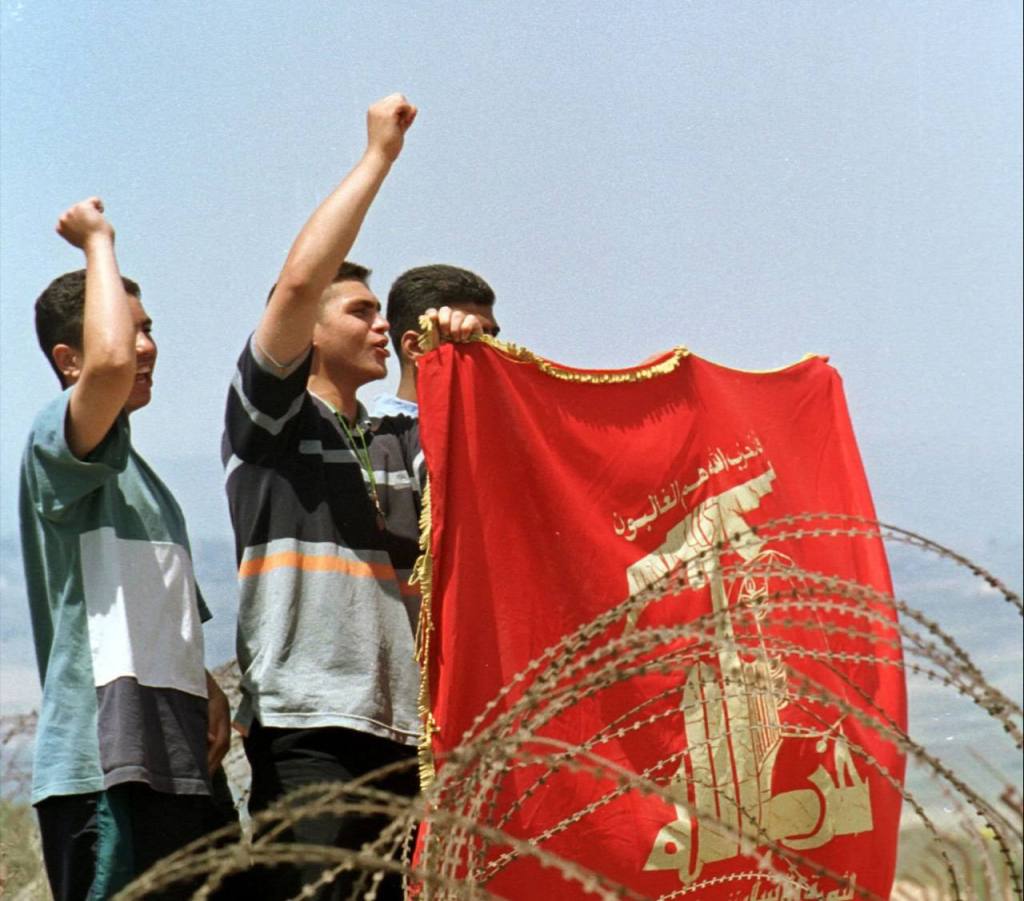
https://t.me/Jihad_Legacy/1563?single “Twenty-five years ago, on May 25, 2000 Zionist colonial forces withdrew from South Lebanon, after more than two decades of occupation. It was a historical moment, marked by victory, one that was forged in prison cells and battlefields, not parliaments.”
There is a danger in reducing Liberation to a date on the calendar, in mistaking commemoration for closure, in confusing methodology for a distant mystique. When liberation is romanticised as an achievement from the past, it is stripped of its revolutionary attribute. Today must be more than a yearly nod, it must be remembered as a refusal to surrender the narrative, and a call to wield its lessons with intent.
Twenty-five years ago, on May 25, 2000 Israeli forces withdrew from South Lebanon, after more than two decades of occupation. It was a historical moment, marked by victory, one that was forged in prison cells and battlefields, not parliaments. That day will forever be a collective second birth, because it was not granted, but rather violently and painstakingly conceived by the South and its people.
This withdrawal was never the product of UN resolutions nor international peace summits. It was the result of years of battle, solitary confinement, electrocution, psychological abuse, physical beatings, and water dousing; it was the consequence of the sacrifices of an armed resistance that confronted one of the most heavily militarized armies of the region. The people of Al-Qantara, Majdel Selm, Khiam, Alman, Adshit, Houla, Markaba, Blida, Adaysseh, Yaroun, Bint Jbeil, and all the neighboring villages, stood not as backdrops to history, but as its authors.
“Israel”, usually mythologized as invincible, suffered its first undeniable military defeat at the hands of an Arab Resistance. The words of Hezbollah’s former Secretary General, martyr Sayyed Hassan Nasrallah, still resonate to this day: “By God, this Israel is frailer than a spider’s web”. Two and a half decades on, the metaphor still applies. While the web may have adapted and grown more digitized, more covert, its fragility remains.The question now is whether Lebanon, both under constant surveillance and yet oddly considered sovereign, will find its spine as its southern villages remain a frontline. But the battleground is no longer strictly military. Today’s resistance unfolds across cultural, economic, and social dimensions. Today’s resistance is a matter of survival, and of preserving identity.
As municipal elections proceeded this May, under a so-called ceasefire, Israeli surveillance drones – MK, aka “Em Kamel” – still hover. From Beirut, to Beqaa, to Mount Lebanon, from North to South; Em Kamel never blinks. And Israeli soldiers remain entrenched in at least five strategic points in the South, still promoting their claims of defense, while asserting control.
The South 2025 may no longer face Merkava tanks, but it now confronts a different arsenal, from surveillance to cultural erasure, from the chokehold of economic siege to the manipulation of narratives and censorship – but the defiance remains the same. And, commemoration must not come at the cost of defiance. Because any tribute that fails to defy occupation can slip into becoming a distraction from it, a sort of normalization towards all violation acts, especially today.
After all, Lebanon has always been entangled in every iteration of Israel’s regional colonial ambitions: from Operation Litani in 1978 to the 1982 invasion, from the Sabra and Chatila massacres to Operation Grapes of Wrath in 1996, from the July war of 2006 to the ongoing devastation following October 2023’s al-Aqsa flood. To treat May 25 as a trophy is to diminish the urgency of the ongoing fight, to detach it from this continuum. Because the truth is, May 25 was not a gift. It was not the endpoint. It was, and still is, a debt, and the South is still bearing the costs of liberation: still being asked to sacrifice without consultation, to be Lebanon’s shield – and often its scapegoat – but rarely its concern.
If this day has taught us anything, it is not that armed resistance works. It is that nothing else does. Because, twenty-five years later, the lesson from Southerners who reclaimed their villages still echoes, unambiguous and unmistakable: a settler shall never feel at ease on stolen land.
Al Akhbarhttps://t.me/aayounhassoun/551 -
Hezbollah-backed lists achieve weeping victories in South Lebanon municipal-mayoral elections (video)
The supporters of Hezbollah and Amal Movement took late Saturday into streets in South Lebanon and Nabatieh to celebrate the sweeping victories of their candidates in the municipal and mayoral elections.
Despite the fact that half of the southern towns witnessed unanimous wins by acclamation which decreases the voter turnout, the South Lebanon recorded 43.3% participation rate and 36.7% of the voters in Nabatieh cast their ballots.
In light of the ballot count process, the lists backed by Hezbollah and Amal Movement won the vote in the three towns of Aitaroun, Shaqra, Al-Sultaniyeh, Saksakiye, Baraachit, Hanin, Deir Qanoun, Froun, Dibbine and Jwayya.
A major leap of victory has been achieved by the lists by Hezbollah and Amal Movement in the two districts of Tyre and Nabatieh.
The Free Patriotic Movement announced that the list it nominated in Jezzine.
In addition to the vast election wins by acclamation in 109 out of 271 towns and villages in South Lebanon and Nabatieh governorates, the voters whose candidates engage in the municipal and mayoral election contest have been flocking into the polling stations with high turnout rates.Al Manar report
-
US Vice President Officially Admits to a Crushing Military Defeat in Yemen

US Vice President JD Vance stated in a press briefing on Saturday: “The era of American dominance over the seas, skies, and space is now over, and the United States and its military must adapt.”
Speaking at a graduation ceremony for a class of the US Naval Academy, Vance added: “We entered Yemen with a clear diplomatic objective—not to entangle our forces in a prolonged conflict with a non-state actor.”
He emphasized that US military leadership must learn to adapt to a world where cheap drones and readily available cruise missiles can inflict damage on our assets and troops.
The American magazine “National Interest” reported that the agreement to halt aggression against Yemen, announced by criminal Trump, represents a shameful military defeat for the US.
The magazine noted that US armed forces suffered several embarrassing tactical defeats during the aggression against Yemen, including a near-fatal encounter for an F-35 stealth fighter in Yemeni airspace—despite its fifth-generation stealth technology.
In a major strategic miscalculation, the Trump administration’s military campaign against Yemen in early 2025, meant to crush the Yemeni Armed Forces and assert US dominance in the Red Sea, ended in costly failure.
Initially designed as an extended, multi-phase operation involving airstrikes, targeted assassinations, and even a potential ground invasion, the campaign faltered within weeks. Despite deploying advanced aircraft, carrier groups, and billions of dollars’ worth of weaponry, the US failed to gain air superiority or disrupt Yemeni resistance, which downed multiple drones and continued maritime attacks unabated
Washington’s sudden halt of the campaign, without consulting Israel, coincided with a dramatic escalation: a Yemeni ballistic missile strike on Lod Airport in occupied Jaffa and the loss of a $67 million fighter jet. The administration announced a ceasefire mediated by Oman, effectively acknowledging Yemen’s resilience and deterrent power.Al Masirah report
-
25th Anniversary of Lebanon Liberation Victory

Illustrative image prepared by Al-Manar Website showing Lebanese southerners returning to their villages in 2000 and 2025. On the eve of the 25th anniversary of Lebanon’s victory of liberating its occupied territories from the Zionist occupation, observers may study a rich material of comparison between the situation in the Lebanese-Palestinian border area in this year and that in 2000.
The superficial and shallow observation may show an image of an absolute Israeli victory and military superiority in contrast with that of withdrawal, escape and defeat in 2000. The proponents of this view rely on the fact that the Zionist Army has kept five occupation sites in South Lebanon since the recent war in 2024 and continued its attacks on South Lebanon on a daily basis.
The heavy sacrifices made by Hezbollah, other resistance factions, and Lebanese army and public have represented a vigorous reinforcement for this claim which portrays the Israeli military performance since the 2024 war as monstrous and brutal.
However, a deeper scrutiny of the scene will conspicuously display the Israeli failures in addition to the enemy’s strengths and achievements. Undoubtedly, the Zionist enemy managed during the latest war on Lebanon to deal a major blow to the Resistance Party’s command and military capabilities.
The evaluation of the outcomes of any war always takes into consideration the two major possibilities of win and loss. Moreover, the circumstances of every confrontation can leave a huge impact on the outcomes. Finally, what is unsaid about the war may include the bulge of data about the future scenarios of the conflict between the two sides.
In other words, Hezbollah , a resistance movement, as any other military movements or armies, is exposed to the two possibilities of win and loss in every confrontation. Besides, the circumstances of the 2024 confrontation can be to a certain extent imposing certain directions for the battle. The main part of the data of the war could be unsaid.
Hezbollah warriors engaged in a one-year battle in support of Gaza against the Israeli genocidal war, striking the Zionist settlements and military houses in northern Palestine, which displaced over 100K settlers.Moreover, Hezbollah managed in 2024 to make considerable feats that, if highlighted, can show the deep faith, unmatched bravery and professional skills of the fighters who repelled the invasion of around 80 thousand Zionist soldiers. The Israeli occupation army failed to occupy more than two or three kilometers of the border area after a 66-day military confrontation. In the military sciences, this is considered as a great achievement.
Hezbollah missiles and drones kept hitting Tel Aviv and all the Zionist settlements till the last day of the war, which imposed on the enemy to request the ceasefire on November 27. This means that the military capabilities are still ready to be used effectively, when needed.
Regarding the new de facto that the Israeli enemy is trying to enforce in South Lebanon, observers have realized that the Israeli enemy is resorting to the outdated choice of occupation and aggression in South Lebanon. That choice failed in 2000 and 2006 and would prove its failure as of 2024 war.
It is the Israeli enemy that returned to failed scenarios; however, the Lebanese Resistance has always proved to be capable of deterring the aggression, expelling the occupation and protecting the nation from any Zionist rage. The current stage may require a certain extent of patience, yet it not unlimited as Secretary General Sheikh Naim Qassem said.The Master of the Umma martyrs, Sayyed Hasan Nasrallah once quoted an Israeli official as saying that Hezbollah fighters are there on the borders menacing ‘Israel’ although they may be unseen.
Al Manar report
-
Gaza Faces “Mass Thirst” as Water Systems Near Total Collapse
“We are on the brink of a mass thirst crisis,” warned Gaza Municipality spokesperson Husni Mehanna. “The situation could spiral out of control at any moment.”
Hundreds of Palestinian families have been forced to flee to Gaza City’s seashore where basic services, particularly water, are nonexistent. The massive destruction of infrastructure in southwestern parts of the city has left these areas virtually uninhabitable.
The crisis has forced residents to dig hundreds of random cesspits for sewage disposal, creating a serious threat of groundwater contamination and disease spread. Officials fear that water shortages in displacement areas will dramatically worsen the already severe humanitarian situation, especially as famine spreads throughout the region.
“We are facing a complete collapse of essential services,” Mehanna stated. “This threatens to escalate the environmental and humanitarian catastrophe due to dwindling fuel supplies and Israel’s deliberate targeting of vital infrastructure.”The Gaza Municipality has warned of an imminent and total collapse of the city’s water and sewage systems due to dwindling fuel supplies and the Israeli targeting of vital infrastructure. The crisis threatens to trigger a phase of “mass thirst” and a widespread health and environmental catastrophe affecting hundreds of thousands of Palestinians.
The municipality estimates that hundreds of thousands of residents and displaced people sheltering in central and western Gaza City are at serious risk. With temperatures rising and displaced populations packed into small areas, the potential shutdown of sewage treatment plants due to fuel shortages could lead to wastewater flooding residential neighborhoods.
Since October 7, 2023, the ongoing Israeli aggression has severely damaged the Gaza Strip’s water infrastructure. According to previous data from the Gaza government, more than 115,000 meters of water networks have been damaged, 63 wells have gone out of service, 4 major water tanks have been destroyed, and the only desalination plant in the northwest of Gaza City—which used to produce about 10,000 cubic meters of water daily—has shut down.
Mehanna concluded by saying that Gaza Municipality urgently needs around $16 million to restart water and sanitation facilities and save the population from a crisis that could escalate into an unprecedented humanitarian disaster.
The Gaza Strip has been facing a catastrophic humanitarian and relief crisis since ‘Israel’ shut down all crossings on March 2, blocking the entry of food, medicine, aid, and fuel, while intensifying its genocidal campaign against the Palestinian population of the Strip.With full US support, ‘Israel’ has been committing acts of genocide in Gaza since October 7, 2023, resulting in over 175,000 Palestinians killed or injured, most of them women and children, and more than 11,000 missing, along with hundreds of thousands displaced.
‘Israel’ has maintained a blockade on the Gaza Strip for 18 years, and around 1.5 million Palestinians out of 2.4 million in the Strip are now homeless after their homes were destroyed in the genocidal war. The Strip is also suffering from severe famine due to Israel’s closure of crossings to humanitarian aid.Al Manar report
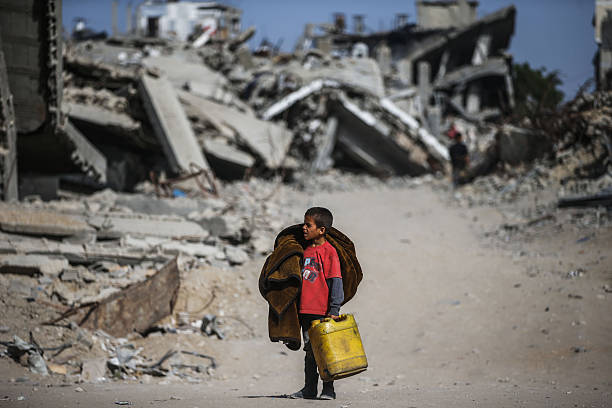
Palestinians in the Jabalia refugee camp leave their homes and move to areas they believe to be safer due to ongoing heavy attacks by the IOF on May 05, 2025. (Photo by Mahmoud Issa/Anadolu via Getty Images)
-
Subscribe
Subscribed
Already have a WordPress.com account? Log in now.
 Nascent Yemen