-
Lebanon under zion¿st assault with over 15 airstrikes across the country
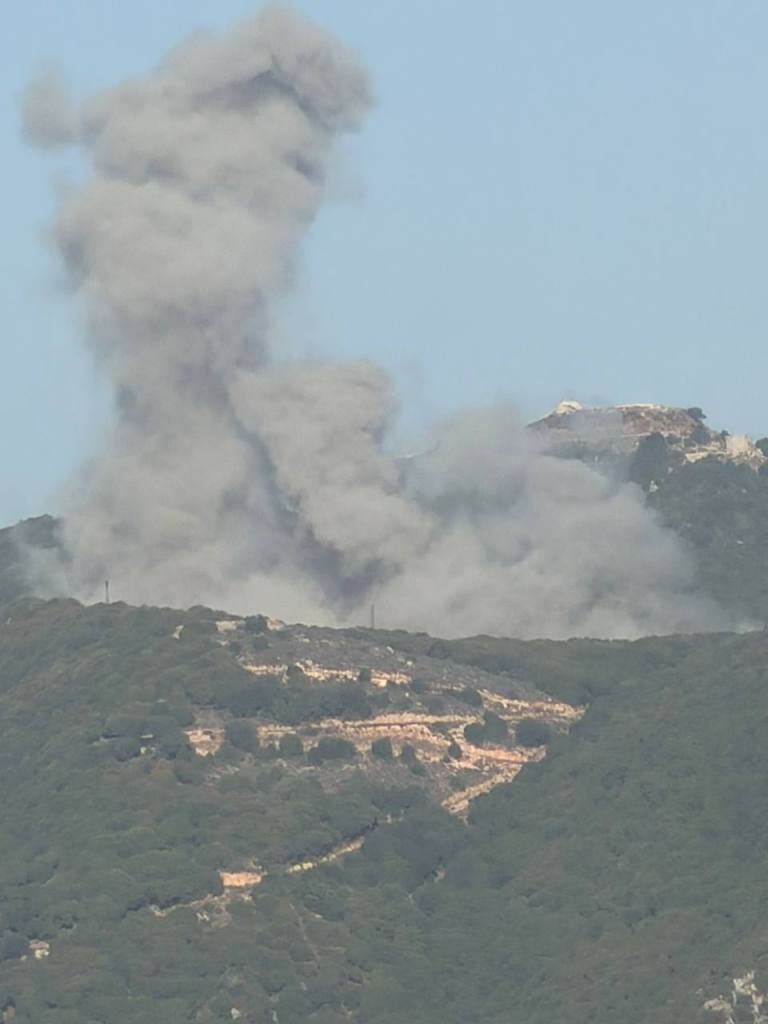
https://t.me/almanarnews/229343 Local sources in Lebanon report at least 15 zion¿st colony airstrikes on the south and east of the country so far.
zion¿st airstrikes targeted the town of Shmestar in Baalbek, Jarmaq-Mahmoudiya area, Al-Jabour Heights, the slopes of Al-Lwaiza, the city of Nabatieh, near Sajd in Jezzine, and the Naqra Valley on the outskirts of the town of Kafr Hamam, south Lebanon.
-
Fundraisers Warn of ‘Catastrophic’ Drop in Donations to Gaza Since October Ceasefire: Report
Fundraisers supporting Palestinian civilians in the besieged Gaza Strip are experiencing a “catastrophic” decline in donations since the ceasefire was announced in October, according to a media report.
Four organizers of mutual aid funds, which depend on small contributions, told the Guardian they have observed a significant drop in financial support over the past month.
Donations aimed at assisting families in temporary shelters, who are battling illness, hunger, and malnutrition, have become increasingly difficult to secure.
Megan Hall, an Australian activist managing numerous mutual aid campaigns on social media for individual families in Gaza, noted that while donations began to slow in September, they sharply decreased following the ceasefire on October 10.
During the Israeli war on Gaza, Hall said she was consistently able to send about $5,000 a week to people in the blockaded Palestinian territory. For October, she said she raised just over $2,000 across all of her campaigns.
Some fundraisers believe the decline stems from a public perception that Palestinian suffering has ended, while Hall suggests other factors are also influencing this trend. She stated, “The drop in donations is catastrophic. It feels like with the so-called ‘ceasefire,’ the world thinks Palestinians don’t need our help anymore.”
As winter approaches, many displaced individuals lack proper clothing and blankets. Activists like Hall are running low on funds to assist Gaza families.
“Mutual aid has kept people alive for two years. And now going into winter, and having been displaced so many times, many don’t even have winter clothing or blankets,” Hall noted.Paul Biggar, CEO of Tech for Palestine, pointed to algorithmic biases by leading social-media companies such as Meta against pro-Palestinian content, which hampers visibility for fundraisers outside established advocacy circles.
Some nonprofits are also reporting substantial declines in support. Gaza Soup Kitchen, which has raised over $5.8 million on GoFundMe since February 2024, saw donations plummet by 51% from September to October, despite providing 10,000 meals daily.
Mainstream humanitarian organizations, such as Oxfam GB and Save the Children UK, are also concerned about the drop in donations since the ceasefire, with Save the Children reporting a one-third decrease in social media fundraising.
Alison Griffin from Save the Children UK highlighted that while other revenue streams are stable, the urgent need in Gaza remains critical. Humanitarian organizations warn that another uncertain winter is upon the 2 million residents of Gaza.
“We market but when there’s not enough media coverage, the marketing doesn’t become cost-effective, and so it is like a self-perpetuating cycle,” said Griffin.
She said other revenue streams – from high-income and legacy donors – were holding up but stressed that the need in Gaza was high.
According to an assessment by SARI Global, cited by the World Health Organization, more than 70% of Gaza’s population is confined to parts of the territory that are exposed to rain, strong winds and coastal surges with no functioning infrastructure.
Meanwhile, the UN Office for the Coordination of Humanitarian Affairs (OCHA) said most of Gaza had been completely destroyed in Israeli aggression.
“The ceasefire means that it is quieter in terms of bombs falling on people’s heads. It doesn’t mean that overnight people’s lives became wonderful because most of Gaza is completely destroyed,” a spokesperson for OCHA said.
“Most of the agricultural land has been destroyed, most of the livestock has been destroyed and the healthcare system is decimated. And of course, the fact that people have been displaced over and over again over these two years means that their coping mechanisms have been degraded to nothing.”
Israel had opened only three of the seven border crossings, which OCHA said had limited aid distribution.
Western governments have largely supported the Israeli regime’s genocide in Gaza since October 7, 2023, which has killed nearly 70,000 Palestinians, primarily women and children.
Since the ceasefire went into effect on October 10, Israel has violated the deal by continuing to attack Gaza, killing at least 290 Palestinians, and by not allowing the agreed-upon 600 aid trucks per day into Gaza, which the United Nations has said in the past is the bare minimum amount needed.
In August, the world’s leading expert on food crises, the Integrated Food Security Phase Classification, declared a famine in Gaza.
Over 450 Palestinians, including over 150 children, have died of starvation and malnutrition in Gaza between October 2023 and the end of September, according to the Gaza health ministry.Al Masirah report

-
Lebanon endurs on its independence anniversary
zion¿st colony drone strike targeted a vehicle on the Faroun main road in southern Lebanon, killing one person.
Lebanese Ministry of Health: 331 people killed in zion¿st attacks since Nov. 2024 ceasefire deal
https://t.me/thecradlemedia/46657 Hezbollah Affirms Right of Resistance, Rejects External Dictates on Independence Day
Hezbollah underlined on Friday Lebanon’s legitimate right to defend its land and resist the occupation, as it voiced full rejection of all forms of subordination and external dictates on the 82nd anniversary of the country’s independence.
Al Manar report

-
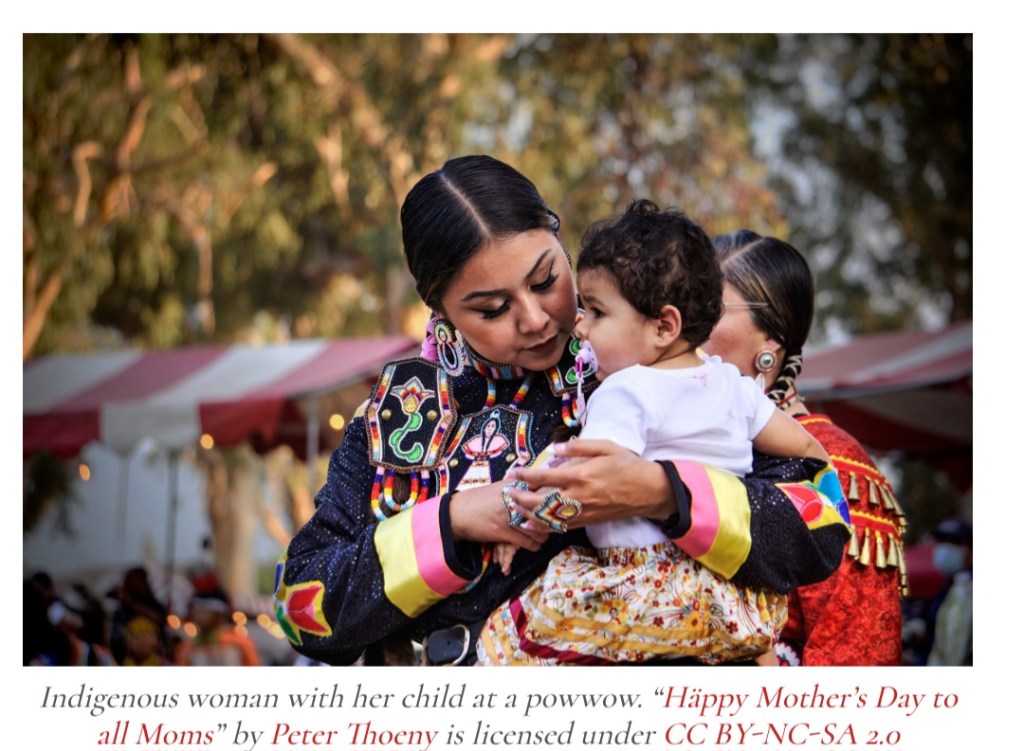
Forced sterilisation of Inuit, Métis and First Nations women in Canada
Canada has a long history of forced and coerced sterilization of Indigenous women, spanning much of the 20th century. Advocates say the practice is still happening and they want it criminalized.
“I heard other nursing staff talk about the ‘Indian problem,’ and the ‘Indian problem’ would be fixed if all the women were sterilized.”
CBC report
-
Canada ‘Posturing’ as Rights Champion Despite History of Racism
Iran has slammed Canada for posturing as a global champion of human rights, saying the North American country should be put on trial over its history of systemic racism against its Indigenous people.
In a statement released on Thursday, Iran’s Permanent Mission to the United Nations lambasted Canada after the country welcomed the adoption of an anti-Iran rights resolution it had drafted at the Third Committee (Social, Humanitarian & Cultural Issues) of the UN General Assembly.
“Spare us the sanctimonious drivel from Canada—a country with a well-documented history of thousands of Indigenous children dumped in unmarked graves, still steeped in its own entrenched structural racism—now posturing as a global champion of human rights vis-à-vis Iran,” it said.
The mission also noted that Canada would have stood trial if human rights had not been misused as a tool for political pressure.
“Had ‘human rights’ not been hijacked as a geopolitical cudgel by the usual club of serial offenders, Canada would have been the one in the dock, sweating under resolutions, not swaggering upon the stage!”
The UN’s Third Committee on Wednesday approved the draft resolution titled “Situation of human rights in the Islamic Republic of Iran” by a vote of 79 in favor to 28 against, with 63 abstentions.
Speaking prior to the vote, Iranian Deputy Permanent Representative to the United Nations Gholamhossein Darzi rejected the “politically motivated, selective, and wholly counterproductive” resolution.
He said that the allegations against Iran contained in the document are based on “unverified and selectively interpreted information.”
The resolution disregards Iran’s human rights achievements, as well as its efforts towards advancing socio-economic development and strengthening legal protections in accordance with constitutional and international obligations, he added.
The envoy further criticized the resolution for failing to condemn the flagrant violations of international law committed by the Israeli regime and the United States during their 12-day military aggression against Iran in June.
The drafters, Darzi emphasized, deliberately omitted any reference in the text to the profoundly harmful and negative impacts of unilateral coercive measures with respect to the human rights of the Iranian nation.
“We firmly believe that, were human rights not being misused as a tool for political pressure by a certain group of countries, the main sponsor of this draft—namely Canada—would itself have been the subject of resolutions in this esteemed body: for the atrocities committed against its Indigenous peoples; for its neglect of the living and economic conditions of its own citizens, and for its military support to the Israeli regime in the commission of genocide and war crimes in the occupied Palestinian territories,” he said.
Meanwhile, he concluded that the resolutions, which do not reflect the realities on the ground, “are crafted not to advance human rights, but to exert political pressure.”Al Masirah report

Indigenous women in Canada forcibly sterilized decades after other rich countries stopped – AP report Further sources
DW video
https://www.dw.com/en/canada-forced-sterilizations/video-69502372
-
West Bank Settler Violence Surges after Gaza Ceasefire: Report
Attacks by extremist zion¿st settlers against Palestinians across the occupied West Bank have increased since the Gaza ceasefire took effect last month, a report says.
The Guardian reported on Tuesday that dozens of new incidents have occurred in recent days across much of the occupied territory as “settlers stepped up a broader effort to intimidate and harm Palestinian communities.”
“It’s really bad at the moment. The settlers are operating with total impunity,” said Aviv Tatarsky, a zionist activist who has monitored settler violence in the West Bank for decades.
A concerted campaign of harassment by groups of armed and aggressive Israeli settlers comes as Palestinian farmers try to harvest their olive trees before the end of the season, the report noted.
The UN logged more than 260 attacks resulting in Palestinian casualties or damage to property in the West Bank in October alone – the highest monthly count since they began monitoring in 2006.
Records kept by the Palestinian Farmers’ Union (PFU) show incidents of violence against its members up fourfold, from three or four daily before the war in Gaza.
The most recent attacks are “not random, but deliberate efforts to undermine Palestinian rural life,” the PFU said in a statement last month.
Israeli authorities recently stopped activists and volunteers from reaching the village of Burin, where they were to assist Palestinians with their olive harvest.
Israeli authorities have repeatedly blocked such efforts.
Hanna Uihlein, a UK-based volunteer, was among a group of more than 30 volunteers from Europe and the US who were held in prison for between 36 hours and five days by Israeli authorities after being detained near Nablus last month.
All were eventually deported.
“We were there to observe and protect … We were treated as criminals and the whole experience was dehumanizing. It was also very clear from the beginning that it was strategic – to intimidate, deter and prevent any form of solidarity with Palestinian farmers,” she said.
Palestinians and human rights campaigners say Israeli authorities do nothing to control settlers in the West Bank.
Many ministers in zionist ruling coalition have close ideological and organisational ties with settler gangs, and frequently offer vocal support. Bezalel Smotrich, the hawkish minister, lives in a settlement and called in September for Israel to annex “roughly 82% of the West Bank.”
There has also been a rise in violence involving the zionist military. Palestinian health officials said on Sunday that a 19-year-old Palestinian man was killed by Israeli military fire near Nablus, the seventh person to be killed in the West Bank in the past two weeks by Israeli fire.
The total number of Palestinians killed by Israeli forces and settlers since October 7, 2023, in the West Bank, including East al-Quds, is now well over 1,000.
One in five of the victims is a child, including more than 200 boys and seven girls. The number also includes 20 women and at least seven people with disabilities.Al Masirah report
Jews seen tagging the occupied West Bank with pro-settlement graffiti during wave of settler attacks on Palestinians.
https://t.me/thecradlemedia/46582 -
zion¿st colony Devastates Gaza’s Cultural Heritage as Over 20,000 Artifacts Looted
Gaza’s historical and cultural heritage has suffered extensive damage during zion¿st colony’s genocidal war on the territory, with more than 20,000 rare artifacts missing or looted and hundreds of archaeological sites destroyed, according to Palestinian officials.
“The Israeli army has systematically and extensively destroyed Gaza’s archaeological sites as part of a policy aimed at erasing Palestinian identity,” Ismail al-Thawabteh, head of Gaza’s Government Media Office, told Anadolu on Monday.
Official Palestinian data shows that Israeli forces have fully or partially destroyed more than 316 archaeological sites and heritage buildings across the Gaza Strip. Many date back to the Mamluk and Ottoman eras, while others originate from early Islamic centuries and the Byzantine period.
Among the most significant sites hit was Qasr al-Basha, a Mamluk-era palace located in Gaza City’s Old City, built on a UNESCO heritage site that traces its origins to 800 BC.
According to Hamouda al-Dahdar, a cultural heritage expert at the Centre for Cultural Heritage Preservation in Bethlehem, about 70% of the palace was damaged in Israeli attacks.
Technicians and local workers continue to search for scattered artifacts beneath the rubble in an effort to salvage what remains of Gaza’s historical identity.
“What happened to Gaza’s heritage was not only destruction; it was organized looting,” Thawabteh said, describing the disappearance of artifacts as “a practice criminalized under international law and an assault on global cultural heritage.”
He added that more than 20,000 rare artifacts, ranging from prehistoric objects to Ottoman-era pieces housed in the palace museum, have vanished during the war.
Dahdar confirmed the disappearance of thousands of artifacts following Israeli raids and the subsequent destruction of the site.
“Each piece is historically significant and represents a chapter of Palestine’s civilizational history,” he said, calling the looting “a grave cultural crime that affects national identity and humanity’s shared heritage.”
Qasr al-Basha had previously suffered damage during earlier Israeli military aggression prior to the regime’s 1994 withdrawal from Gaza. After the withdrawal, the Palestinian Authority restored the palace and converted it into a museum featuring rare historical collections.
The palace again sustained heavy destruction during Israel’s latest offensive, which began in October 2023, along with the looting of its archaeological holdings.
Geneva-based human rights group, Euro-Med Monitor, said Israel is “intentionally destroying” archaeological and historical monuments in Gaza, and “explicitly targeting Palestinian cultural heritage.”
“Destroying and targeting historical and archaeological sites may amount to a war crime under the Rome Statute establishing the International Criminal Court, and is a clear violation of The Hague Convention relating to the protection of cultural heritage during armed conflicts,” it noted.
More than 69,000 Palestinians, mostly women and children, have been killed, and over 170,700 others wounded since the Israeli genocide in Gaza began, in constant bombardments that have reduced much of the territory to rubble.
Source: Al Masirah report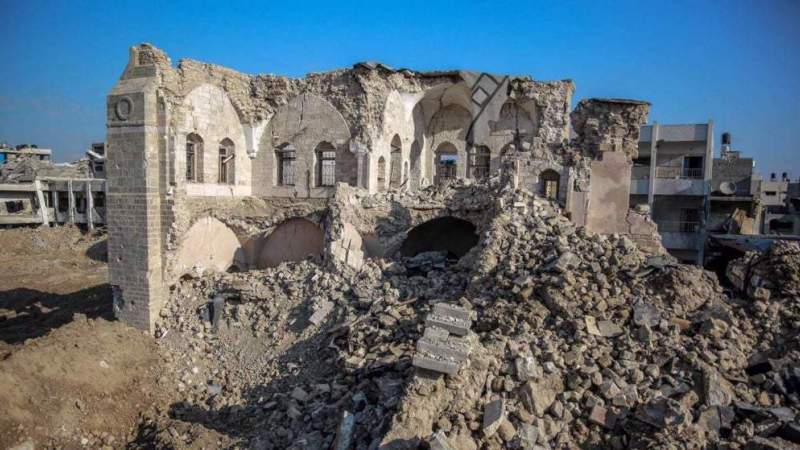
-
Lebanese lawmakers call on Gov to take action amid zion¿st-american ceasefire violations
Yesterday, the zion¿st occupation carried out repeated violations in multiple Lebanese towns, including a building in the town of Ainata southern Lebanon and on the town of Tarfalssiyah in southern Lebanon.
https://t.me/presstv/165411 Health Minister Demands Cabinet Session in South Lebanon in Response to zionist Aggression
The Lebanese council of ministers convened on Thursday at Baabda Palace to discuss and approve an ordinary agenda.
Before the session he chaired, President Joseph Aoun discussed the latest developments with Prime Minister Nawaf Salam, knowing that an Israeli drone flew intensively over Baabda Palace on Thursday.Health Minister Rakan Nasseredin called on the cabinet to convene in the South in response to the ongoing zionist attacks, so that southerners would feel that the state was on their side, with the advent of the first ceasefire anniversary.
Regarding the cancellation of the army commander’s visit to Washington, President Aoun preferred not to explain, saying: “There is a misunderstanding that is being resolved.”
Source: Al-Manar English Website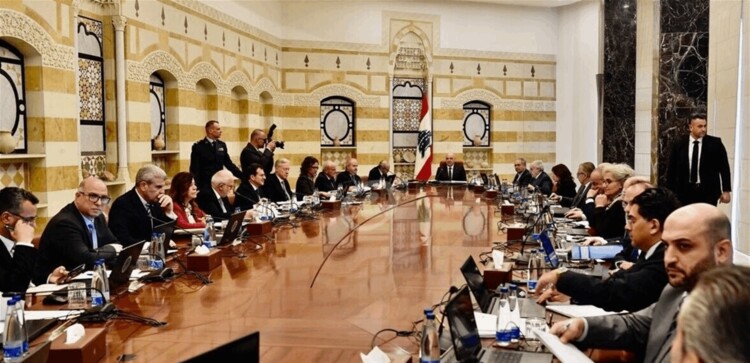
-
Updated: Funeral held for the 14 victims of zionist attack of November 18, in Sidon
Mourners in Lebanon carry the coffins of victims killed two days earlier in a z¿onist strike on the Ain al-Helweh refugee camp in Lebanon’s southern city of Sidon.
The zion¿st strike on the Ain al-Hilweh camp near Sidon in southern Lebanon late Tuesday killed at least 14 people and wounded several others, including young students, according to the Lebanese health ministry.
Local reports described gruesome scenes, with body parts scattered near the Khalid Ibn al-Walid Mosque, while the injured were rushed to hospitals in Sidon.
Israel’s military claimed the attack targeted “a Hamas training compound” that was being used to plan and carry out attacks against the regime. The regime’s military always makes such unfounded claims.
Hamas rejected the allegations as “a blatant lie aimed at justifying the massacre,” saying that it had “no military installations in the Palestinian camps in Lebanon” and that the targeted site was merely “an open sports field.”
“The Israeli terrorist attack is a new episode in the ongoing series of crimes against the Palestinian people in the Gaza Strip and the West Bank, and against Lebanese territory and sovereignty,” Hamas said, holding Israel “fully responsible for this heinous crime that targeted unarmed civilians.”
Another Israeli strike in south Lebanon killed at least one person and injured 11 others in the village of Tiri in the Bint Jbeil district on Wednesday morning.
Israel has repeatedly violated the ceasefire agreement it signed with the Lebanese resistance group Hezbollah in November 2024.
Last week, Parliament Speaker Nabih Berri condemned Israel’s “systematic breaching” of the ceasefire agreement, saying that Lebanon has respected its commitments while Tel Aviv “continues its military assaults without restraint.”
Berri urged political factions to unite in the face of “unprecedented danger,” as he criticized the lack of national consensus in responding to Israeli attacks.
He also said that Hezbollah has the “legitimate right” to reorganize its internal structure in response to the recent Israeli strikes on the country.
Hezbollah’s Secretary-General Sheikh Naim Qassem also called on the Lebanese government to mobilize all state institutions and develop a comprehensive plan to confront the ongoing Israeli violations of Lebanese territory.
He said the resistance remains committed to its mission of expelling the occupying forces from the country.
According to Lebanese authorities, Israeli attacks since October 2023 have killed approximately 4,000 people and displaced more than 1.2 million residents across the country.Al Masirah report
From the funeral for the victims of the Ain al-Helweh refugee camp massacre in southern Lebanon, carried out by zionist on 18 November, which resulted in the deaths of 13, a majority of whom were between the ages of 14-18 years old.
https://t.me/presstv/165363Residents of Lebanon’s Ain al-Hilweh refugee camp march denouncing the z¿onist massacre committed last night and expressing their solidarity with the people of Palestine.
https://t.me/presstv/165257 -
z¿onist colony widely bombed Lebanon with banned cluster munitions: Report
A new report has revealed that the z¿onist military widely employed cluster munitions, which are outlawed under international law, during its over 14 months of aggression against Lebanon, extensively destroying and damaging civilian structures in the southern part of the country.
The report, published by British daily newspaper The Guardian, cites photos of munition remnants found in southern Lebanon.
The images, which have been examined by six different arms experts, appear to show the remnants of two different types of Israeli cluster munitions – the 155mm M999 Barak Eitan and 227mm Ra’am Eitan guided missiles.
The M999 Barak Eitan is an advanced anti-personnel cluster round produced by major Israeli weapons manufacturer Elbit Systems in 2019.
Each M999 artillery shell disperses nine submunitions that explode into 1,200 tungsten fragments.
Israeli media have described the Ra’am Eitan as a guided missile carrying 64 submunitions that spread over a wide area and kill anyone within it.
According to an Israeli army press statement issued in February 2024, Israeli forces deployed along the border between the northern part of the occupied territories and Lebanon had been equipped with Ra’am Eitan missiles in preparation for fighting Hezbollah resistance fighters.
The Israeli cluster munitions were found in three locations in southern Lebanon, where Israeli bombing has been most deadly, namely the forested valleys of Wadi Zibqin, Wadi Barghouz, and Wadi Deir Siryan.
The evidence marks the first indication that Israel has deployed cluster munitions since the 33-day war on Lebanon in 2006, and it would also be the first time the usurping regime is known to have used the two newer types identified.
Cluster munitions are a type of bomb designed to disperse numerous smaller submunitions, commonly referred to as bomblets, across a broad area comparable to the size of several football fields.
Cluster munitions are widely prohibited due to their high failure rate, with up to 40% of submunitions failing to detonate on impact. This leaves civilians at risk, as these unexploded devices can later detonate and cause fatal injuries to those who encounter them.
As of now, 124 states have become part of the Convention on Cluster Munitions, prohibiting their use, production, and transfer. However, Israel has not joined the convention.
“We believe the use of cluster munitions is always in conflict with a military’s duty to respect international humanitarian law because of their indiscriminate nature at the time of use and afterwards,” Tamar Gabelnick, the director of the Cluster Munition Coalition, said.
Their wide area impact, she added, means they cannot distinguish between military and civilian targets and the cluster munition remnants kill and maim civilians for decades after use.
During the 2006 war, Israel dropped four million cluster bombs on Lebanon in the final days before a ceasefire was reached. An estimated one million unexploded bomblets remained, killing 400 people since that time.
Human rights organisations argue that it is impossible to use cluster munitions in any way that significantly minimises harm to civilians.
“Cluster munitions are banned internationally for a reason. Their use is inherently indiscriminate, there is no lawful or responsible way to deploy them, and civilians bear the greatest burden because these weapons remain deadly for decades,” Brian Castner, head of crisis research at Amnesty International, said.
Israel and Hezbollah reached a ceasefire agreement that took effect on November 27, 2024. Under the deal, Tel Aviv was required to withdraw fully from the Lebanese territory—but has kept forces stationed at five sites, in clear violation of UN Security Council Resolution 1701 and the terms of last November’s agreement.
Since the implementation of the ceasefire, Israel has violated the agreement multiple times through repeated assaults on the Lebanese territory.
Lebanese authorities have warned that the Israeli regime’s violations of the ceasefire threaten national stability.PressTV report
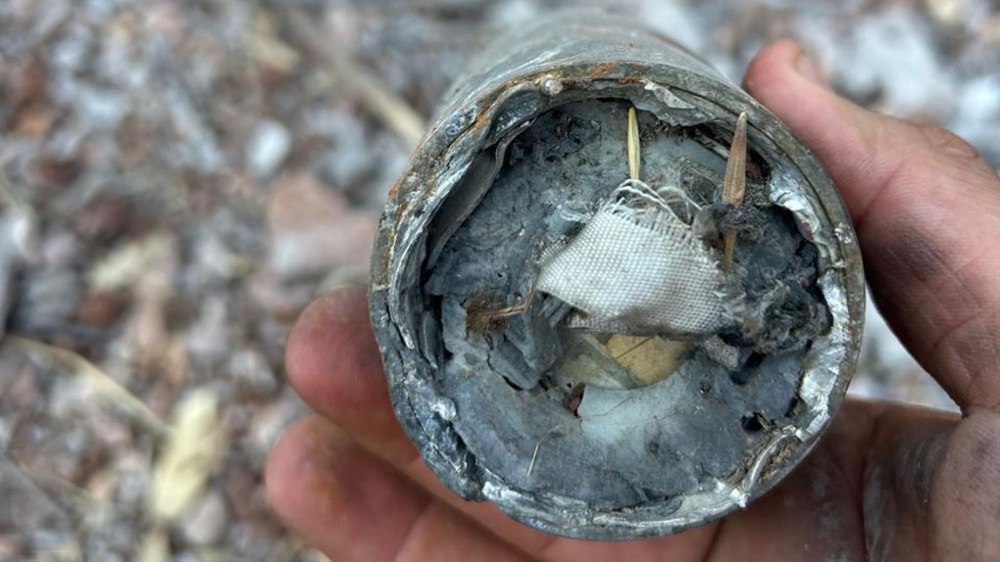
Remnants found of a cluster munition in southern Lebanon show a white nylon ribbon, used to stabilize and spin submunitions.
-
Subscribe
Subscribed
Already have a WordPress.com account? Log in now.
 Nascent Yemen