-
Destabilising Yemen, causing havoc in Sudan: UNITED ARAB EMIRATES
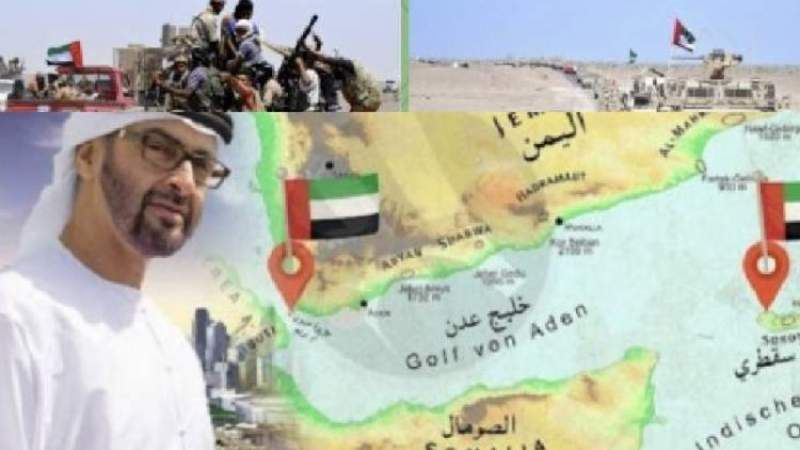
Political and economic analysts say the United Arab Emirates’ announced military withdrawal from parts of Yemen is largely cosmetic, arguing that Abu Dhabi continues to exert influence through local tools, external agendas, and military and intelligence infrastructure serving broader US–Zionist objectives.
Political activist Al-Yousfi stated that the UAE’s real presence remains intact via forces and entities it cultivated and empowered over recent years, stressing that Emirati and Zionist influence persists through military bases in strategic locations, most notably Mayyun Island, as well as camps established under direct Emirati supervision with international cover led by Britain.
He noted that Abu Dhabi operates with extensive intelligence archives on Yemen inherited from the British side, implementing them on the ground in ways that advance domination and control projects. According to Al-Yousfi, developments in southern provinces confirm that Emirati goals were never linked to counterterrorism, but instead contributed to reproducing and feeding instability under misleading labels, in a pattern similar to Libya and Syria.
Al-Yousfi added that these policies align with an old British plan to fragment the region into fragile entities, a project extending from Yemen to Somalia, Sudan, and Libya, now revived under a renewed colonial vision. He also pointed to growing US involvement aimed at managing tensions among regional tools to serve the American–Zionist project, amid reports of Saudi Arabia moving toward joining the so-called “Abraham Alliance,” following the UAE’s path of normalization. He cited expanding US corporate dominance in oil sectors in Hadramout and Shabwah as evidence of rising American influence.
In a related context, economic expert Rashid Al-Haddad said Emirati moves in the separatist region of so-called “Somaliland” are inseparable from serving the Zionist project and Israeli enemy ambitions to control Bab al-Mandab. He explained that Abu Dhabi’s deep engagement with the unrecognized separatist authorities amounts to implicit recognition that undermines Somalia’s sovereignty.
Al-Haddad highlighted the 2016 agreement granting DP World control over Berbera Port, noting that its limited financial value contrasts sharply with the port’s strategic location at the southern entrance of Bab al-Mandab and along a coastline exceeding 700 kilometers on the Red Sea and Gulf of Aden. He said subsequent developments exposed the falsity of investment claims, as the port was militarized in 2017 and effectively converted into a military base.
According to Al-Haddad, the UAE lacks both the capacity and strategic incentive to establish such military influence independently, asserting that its role is limited to providing logistical and security services—possibly without cost—for the benefit of the Zionist entity, under Western, particularly British, direction.
Meanwhile, Lebanese political analyst Mohammed Hezima said the Israeli enemy’s central objective is to impose regional hegemony under an expansionist strategy tied to the “Greater Israel” project and the US vision for reshaping the Middle East. He explained that pushing for recognition of “Somaliland” forms part of efforts to reach Bab al-Mandab and the Indian Ocean, especially after the Zionist entity faced mounting strategic pressure following the Al-Aqsa Flood battle.Hezima stressed that Yemen’s role, led by Ansarullah, has evolved from support to direct influence in the balance of conflict, particularly through maritime pressure that exposed Israeli and US vulnerabilities. He added that the Israeli enemy is now seeking alternatives by expanding intelligence presence in the Horn of Africa, establishing early-warning systems, and laying the groundwork for military encirclement, while simultaneously working to exhaust key Arab states politically, economically, and militarily.
The renewed focus on Yemen and the Horn of Africa comes amid intensified regional competition over strategic waterways, particularly Bab al-Mandab and the Red Sea, which are vital to global trade and energy flows. Analysts say Emirati, Saudi, and Western-backed moves, alongside Israeli enemy ambitions, are part of a broader effort to reshape the region’s geopolitical map, deepen normalization, and counter emerging resistance dynamics following major shifts triggered by the war on Gaza and Yemen’s expanding role in regional deterrence.Al Masirah report
-
8 killed as US forces strike 5 more vessels amid tensions with Venezuela
The US military has launched new deadly strikes on boats it, contemptuously and lacking evidence, accuses were involved in drug trafficking, escalating an aggressive campaign in international waters as tensions with Venezuela remain high.
US Southern Command said on Wednesday it struck five alleged drug-smuggling vessels over two days, killing eight people.
The command did not disclose the exact locations of the strikes carried out on Tuesday and Wednesday. Previous attacks have taken place in the Caribbean Sea and the eastern Pacific Ocean.
According to Southern Command, three boats were targeted on Tuesday while traveling together along what it described as known narcotics routes. It released a video showing the boats moving in close formation before explosions hit them.
The US has not provided independently verified evidence to support its claims. The authenticity and context of the video have not been independently verified.
The command said three people were killed when the first vessel was struck. Those aboard the other two boats jumped into the water before follow-up strikes sank the vessel. Southern Command claimed it had notified the Coast Guard to activate search and rescue operations, but it remains unclear whether any survivors were recovered.
Hours later, the military announced strikes on two more vessels on Wednesday, killing five additional people.Since September, the US military has carried out more than 30 such strikes, with a reported death toll of at least 115.
Rights groups and international law experts say the operations amount to extrajudicial killings, noting that those targeted appear to be civilians posing no immediate threat to the United States.
The strikes come amid a major US military buildup in the Caribbean, described as unprecedented in decades.
Analysts say the show of force reflects a broader pattern of interventionist policy in Latin America, often justified through security narratives but carrying serious legal and humanitarian consequences.
The Trump administration and senior military officials have faced growing criticism over earlier attacks in which survivors were also killed.
US Secretary of War Pete Hegseth came under pressure over the deadly strikes staged during the American military campaign in the Caribbean.Many lawmakers see the US military aggression in Latin America and the surrounding waters in the region as war crimes.
They are seen as a pretext for “regime change” in Latin American countries.
The latest strikes coincide with increased US pressure on Venezuela. Washington has accused President Nicolas Maduro of leading a drug cartel, an allegation his government strongly rejected.
Maduro has warned that Venezuela will defend its sovereignty and territorial integrity, saying the United States cannot turn Bolivarian nations into colonies or exploit their natural resources.
He urged Washington on Saturday to abandon the failed “regime change” plots that the White House has been trying to implement in his country for the past 25 years.
He said to American politicians ready to engage in respectful dialogue, “We will always find here a president who represents his people, to reach out, to seek paths to peace, cooperation, and prosperity.”PressTV report

-
On the very same path in 2026💛
Jerusalem will remain present in our memory as a compelling objective, an ambition without limits, and the source of our burning desire to regain the place where the Prophet ascended to heaven and our First Qibla. Palestine, all of Palestine, will remain part of this nation, and we shall not relinquish a single grain of its sand.
Hezbollah Secretary-General Martyr Sayyed Hassan Nasrallah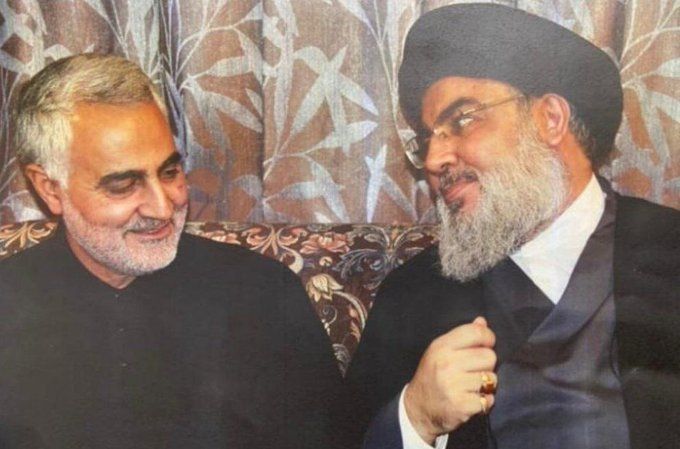
-
Closing 2025
Death to America! We shout in the face of the killers of prophets and the descendants of the apes and pigs: We hope we will not see you next year. The shout remains: Death to Israel!
Hezbollah Secretary-General Martyr Sayyed Hassan Nasrallah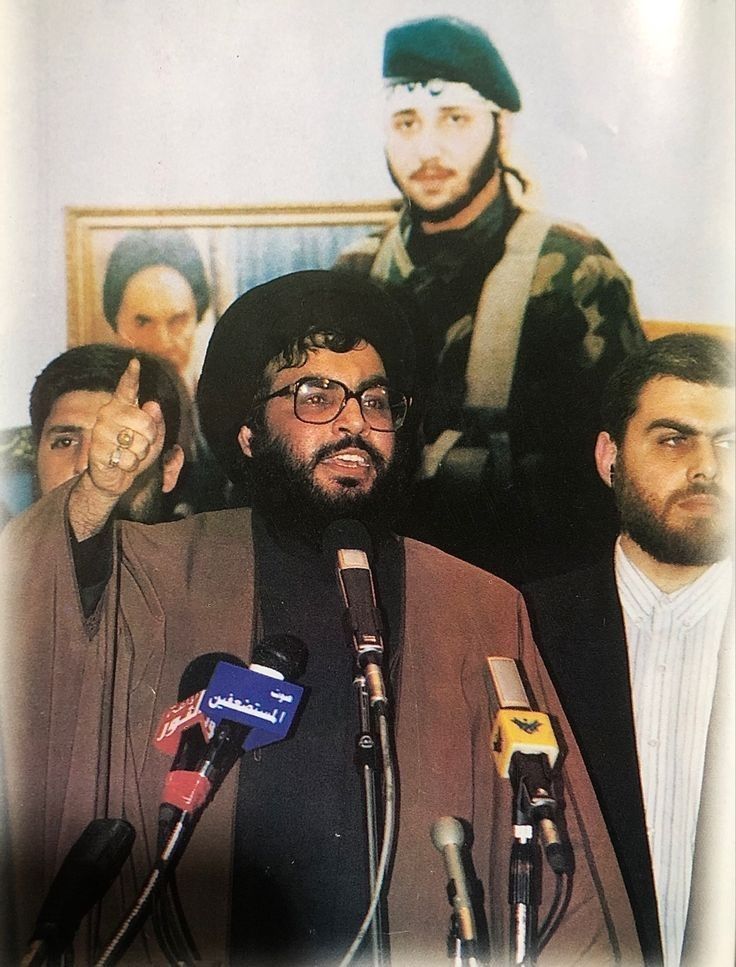
-
Saudi Enemy Renews Attacks on Residential Villages in Qatabir District
The Saudi enemy has renewed its attacks on residential areas in the border district of Qatabir, using artillery fire and heavy machine guns, Al-Masirah’s correspondent in Sa’adah reported on Wednesday.
The correspondent said the shelling targeted populated villages in the Al Thabit area, triggering fear and panic among civilians, particularly women and children, amid the Saudi enemy’s continued daily violations against border regions.
The attacks come as part of an ongoing escalation by the Saudi enemy against residential villages and areas in Sa’adah province, constituting a blatant violation of international laws and norms and a direct targeting of civilians and their property.
Border areas of Sa’adah province are subjected almost daily to artillery shelling and heavy machine-gun fire by the Saudi enemy, causing material damage to homes and farms and posing a constant threat to the lives of innocent civilians.Al Masirah report

Saadah 2015 -
C.I.A. Conducted Drone Strike on Port in Venezuela
Renewed US drone strike kill two off the Venezuelan shore.
The Pentagon released footage of the drone attack carried out yesterday that resulted in the murder of the two, most likely, fishermen rather than drug dealers. The CIA carried out a drone strike earlier this month on a port facility on the coast of Venezuela, sources familiar with the matter told CNN, marking the first known US attack on a target inside that country.
The drone strike, the details of which have not been previously reported, targeted a remote dock on the Venezuelan coast that the US government believed was being used by the Venezuelan gang Tren de Aragua to store drugs and move them onto boats for shipping, the sources said. No one was present at the facility at the time it was struck, so there were no casualties, according to the sources.
Two sources said US Special Operations Forces provided intelligence support to the operation, underscoring their continued involvement in the region. But Col. Allie Weiskopf, a spokesperson for US Special Operations Command, denied that, saying, “Special Operations did not support this operation to include intel support.”President Donald Trump appeared to first acknowledge the attack in an interview last week that initially attracted little notice, though he offered few specifics, including when reporters asked directly about it on Monday.
The strike could significantly escalate tensions between the US and Venezuelan President Nicolás Maduro, who the US has been pressuring to step down through an aggressive military campaign.
The US has launched strikes destroying more than 30 boats in the Caribbean Sea and eastern Pacific Ocean in what it has described as a counter-narcotics campaign, and Trump has ordered a blockade of sanctioned oil tankers coming to and leaving Venezuela. Trump had also repeatedly threatened to carry out strikes inside Venezuela, but until the CIA attack earlier this month, the only known US strikes on Venezuelan targets were against the suspected drug-trafficking boats in international waters.The CIA declined to comment. CNN has asked the White House, US Special Operations Command, and Venezuela’s Ministry of Communications and Ministry of Foreign Affairs for comment.
Trump acknowledged in an interview on Friday that the US had knocked out some type of “big facility where ships come from” as he talked about his administration’s campaign against Venezuela. Asked about it again on Monday, he said the US attacked “in the dock area where they load the boats up with drugs.” But he declined to comment when asked whether the attack was conducted by the military or the CIA.
“So we hit all the boats, and now we hit the area,” Trump said Monday. “It’s the implementation area, that’s where they implement, and that is no longer around.”
One of the sources said the strike was successful in that it destroyed the facility and its boats, but described it as largely symbolic since it is just one of many port facilities used by drug traffickers leaving Venezuela. It also appeared to attract little to no attention, even inside the country, in real time.
Trump earlier this year expanded the CIA’s authorities to conduct operations in Latin America, including inside Venezuela, CNN previously reported. But even then, the US military had the legal authority only to conduct strikes against suspected traffickers at sea, not on land, as CNN has reported.The Trump administration has offered varying justifications for the campaign in Venezuela, which has involved a massive buildup of military assets in the Caribbean. Officials have pointed to a counter-narcotics imperative, but Trump’s chief of staff, Susie Wiles, told Vanity Fair in an interview that the boat strikes were aimed at getting Maduro to “cry uncle.” The Venezuelan leader has shown no signs of relinquishing power.
Top officials have made clear publicly and in briefings to lawmakers that they intend to continue targeting suspected drug smugglers using a similar playbook to the one used for killing terrorists during the global war on terror – a campaign in which the CIA played a crucial role, too. Secretary of Defense Pete Hegseth has openly compared drug traffickers to al Qaeda.
“These narcoterrorists are the al Qaeda of our hemisphere,” the secretary said at the Reagan National Defense Forum earlier this month. “And we are hunting them with the same sophistication and precision that we hunted al Qaeda.”CNN Report

-
Fresh zion¿st colony attacks on Lebanon
Al-Manar correspondent in southern Lebanon reports: z¿onist artillery shelled the outskirts of the towns of Yaroun and Rmeish – Al Manar Live News.
z¿onist occupation forces detonate what remains of a destroyed house in the Al-Kasair neighborhood of Mays al-Jabal town at night
https://t.me/almanarnews/232895 -
Extreme Cold Kills 25 Gazans, Including Children, in December Amid z¿onist entity Aid Obstruction
More than two dozen people have died in the Gaza Strip as a winter storm threatens the lives of nearly 900,000 Palestinians living in tents across the devastated coastal territory, with z¿onist occupation forces hampering aid deliveries and exacerbating the humanitarian condition.
The official Palestinian news agency WAFA, citing Gaza’s Civil Defense and rescue teams, reported that 25 people, including six children, have died this month from hypothermia following rains and plunging temperatures.
According to reports, Gaza had not experienced severe weather conditions marked by heavy rainfall, strong winds, and extreme cold prior to the current month of December.
Eighteen residential buildings, already damaged by Israeli shelling, completely collapsed due to harsh weather conditions and intense rainfall during the same period.
Over 110 residential buildings sustained severe partial collapses, which endangered the lives of thousands of residents living inside or near these structures.
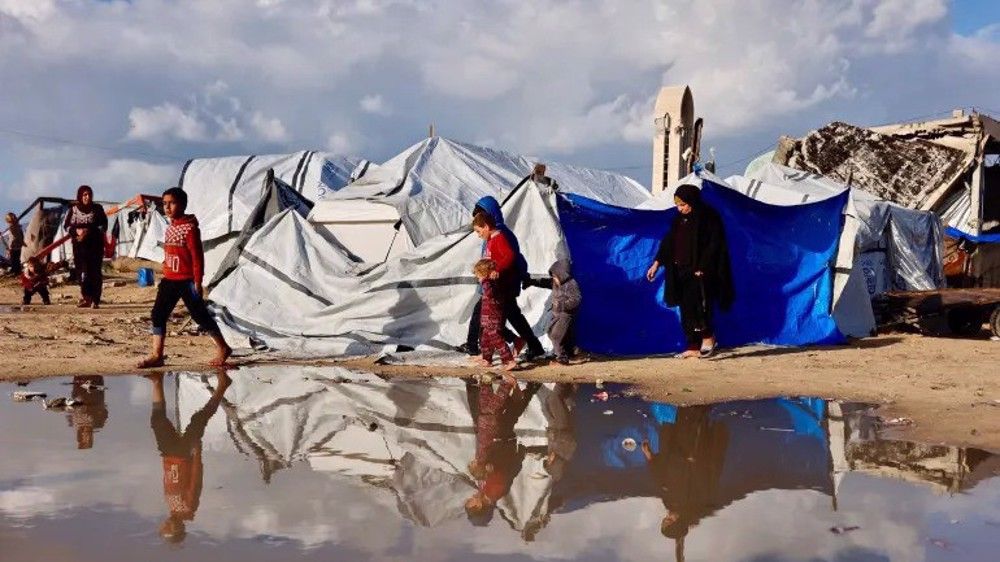
Meanwhile, 90 percent of displacement tents in the Gaza Strip were flooded or blown away by heavy rains and strong winds, leaving thousands of families without temporary shelter. This disaster also led to the loss of their few possessions, such as clothes, blankets, and bedding, further aggravating their already dire humanitarian situation.
Intense weather conditions are adding to the hardships faced by displaced Palestinians in Gaza, who have endured ongoing bombardments, a crippling siege, and immense losses during more than two years of Israel’s genocidal war.
Israel persists in breaching the ceasefire agreement and obstructing essential humanitarian aid from reaching the war-stricken coastal sliver, even though these provisions being outlined in the initial phase of the accord.
Flimsy tents were submerged, and improvised camps were engulfed by mud on Monday after heavy winter rains battered the territory over the past few days.
Local officials in Gaza have advised against seeking refuge in damaged buildings; however, the tents provide minimal shelter from the heavy rainfall and offer no effective defense against flooding.
Israel’s genocidal war on Gaza has killed at least 71,266 Palestinians and wounded 171,222 others since October 2023.Al Masirah report

-
Breaking the Food Siege: Wheat and Maize Achieve Qualitative Leaps Toward Self-Sufficiency
The agricultural transformation witnessed between 2020 and 2025 represents a pivotal phase in the country’s modern economic history. During this period, development policy shifted away from structural dependence on global wheat stockpiles—used as a weapon of submission—toward the adoption of a food sovereignty strategy as a practical embodiment of the principle of “the perfection of faith,” liberation from the dominance of arrogant powers, the construction of a sovereign front of resilience, and a corrective course to confront the humiliating dependency imposed on the country for decades.
This orientation, which forges an intrinsic link between a grain of wheat and the dignity of national stance, has created an urgent necessity to exploit vast tracts of land long left idle as a result of systematic destructive policies, and to launch an “unprecedented” agricultural season that positions wheat as the backbone of the national economy.
Within this context, the following report analyzes the numerical and field transformations in the grain sector—particularly wheat and maize—exposing the falsity of the manufactured obstacles imposed by Zionist-American policies to starve the Yemeni people. It highlights the existing gap and the revolutionary mechanisms adopted to narrow it, within a comprehensive vision aimed at transforming cities and valleys into major agricultural workshops that end an era of negligence and lay the foundations for an age of self-sufficiency.The Economic Philosophy of the Agricultural Revolution and the Challenge of Sovereignty
AnsarAllah full report

-
Heavy rains, strong winds destroy 90 percent of Gaza’s displacement tents: Civil Defense
Gaza authorities say heavy winter rains and strong winds have destroyed nearly 90 percent of displacement tents, leaving more than half a million Palestinians exposed to flooding, mud, and life-threatening conditions in the besieged territory.
PressTV full report
-
Subscribe
Subscribed
Already have a WordPress.com account? Log in now.
 Nascent Yemen