-
More Isolation: World Leaders Walk Out in Protest as Netanyahu Addresses UNGA
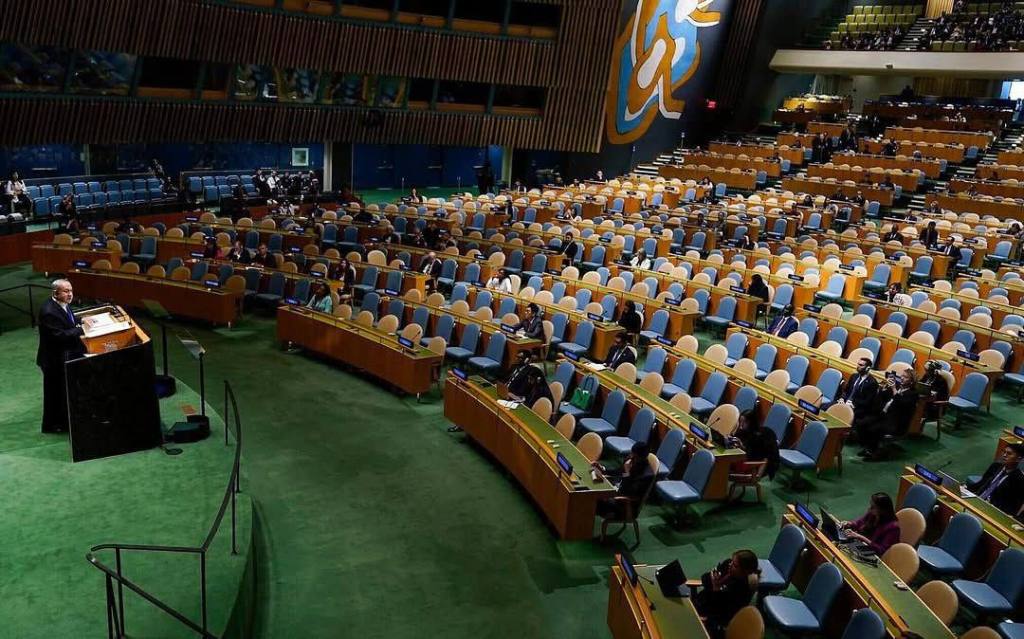
Many delegates exited the United Nations General Assembly hall in protest as Netanyahu began his address during the 80th session.
Netanyahu, who is currently the subject of an arrest warrant issued by the International Criminal Court for alleged war crimes, used his speech to defend his genocidal war on Gaza.
He criticized the stance of various member states and the broader international community, asserting that his government must “finish the job” in the blockaded Palestinian territory.
The remarks by Netanyahu came following speeches by dozens of world leaders criticizing zionist colony and calling for the end of its brutal war on Gaza.
The colony is confronting unprecedented isolation as diplomatic, cultural, and economic pressures mount.
The mass walkout symbolizes a broader international backlash against the war in Gaza, which is now manifesting in official state recognition of Palestine and widespread boycotts of Tel Aviv regime.
Growing isolation of Israel
Hamas said the walkout by UN member state delegations ahead of Netanyahu’s speech at the United Nations General Assembly signaled Israel’s increasing international isolation over the war in Gaza.
“Boycotting Netanyahu’s speech is one manifestation of Israel’s isolation and the consequences of the war of extermination,” Taher al-Nunu, media adviser to the head of Hamas’s political bureau, said in a statement.
In his speech, Netanyahu further rejected the global recognition of the Palestinian state by Israel’s closest Western and European allies and vowed Israel would continue its military offensive in Gaza to eliminate Hamas, despite international pressure.
“You didn’t do something right. You did something wrong, horribly wrong,” he said, arguing the move would spur further attacks on Jews and “innocent people everywhere.”
Traditional Israeli allies have become increasingly critical as the war on Gaza has stretched on, with the UK, France, Australia and Canada among those recently announcing recognition of a Palestinian state.
Using a familiar line, he claimed Palestinian statehood would reward groups such as Hamas – even though 157 states have now recognized the State of Palestine.
Netanyahu described genocide in Gaza as a “false charge”, despite recent UN commission findings.
A recent report by a commission mandated by the UN Human Rights office found earlier this month Israel had committed genocide in Gaza, a position supported by independent rights observers and an array of scholars and academics.Elsewhere, the Israeli prime minister pointed to Israel’s ongoing offensive in Gaza City, pointing to forced displacement orders issued by the Israeli military beforehand.
At least 90 percent of Palestinians in Gaza have been displaced in the war. There have been repeated Israeli attacks on sites sheltering displaced Palestinians, including hospitals, schools and tent shelters, with aid and humanitarian groups warning that “nowhere is safe” in Gaza.
As Netanyahu neared the end of his speech, he claimed that Israel’s war, which has for nearly two years risked wider escalation, will instead lead to regional peace.
This comes as an Israeli strike earlier this month on Qatar has roiled Arab states of the Persian Gulf region, with experts saying the attack, along with the war on Gaza, dims the prospect of long-sought normalization between Israel and Saudi Arabia.
Commenting on the speech, Yair Lapid, head of Israel’s opposition, criticized Netanyahu for delivering a UN address filled with “gimmicks,” calling him “tired and whining.”
“Netanyahu did not present his plan for bringing the hostages home, did not outline a path to end the war, and did not explain why, after two years, Hamas has still not been defeated,” Lapid said on social media.
“Instead of stopping the diplomatic tsunami – Netanyahu today worsened Israel’s situation,” he added.
Xavier Abu Eid, a political scientist and former communications director for the Palestine Liberation Organization, said the speech by Israel’s increasingly isolated prime minister before the UN General Assembly was unlikely to sway global public opinion over its genocidal war on Gaza.
He highlighted the “isolation” Netanyahu and Israel now face, reiterating the Israeli premier is wanted for war crimes by the ICC.
In November 2024, the ICC issued arrest warrants for Netanyahu and his war minister, Yoav Gallant, for war crimes and crimes against humanity in Gaza.
A series of UN queries had already accused Israel of committing war crimes and the crime against humanity of extermination in Gaza through its systematic attacks on the civilian sites and healthcare system.
According to the Gaza Health Ministry, over 65,500 Palestinians have been killed, with more than 167,500 others injured since the beginning of the genocidal war in October 2023. Many victims of Israeli attacks remain trapped under the rubble and on the streets.Al Masirah report
https://t.me/Eyeonpalestine2/20830 -
Statement by the Spox of the Yemeni Armed Forces General Yahya Saree
Once again, Yemeni missile shuts down ‘Ben Gurion Airport’ and makes settlers rush to the bunkers under blaring sirens.
Yemeni missile on its way to the colony Triumphing for the oppressed Palestinian people and their dear Mujahideen, and in response to the crimes of genocide and the dangerous escalation being perpetrated by the Israeli enemy against our people in the Gaza Strip, and in response to the zionist aggression against our country and its crimes against our people.
The missile force of the Yemeni Armed Forces carried out a qualitative military operation using a multiple warheads hypersonic Palestine 2 ballistic missile, targeting several sensitive targets in the occupied Yaffa region.
The operation, thanks be to Allah, successfully achieved its objectives, forcing millions of herds of usurping Zionists to flee to shelters and halting operations at Lod Airport.
In another context, our air defenses, thanks be to Allah, were able to intercept a number of combat formations by launching a number of surface-to-air missiles during the recent Israeli aggression against our country, forcing some of them to leave and thwarting part of the attack.
The Yemeni Armed Forces call on all civilian and military companies and vessels exist in the theater of operations in the Red Sea and the Arabian Sea, or transiting through them, to identify themselves and reveal their identities. Otherwise, they will be subject to targeting, and they will bear full responsibility.
Our armed forces will continue to carry out more operations, Allah willing, at an escalating pace, in defense of the country, as part of confronting the Israeli aggression, and in support of our steadfast brothers in Gaza until the aggression against them is halted and the siege is lifted.
Sana’a,
3 Rabi’ al-Akhir 1447 AH
September 25, 2025 AD
Issued by the Yemeni Armed Forces
http://t.me/army21ye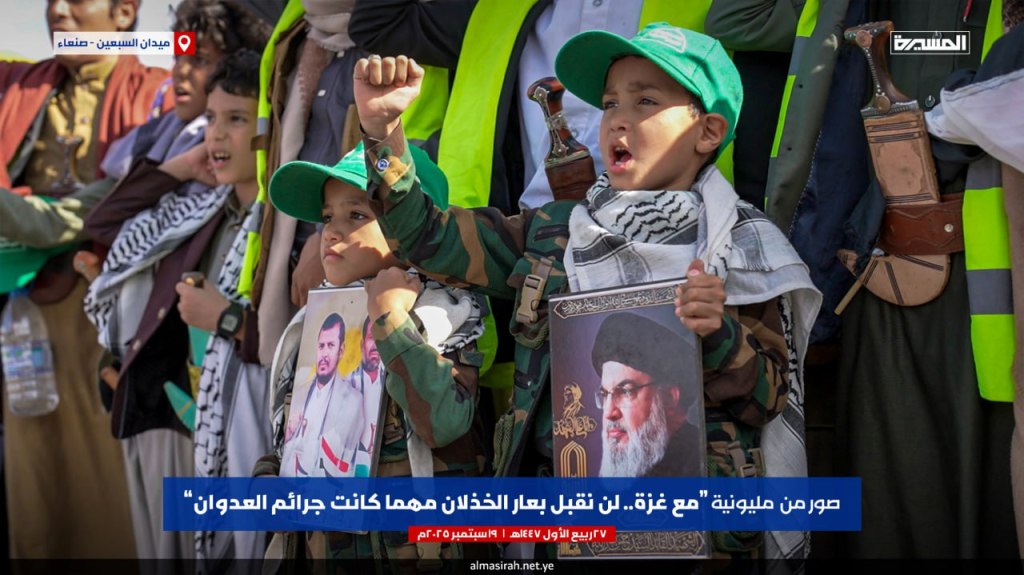
-
Update on zionist aggression in the Yemeni capital
In a preliminary toll, Yemen’s Ministry of Health reported 8 martyrs and 142 injured following raids by the IOF on Sana’a this evening.
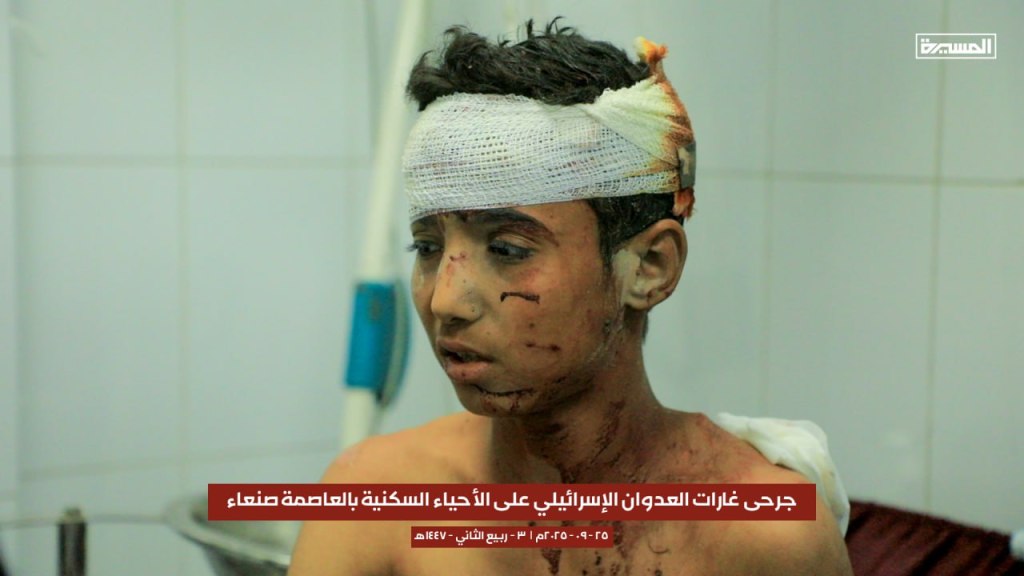
Children were injured in zionist aggression raids on residential neighborhoods in the capital, Sanaa.
https://t.me/AlmasirahVideos/113869Video captures the extent of the damage on Sana’a -
Remembering precious sacrifices
Thousands gather by the Rock of Raouché in the Lebanese capital, Beirut, to commemorate the memory of the leaders and martyrs of the Resistance.

Al Manar English report with video Iconic leader Sayyed Hassan Nasrallah’s portrait is projected on the rocks of Beirut’s bay. Al Manar English report with videos -
Violent zion#st colony airstrikes hit civilian sites in Sana’a
At least 70 bombs were dropped on Sana’a by the z#onist colony, including 13 strikes on one building. z^onist occupation bombed residential buildings and the Presidential Palace once again.
RNN
zionist airstrikes in Yemen targeted the Dhahaban power station, Al-Nahdayn area, and two residential neighbourhoods in the capital, Sanaa.
Massive bombing of Sana’a -
Following total arms embargo on zion>st entity, Spain sends patrol vessel in protection of Flotilla
Spain approves full arms embargo on zion#st colony, warns Netanyahu over Gaza killings.
Embargo includes ban on arms exports, fuel transit, and imports of products, services from occupied territories.
AA report
The announcements by Rome and Madrid to deploy navy vessels to assist and protect the flotilla come after activists reported several attacks on its ships overnight on Tuesday.
The country’s Prime Minister Giorgia Meloni also condemned the overnight attack on the flotilla, but called the aid initiative “dangerous and irresponsible.”
Meloni proposed a plan to hand over the aid in Cyprus to the Latin Patriarchate of Jerusalem, which would then be in charge of delivering the aid.“
Addressing the Italian Chamber of Deputies on Thursday, Crosetto said another frigate, Alpino, will join the Fasan to further strengthen the Italian naval presence in the area.
“We will continue to do everything possible to avoid incidents, and I ask for your help in this, regardless of political differences. But I want to be very clear: outside of international waters, we are unable to guarantee the safety of the vessels,” the Italian defence minister said in his briefing.
Crosetto pointed out that he recommended that the flotilla accept Italy’s proposal to deliver the aid through the Church.
“Is it necessary to jeopardise the safety of Italian citizens to bring aid to Gaza? The government has supported the humanitarian effort, we are capable of delivering the aid the flotilla is bringing safely and in a few hours,” he emphasised.
Shortly after Italy’s announcement on Wednesday, Spanish Prime Minister Pedro Sánchez said Spain will also deploy a patrol vessel “with all necessary resources” to protect and assist the flotilla on its journey to Gaza.The Spanish government demands that international law be complied with and that the right of our citizens to navigate the Mediterranean safely be respected,” Sánchez said at the United Nations General Assembly in New York.
“The Spanish government demands that international law be complied with and that the right of our citizens to navigate the Mediterranean safely be respected,” Sánchez said at the United Nations General Assembly in New York.
EuroNews report

PressTV It is of utmost necessity to highlight that Meloni is a picture-book fascist and that her government is the third largest arms supplier to the zionist colony after the US and Nazi Germany.
-
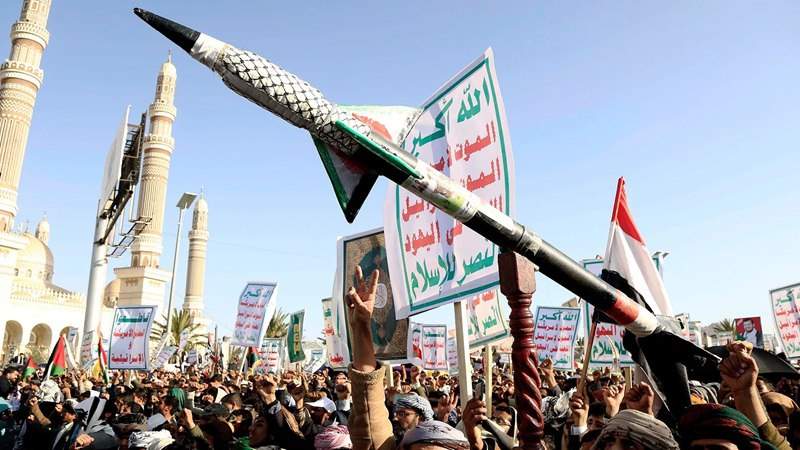
Yemeni Drone Hits Eilat, Injures Large Number of z¹⁹onist settlers
May Allah bless the Yemeni Armed Forces. A Yemeni drone targeted on Wednesday a hotel in the occupied Palestinian city of Eilat, injuring a large number of z#onist settlers.
z#onist media quoted medics as reporting 19 injuries, some serious.
The z<onist occupation army started an investigation into the failure of the defenses to intercept the Yemeni drone which appears to be carrying huge amounts of explosives.
The Yemeni Armed Forces had earlier targeted Eilat with a drone.Source: Al-Manar English Website
-
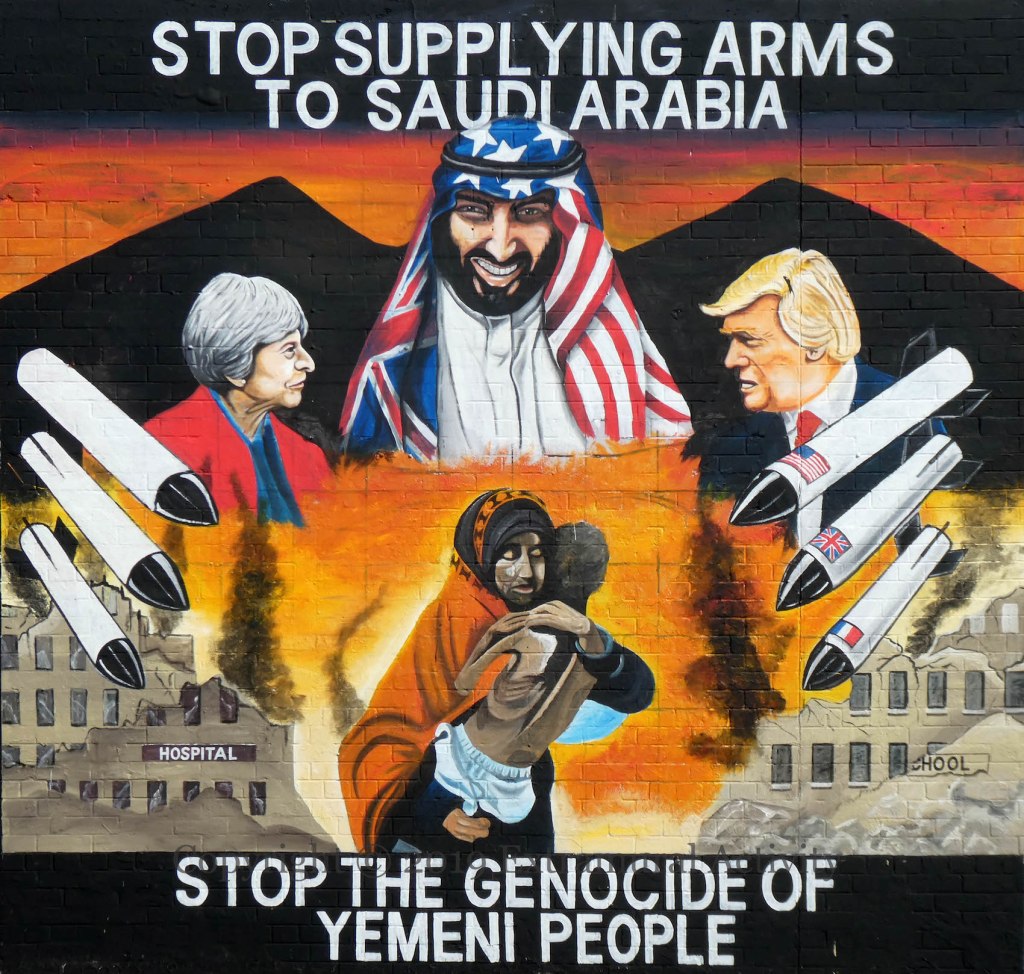
Yemeni Economist: US, Saudi Arabia Systematically Looted Yemen’s Oil and Gas Wealth, Entrenching Poverty, Dependence
Economic expert Rashid al-Haddad has exposed decades of systematic looting of Yemen’s oil and gas resources, accusing the United States and Saudi Arabia of leading a complex network of exploitation in collusion with successive Yemeni governments. He said this alliance turned a resource-rich country into one of the poorest in the region, despite Yemen’s vast reserves and economic potential.
Al-Haddad explained that Washington enabled the former regime to enter oil exploration in the 1980s, particularly during the Iran–Iraq war, when the US sought to create alternative energy markets. Since then, he said, American companies have retained control over major oil fields, including blocks with reserves exceeding 600 million barrels.
He revealed that foreign operators, mainly American, imposed contracts guaranteeing themselves at least 70 percent of revenues, while Yemen was left with a marginal share. The so-called “cost oil” mechanism, he added, allowed inflated expenses to further erode Yemen’s profits. Even in the export process, Yemeni staff were excluded from oversight, leaving the country sidelined while its wealth was drained.
Al-Haddad stressed that the revenues never translated into tangible development. Instead, Yemen was saddled with $6.7 billion in foreign debt by 2015, with 80 percent of loans allocated to projects that were either stalled or fictitious. “Where are the real projects from oil and gas revenues?” he asked, noting that more than 90 percent of Yemenis remained in poverty while only 5 percent of the political elite enjoyed the benefits.
He highlighted how Saudi Arabia deliberately obstructed the development of promising oil fields, such as Harib, Tamuz, and al-Jawf, to keep Yemen economically weak and dependent. Riyadh, he said, operated through its “special committee” and local collaborators to block investment in strategic reserves.
Beyond oil and gas, al-Haddad pointed to untapped wealth in minerals, gold, marble, and limestone. He cited the al-Mahraq mountains, rich in gold, as an example of resources deliberately left idle due to corruption and foreign interference.
The economist also reviewed the collapse of Yemen’s national currency. From a value of 8 rials to the dollar in 1982, it fell to 40 in the mid-1990s, then spiraled downward following destructive policies such as uncontrolled money printing during the 1994 civil war and the 2011 unrest. He said these reckless policies fueled inflation, eroded purchasing power, and deepened poverty.
He further noted that over 200 externally financed projects were halted or failed due to corruption and bureaucratic obstruction, reflecting a governance system that prioritized foreign and elite interests over national welfare.
Despite this bleak legacy, al-Haddad emphasized that Yemen remains a land of promise: “Yemen is not a poor country, but one rich in natural and human resources. Its wealth has been systematically looted for decades, leaving its people deprived of basic necessities.” He concluded that the ongoing war and blockade are designed to maintain this cycle of dependency and prevent Yemen from achieving economic independence.
Yemen became an oil exporter in the late 1980s and started gas exports in 2009, raising hopes of prosperity. Instead, experts say, the country fell victim to foreign domination, corruption, and local elite capture. Analysts argue that the September 21 Revolution of 2014 was fueled by popular anger over this plunder, as Yemenis sought to reclaim sovereignty over their wealth and secure a dignified standard of living.
Al Masirah report
ExtraMural Activity media -
Hezbollah: One year after the large-scale aggression
Despite the enormous political, economic, and military pressures, the resistance (Hezbollah) has succeeded in maintaining its position and even developing its structure.
First, resistance in Lebanon emerged from a pressing need in the absence of genuine sovereign protection. It has become a fundamental element in the balance of power in the Levant.
Since 2006, it has proven its ability to counter unrestrained Israeli aggression and increase the costs for it.
Undoubtedly, the rhetoric that seeks to portray the resistance as a burden on Lebanon reflects the long-standing U.S.-Israeli political intentions that are renewed at every stage. Their main malicious goal is to strip Lebanon of its elements of power and turn it into a submissive state.
Meanwhile, the spies in the U.S. embassy in Beirut have been working tirelessly to hold the resistance responsible for the destruction caused by the wars over the years, clearly falsifying the facts. But the aggression is the direct cause of the losses, while the resistance has controlled its long-term consequences.
The deterrence by the resistance is not an absolute guarantee; rather, it is a dynamic process influenced by military, technological, and political transformations.
Nevertheless, the resistance represents a unique experience compared to other resistance movements in modern history.
A year later, the facts reveal that the Israeli occupation entity has not abandoned its project to weaken the resistance, and that Washington continues to place Lebanon at the heart of its regional strategy.
The coordination between Tel Aviv and Washington has transcended the confines of the last war to a comprehensive program of action encompassing all of West Asia, including Iran.
Meanwhile, observers confirm that Hezbollah has indeed succeeded in restoring its military and organizational capabilities with remarkable speed and has demonstrated a significant financial capacity to compensate those affected, causing concern in Washington about Hezbollah’s sources of funding and the effectiveness of the sanctions imposed on it.
In contrast, the Americans are focusing on keeping the Lebanese Army and Banque centrale du Liban under their direct supervision, believing that any support for them must be conditional on the extent of their move to restrain the resistance, despite their awareness that the army is unable to carry out the mission of disarming the resistance.
zionist occupation entity has also demonstrated that it is not concerned with the time limits that Washington is rumored to have granted Lebanon, meaning that it will continue its assassinations and raids whenever it deems necessary.
Indeed, leaks by Western sources indicate a zionist intention to resume its aggression through a large-scale ground operation aimed at controlling southern Lebanon up to the Litani River, then imposing new security arrangements to its north.
This approach intersects with efforts to impose facts on the ground in southern Syria, by establishing demilitarized zones and preventing any possession of strategic weapons. This reaffirms that the battle is not limited to Lebanon alone, but rather includes redrawing the security map of West Asia as a whole.
This is because ‘Tel Aviv’, and Washington behind it, believes that confronting the Axis of Resistance must be comprehensive, not limited to Hezbollah, Hamas, or Ansarallah, and extends primarily to Iran, which both sides view as the backbone of this axis. This view is met with European support.
Hence, the resistance in Lebanon is not a burden, as its opponents promulgate, but rather a security and political pillar in the face of a project that continues to pose a direct existential threat.
On the first anniversary of the massive aggression, it is clear that any attempt to weaken the resistance or disarm it will only make Lebanon more vulnerable, while its continuation constitutes the actual guarantee for the resilience of Lebanon, and indeed the peoples of the entire region.Tehran Times report
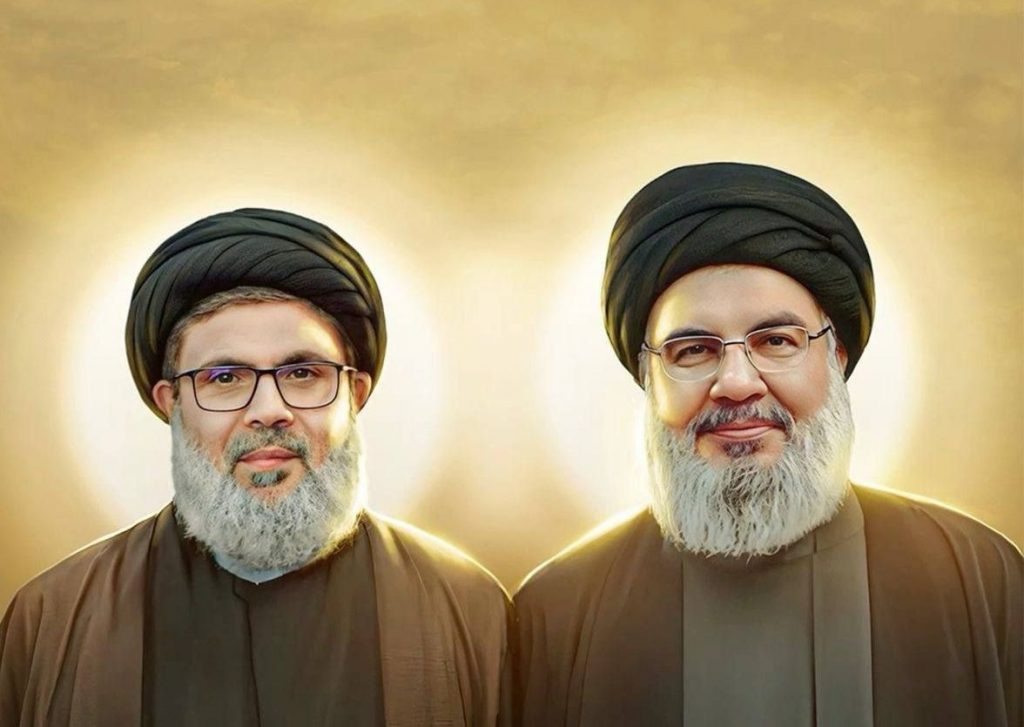
Hezbollah in preparations for the first anniversary of both leaders’ martyrdom. -
Freedom Flotilla comes under zion¹²st fire, again
zion#st drone strikes targeting the Global Sumud Flotilla ships in international waters of the Mediterranean Sea, with at least 12 attacks reported so far.
According to reports, the zion^st colony demanded the Flotilla crew to Dock at Ashkelon Port and unload the aid.Adamant to deliver aid to Gaza only, the crew rejected, triggering the violent attacks.
Previously, activists on board had reported on disproportionately high drone activities surrounding the ships.
The Italian Minister of Defense stongly condemned the zionist attack on the Global Sumud Flotilla.
He announced that he has dispatched an Italian navy ship towards the flotilla to provide assistance and protection as they head towards Gaza to break the zionist imposed siege.https://t.me/presstv/158164
-
Subscribe
Subscribed
Already have a WordPress.com account? Log in now.
 Nascent Yemen