-
Hezbollah Condemns US Terrorist Aggression on Venezuela, Warns of Global Threat
Hezbollah issued a forceful condemnation on Saturday, denouncing the terrorist aggression and thuggery by the United States against Venezuela. The statement detailed accusations that US operations targeted the capital, Caracas, along with vital civilian infrastructure and residential complexes, and resulted in the abduction of President Nicolás Maduro and his wife.
Hezbollah characterized the action as a blatant and unprecedented violation of the national sovereignty of an independent state, international law, and the UN Charter, carried out under what it called flimsy and false pretexts.
The statement presented the aggression as definitive proof of a hegemonic, arrogant, and piracy-driven approach practiced by the US administration without any restraint. It further accused the US of demonstrating a disregard for international stability and security, perpetuating a law of the jungle, and dismantling the remnants of the international order.
Hezbollah asserted: “The United States of America, still gripped by a madness for control and hegemony, especially under its current president, continues its aggressive policies based on subjugating free nations and peoples, plundering their wealth and resources, and leading wars aimed at redrawing national maps.”
The statement accused the US of revealing its true criminal face from “Afghanistan to Iraq, Yemen, and Iran,” citing its role in “the creation of terrorism” and its support for ‘Israel’, which it said “shares the same criminal, aggressive, and colonial behavior.” It condemned the “shamefully silent” international community for failing to curb American actions.
“Hezbollah affirms its complete solidarity with the Venezuelan people,” the statement continued, expressing confidence that US “arrogance” would crumble before the will of the Venezuelan people. It highlighted Venezuela’s historical support for global justice causes, “foremost among them the Palestinian cause.”
Hezbollah concluded with a call to action, urging “all nations, governments, peoples, and free forces of the world to condemn this aggression and to stand with Venezuela, its people, and their right to defend their sovereignty and independence in full.”
Source: Al-Manar English report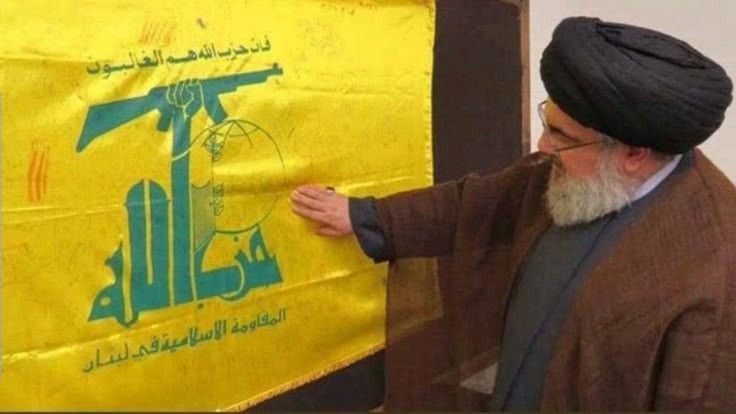
-
No International Law, no International mechanism will protect you; only your weapons and fighters will
Addressing Trump in Washington, Hezbollah Secretary-General Martyr Sayyed Hassan Nasrallah once said, an idiot resides in the White House.
Hezbollah Secretary-General Martyr Sayyed Hassan Nasrallah on the arms of the Resistance. -
Psychopath Trump claims Venezuelan President Maduro captured, flown out of country
Venezuelan President Nicholas Maduro and his wife, Cilia Flores, have been captured by US armed forces, Pedophile-billionaire Trump claims, after Washington carried out a large-scale strike against the country.
In a post published on the social media platform Truth Social on Saturday, Trump said the couple had been flown out of Venezuela.
“The United States of America has successfully carried out a large-scale strike against Venezuela and its leader, President Nicolas Maduro, who has been, along with his wife, captured and flown out of the country,” he wrote.
There has been no statement from the Venezuelan government regarding Maduro’s whereabouts after the US military aggression against the South American country this morning.
In a video published on Facebook, the Venezuelan Minister of Defense, Vladimir Lopez, said that the news about his death during the US missile attack on Caracas is not true, and he is safe in a bunker.
“Heroic people of Venezuela! Soldiers of the Fatherland! Sons and daughters of Bolívar! The Bolivarian National Armed Forces inform the entire world that in the early hours of January 3, 2026, the Venezuelan people became the target of the most criminal military aggression by the government of the United States,” Lopez said.
“Honor, duty, and history call upon us. Let the cry of a free Fatherland echo in every corner. Victory is ours, because reason and dignity stand with us. We will prevail,” he added.PressTV report

Venezuelan President Nicholas Maduro (R) and his wife, Cilia Flores (File photo) -
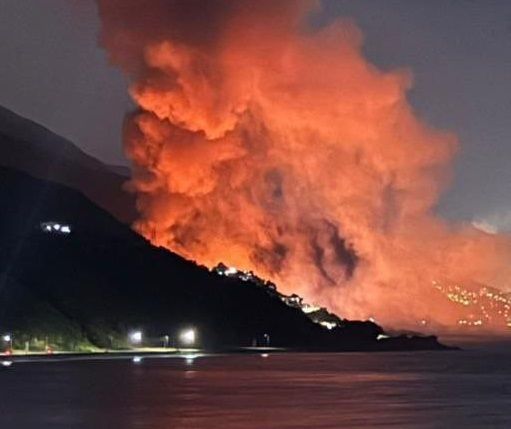
US aggression, piracy on Venezuela
The Venezuelan government stated that attacks occurred in the capital and in the states of Miranda, Aragua, and La Guaira.
Al Manar report
-
The pedophile-billionaire bombed Venezuelan civilian and military infrastructure
Venezuela declares state of emergency after US strikes against civilian, military targets –
At least seven explosions have shaken Caracas, the capital of Venezuela, as low-flying aircraft have been detected in the skies above the city, in what the Venezuelan government said were coordinated US strikes.
Explosions and smoke were reported across Venezuela’s capital, Caracas, at around 2 a.m. local time (6 a.m. GMT) with power outages near a key military base and reports of low-flying aircraft on Saturday.
People in various neighborhoods rushed to the streets. Some could be seen in the distance from various areas of Caracas.
Venezuela said US forces carried out coordinated strikes on civilian and military targets in Caracas and several other states, describing the operation as a direct act of military aggression aimed at seizing the country’s oil and mineral wealth.
President Nicolas Maduro announced a nationwide state of emergency, ordered the full activation of national defense plans, and authorized the deployment of comprehensive defense commands across the country in response to the attacks.
Caracas said it retains the right to legitimate self-defense under Article 51 of the UN Charter and called on regional governments and the international community to stand against what it described as imperialist aggression.
American news outlets reported that US President Donald Trump had greenlighted direct attacks on Venezuelan soil several days ago.
Colombian President Gustavo Petro condemned the attack, calling on the UN to convene immediately to discuss the issue.
“Caracas has been attacked by missiles, and the world must be aware; Venezuela is under attack. The Organization of American States and the United Nations must convene immediately,” Petro said in a post published on X.Since August, US Southern Command has deployed warships, submarines, aircraft carriers, F-35 squadrons, and approximately 15,000 personnel to the area.
These deployments include Carrier Strike Group Twelve, featuring the USS Gerald R. Ford, the world’s largest aircraft carrier.
Since September, the US military has carried out more than 30 such strikes, with a reported death toll of at least 115.
Officials in Caracas have condemned the operations as a deliberate display of US hostility aimed at intimidating the region and undermining Venezuela’s sovereignty amid rising geopolitical tensions.
Washington has also claimed, without providing evidence, that Venezuelan President Nicolas Maduro leads the Cartel de los Soles, which the US designated a terrorist organization last month.
Maduro has said the administration of US President Donald Trump seeks to remove him from power and seize the country’s oil resources.PressTV report

Pedestrians run after explosions and low-flying were aircraft heard in Venezuelan capital, Caracas, January 3, 2026. (Photo by AP) -
13 Rajjab – Imam Ali’s birth in the Kaaba
17 MARCH 599 CE. The sandy streets of Makkah are not kind to those walking on them, not on dry, hot days as humid winds gush across, reigning over their fragile human frames. While the glaring desert sun casts a bright light over the city, a gentle stream of people continues to circle the cube-shaped structure sitting in the city centre – the Kaaba, believed to have first been built by Abraham and his son Ishmael centuries ago.1 A subtle taste of spirituality hangs over the area, attracting all and sundry. Over time it has emerged as a sanctuary and pilgrimage site for so many tribes living in and around Makkah and even beyond – hundreds of idols are scattered around, and a plethora of images of divine figures like Mary, Jesus and Abraham adorn the walls, attracting both polytheists and monotheists alike.2 Within the walls of the Kaaba, an iron nail driven into the floor is seen by many to be the ‘navel of the world’3 – an axis mundi, perhaps, or centre of the world, connecting the heavens with the earth. This mud and stone building, in short, operates as the hub of religious life in pre-Islamic Arabia. While reasons and inspirations may differ, the Kaaba is holy for all souls that find themselves attracted to it – and it is about to come to life in a remarkable new way.
Just a short walking distance from the Kaaba, Fatima bint Asad cries under the early morning glow, her expecting body struggling with the excruciating pain of labour contractions. She desperately needed some comfort and could not think of anything else but the Kaaba. Finally, she makes it there, but cannot stand before it to pray. She leans against its wall as anxiety and agony begin to take over even more intensely. She is no stranger to the holiness before her, her desperate voice pleading to the Lord, ‘Oh God, for the sake of the one who built this house, Abraham, and the child inside me, I beseech you to make this delivery easy’.4 And just in that moment, in a scene to occur just once in history, the Kaaba’s wall slivers open from a corner, just enough for Fatima bint Asad to walk in. Almost immediately, legend has it, the wall closes shut again. For days the city of Makkah rattled and talked of the miracle in the Kaaba, excitement heavy in the air. Even Abu Talib, Fatima bint Asad’s husband, waited in desperation, unable to go inside, as the only door to the structure was locked and the keys to the door nowhere to be found. The divine force was on Fatima’s side. As the mystery unravels, Fatima bint Asad joyfully walks out of the Kaaba with a beautiful baby boy in her arms. Ali is born!
Fatima bint Asad was likely in her late thirties at the time and already had three sons – Talib, Aqeel and Jafar – and a daughter, Fakhitah (also known as Umm Hani), but distinguishable among those who welcomed her at the doors of the Kaaba besides her husband was Muhammad, her husband’s nephew, whom she had lovingly raised and nurtured in her home for over fifteen years. This handsome young man was hardly eight when she and her husband Abu Talib had adopted him in 578 after the death of his grandfather (and Abu Talib’s father) Abd al-Muttalib. The responsibility of raising Muhammad in his early years had fallen on Abd al-Muttalib’s shoulders, as Muhammad was born fatherless and lost his mother Amina at the age of six. For Fatima bint Asad and Abu Talib, taking good care of Muhammad had become a priority dearer to them than anything else in life. Fatima bint Asad loved Muhammad more than her own children – so much so that, when there was less food on the table, Muhammad always got a plateful, in preference to his cousins.6 Muhammad caringly took Ali in his arms at the Kaaba’s footsteps, to welcome the newborn into the family. Muhammad was delighted at the birth of his cousin and named him Ali, while Fatima bint Asad had given another name to the baby – Haider, meaning ‘lion’ in Arabic.
An excerpt from
The Prophet’s Heir by Professor Hassan Abbas

-
Iran reacts to pedophile-billionaire Trump’s ‘consistent pattern of unlawful conduct’
Araghchi Says Iran’s Armed Forces Ready to Respond, Following Trump’s Threat –
Iran’s Foreign Minister Abbas Araghchi has warned US President Donald Trump against meddling in Iran’s internal affairs, slamming his latest remarks as “reckless and dangerous,” and stressing that Iran’s armed forces are fully prepared to defend the country’s sovereignty.
“Those in Iran impacted by transient exchange rate volatility have recently been peacefully protesting, as is their right,” the foreign minister said in a post on X on Friday. “Separate from that, we have witnessed isolated incidents of violent riots—including attacks on a police station and throwing of Molotov cocktails at police officers.”
Referring to Trump’s domestic record, Araghchi said the US president should understand that violence against public property cannot be tolerated anywhere.
“Given President Trump’s deployment of the National Guard within US borders, he of all people should know that criminal attacks on public property cannot be tolerated,” he said.
Araghchi was responding to a social media post by Trump in which he said US forces are “locked and loaded,” threatening Iran with military action under the guise of supporting protests triggered by the sharp fall of the national currency.
The Iranian foreign minister warned that such language only fuels instability.
“This is why President Trump’s message today, likely influenced by those who fear diplomacy or mistakenly believe it is unnecessary, is reckless and dangerous,” he said.
“As in the past, the Great People of Iran will forcefully reject any interference in their internal affairs,” he said.
He added that Iran’s military stands ready to respond to any violation of its sovereignty.
“Similarly, our Powerful Armed Forces are on standby and know exactly where to aim in the event of any infringement of Iranian sovereignty,” Araghchi said.
Protests erupted on Sunday after some shopkeepers in Tehran temporarily closed their businesses to protest the sharp fall of the rial, which plunged to record lows against the US dollar.
Iranian officials have acknowledged the economic pressure on the public and said peaceful protests are legitimate, while warning that foreign-backed elements are seeking to exploit the situation and fuel violence.
Earlier on Friday, Secretary of Iran’s Supreme National Security Council Ali Larijani also warned Trump against interference.
“Trump should know that US interference in this internal matter would mean destabilizing the entire region and destroying America’s interests,” Larijani said.
Separately, Iranian Parliament Speaker Mohammad Baqer Qalibaf warned Washington against any “adventurism.”
“The disrespectful President of the United States should know that with this official admission, all American centers and forces across the region become legitimate targets for us in response to any possible adventurism,” Qalibaf said.PressTV report
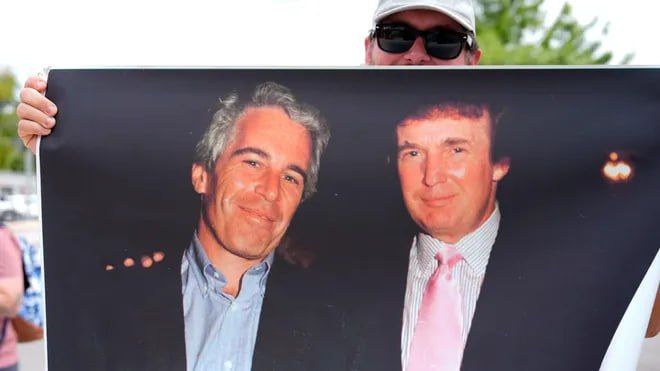
Trump’s ‘consistent pattern of unlawful conduct’ – PressTV report.
-
General Soleimani: Inspirational life and legacy for generations to come
Architecture of resistance: Palestine and Lebanon
General Soleimani achieved martyrdom on January 3, 2020 in a US drone strike that targeted him and PMF commander Abu Mahdi al-Muhandis while he was on a diplomatic mission in Baghdad, Iraq.
The cowardly assassination of the two resistance leaders sparked anger worldwide, as the United States engaged in a clear act of war, resulting in marches and demonstrations that spilled into the very cities of the United States.
General Soleimani’s funeral was attended by millions from Iraq to Iran, from Palestine to Pakistan, from New York to London, as people gathered in the streets to pledge allegiance to the late anti-terror commander’s cause – resistance against the empire, against the terrorist Israeli entity.
For the first time, many in the West asked themselves: Who was Qassem Soleimani?
A veteran of the Holy Defense against West-backed Iraqi dictator Saddam Hussein’s aggression on Iran, General Soleimani’s steadfastness, intelligence, and bravery in battle allowed him to climb the ranks of IRGC leadership in 1998, specifically in the Quds Force.
Remaining firm to the Islamic Republic of Iran’s commitment to the liberation of Palestine, General Soleimani began critical work in coordinating with the Palestinian resistance in the late 90s and early 2000’s during the Second Intifada.
Meeting with Palestinian resistance leaders, including Hamas founder and martyr Sheikh Ahmed Yassin, General Soleimani established a working committee between the different Palestinian factions that dispelled all myths of sectarianism between Palestinian resistance and the Islamic Republic of Iran.
He oversaw the shipment of thousands of weapons into the hands of the Palestinian resistance – weapons that are still wielded to great effect today. But the real assistance provided by General Soleimani was the training and self-sufficiency that he cultivated within the Palestinian resistance.
General Soleimani understood the aggressive, homicidal nature of the illegitimate Israeli entity – assassinations, bombings and sabotage, without regard for civilian lives. He understood that weapons shipments can be intercepted, bugged, or sabotaged. From this calculus, he understood that, for the resistance to succeed, they had to work with what they had – on terrain they knew.
This understanding paved the way for the development of tunnels underneath Gaza and the rockets that were then launched into Tel Aviv from Gaza.
In 2021, a Palestinian Islamic Jihad Movement representative said that General Soleimani developed “Palestinians’ resistance from stone to the missile.”
It was shortly after the conclusion of the Second Intifada that the Israeli attempted invasion of Lebanon would begin in 2006, which brought – until this year – Israel’s most crippling humiliation. Israeli military tanks and helicopters fell while Israeli troops were deterred from the Litani by Hezbollah weaponry.
On Lebanese soil, General Soleimani oversaw strategy and logistics.
With the launch of Operation Al-Aqsa, the world saw for itself the powerful network of tunnels that both the Palestinian and Lebanese resistance used to disable enemy tanks and liquidate Israeli invaders.
Failing to assassinate him despite several attempts, imperialists dubbed him “the Shadow Commander.”Counterbalance to imperial ambitions
General Soleimani’s leadership and skill would also be tested after the US launched the so-called “war on terror” in 2001. President George Bush outlined the objective of toppling of seven countries in five years – Iraq, Syria, Lebanon, Libya, Somalia, Sudan, and Iran.
Americans relied on its clients in the region, such as especially Israel, and the various non-state proxies the US was brewing, including the empowerment of Daesh in Iraq and Syria, in order to create the conditions for the toppling of governments in these countries.
General Soleimani understood that the proper counterweight to US domination was a doctrine of authentic resistance, a resistance forged in ideology but also independent of each other; thus, if one element was cut off, the others could continue to function.
With experience in equipping the Palestinian resistance as well as Lebanon’s Hezbollah, General Soleimani approached the shockwaves in the region with a clinical and smartly executed strategy.
The toppling of Saddam Hussein by the US caused a national catastrophe, with thousands of Iraqis murdered by US coalition forces. Americans used sectarianism as a vehicle to keep the Arab country weak and separated, allowing the festering elements of Al Qaeda and other Takfiri groups in Iraq to take advantage of the chaos. This resulted in the rise of Daesh (ISIS), which ravaged the country, spilling over into Syria – one of the aforementioned targets.
Through shadowy networks in Turkey, Qatar, and Saudi Arabia, the US funneled weapons into the hands of Takfiri mercenaries pouring into Syria and Iraq from Western China all the way to the US itself.
“Operation Timber Sycamore” went as far as even training Takfiri militants who were executing women, children, and the elderly from Syria to Iraq.
The tide needed to turn. Iraq’s senior most cleric Ayatollah Seyyed Ali Sistani’s fatwa – the creation of the Popular Mobilization Forces of Iraq to expel the Daesh enemy – allowed General Soleimani to train soldiers in expelling the Takfiri threat from Iraq, which threatened whatever little stability the country had from years of American occupation.
Successful in driving out most of the Daesh elements from Iraq, General Soleimani also dedicated his time in Syria, struggling alongside the mostly-Sunni Syrian Arab Army to contain the so-called “Syrian Opposition” – a coalition of defected Syrian military commanders fighting alongside Daesh, Al Nusra Front, and other Takfiri groups.
In 2024, Syria eventually fell to Hay’at Tahrir al-Sham (HTS) forces, who would sell the country to the whims of Washington and Tel Aviv. However, the time that General Soleimani bought was incalculable – US occupation forces controlled Syrian oil fields while Takfiri groups licked their wounds in Idlib, waiting for the opportune time to strike – when most resistance forces were occupied fighting Israel.
Perhaps if Syria fell within General Soleimani’s lifetime, the Al Aqsa Flood would not have happened, or would not have been as effective, as it has become clear that the HTS regime installed in Syria is anti-resistance: expelling members of the Palestinian resistance while preparing to confront Hezbollah on the Syria-Lebanon border.
This was the “Soleimani Doctrine” in action: identifying resistance to imperial ambitions and training them to stand their own ground. General Soleimani, through ideological coherence, refined the language and strategy of resistance.
Praying alongside soldiers, meeting with groups in person to discuss ideology with strategy, and, of course, fighting side-by-side on the battlefield with them, General Soleimani forged a new sense of solidarity within the logic of anti-imperialism in a region under imperialist pressure.
The Axis of Resistance had announced itself.A living legacy
Today, General Soleimani lives within the hearts of those who love him and with the minds of those who fear him.
A worldwide symbol of what it takes to resist imperialist ambitions, you can find General Soleimani in the streets of Caracas, where his mural greets the Bolivarian revolutionaries training to confront the possibility of a US invasion. You can see him in banners decorating the holy cities of Karbala and Najaf.
Conversely, you can observe how imperialist mechanisms seek to remove his memory. Posting a photo of the “Shadow Commander” on social media platforms like Instagram and Facebook can earn you suspensions for “promoting terrorism.”
An interesting punishment for honoring someone responsible for destroying terrorists while imperialist powers fueled them in West Asia.
Every year, tens of thousands across the globe mark the anniversary of his martyrdom.
The strategic masterpiece of General Soleimani – the Axis of Resistance – continues to operate despite new challenges and calculations. It has created a bulwark of resistance in an otherwise imperialist-subordinated region.
The blow dealt to imperialism in the form of coordinated, ideologically aligned resistance – from Yemen thwarting the US Navy and Air Force – to the Palestinian resistance forcing the Israeli war machine into a military quagmire – proves that resistance is the only path forward towards sovereignty.
The ideology of resistance that General Soleimani instilled is not limited to the armed revolution. The calculus of resistance against imperial domination is for everyone to understand and wield.
From the organizer researching the ties of corporations to the Israeli occupation, to the scholar publishing a work exposing the intricacies of finance imperialism, to the student who refuses to stand by while their institutions provide material support to ethnic cleansing, and even the parent raising a child to be cognizant of the imperialist plans for their world – everyone has a role to play in strengthening the axis against imperialism, Zionism. And Takfirism.
As Martyr Abu Obeida would say, a leader is succeeded by 10, and a fighter by a thousand.PressTV report
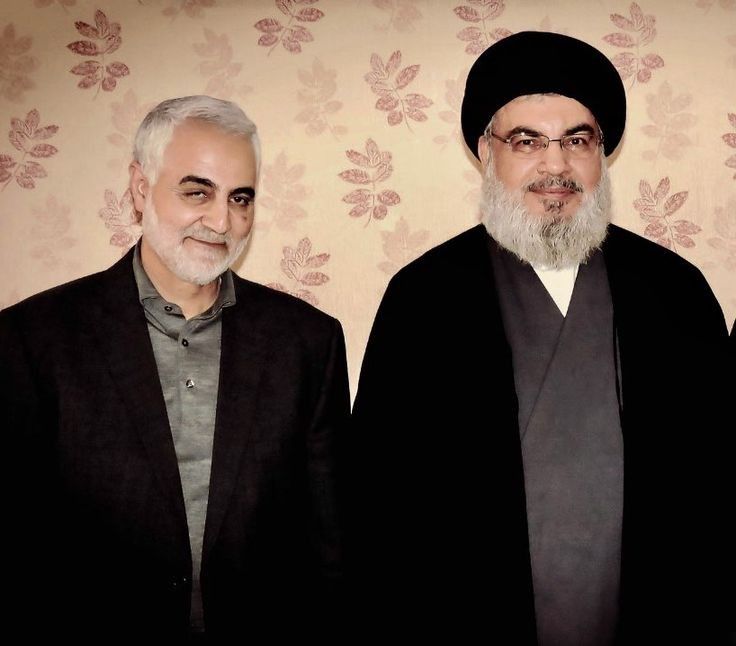
-
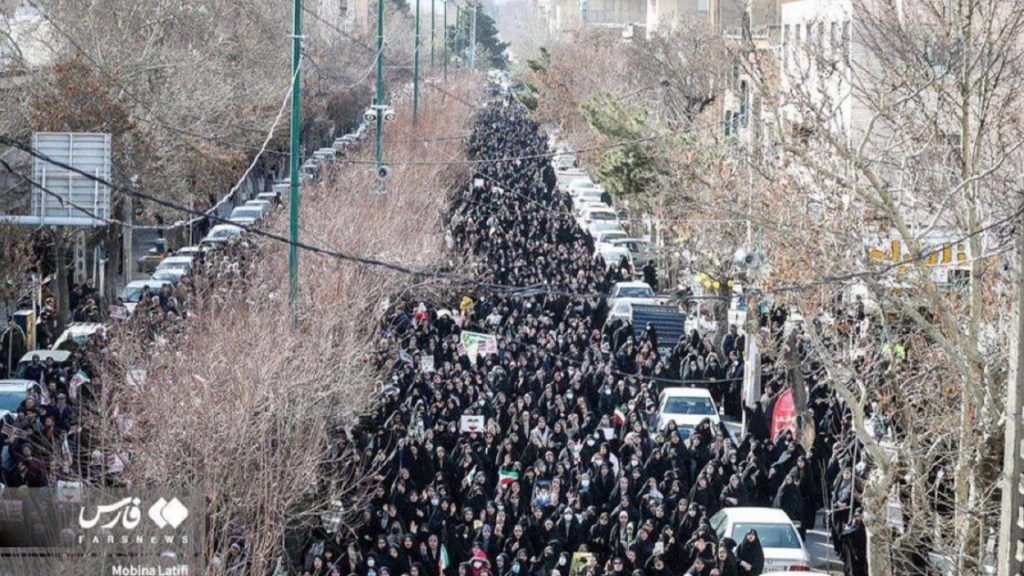
Iranian Crowds Reject Chaos, Denounce US Interventions following Trumpian threats
Massive rallies took place in Fars and Hamedan provinces in Iran today, demanding that Iranian security forces take firm action against anyone threatening public security.
The rallies condemned “the destructive actions carried out by some elements in the country, exploiting peaceful protests”.
Participants emphasized their rejection of any form of violence or sabotage, affirming their commitment to legal and peaceful channels for expressing legitimate demands.Participants chanted anti-US slogans, denouncing its interference in Iran’s internal affairs.
Iranian cities have seen protests in recent days over tough economic conditions, high living costs, and the currency decline against the dollar. Some destructive elements exploited these peaceful protests, engaging in riots and sabotage targeting public facilities, government buildings, and even military institutions, trying to create chaos and panic among residents.PressTV report
Background information
Trump threatened Iran in a social media post, claiming the United States was prepared for military action against Iran.
“If Iran shots (sic) and violently kills peaceful protesters, which is their custom, the United States of America will come to their rescue. We are locked and loaded and ready to go,” Trump said.Al Manar report
-
Saudi Aggression Resume Airstrikes on UEA affiliates in Hadhramawt, including civilian infrastructure
Saudi-led coalition warplanes have resumed aerial bombardment on various areas of the occupied Hadhramawt province, amid an intensifying struggle for influence with the Emirati occupation, a conflict described as being fueled by the blood of mercenaries aligned with both sides.
Following seven Saudi airstrikes targeting Al-Khasha’a من camp and hitting groups of mercenaries affiliated with the Emirati occupation, local sources in Hadhramawt reported a renewed wave of air raids striking both military positions and civilian areas, underscoring the growing dangers posed by the continuation of proxy conflicts and their regional sponsors.
The sources said Saudi aircraft also carried out airstrikes on Seiyun Airport, after previously targeting the headquarters of the so-called “First Military Region,” which had recently fallen under the control of Emirati-backed mercenaries.
Saudi warplanes again targeted the province with airstrikes on Al-Qatn District.
The targeting of civilian objects and public service facilities, including airports, points to a deliberate Saudi policy of destroying Yemen’s infrastructure and exacerbating the suffering of Yemenis in both the north and south, particularly amid the ongoing air blockade.
The occupied territories in Yemen have increasingly become a stage for internal disputes among coalition-backed forces. Airports, military facilities, and administrative structures are being manipulated for political leverage, while civilians bear the consequences. Observers note that these conflicts reflect broader failures of Saudi and UAE strategies, revealing both the limits of their control and the exploitation of local proxies for external
agendas.Al Masirah report
Saudi airstrikes on UAE-backed separatists kill seven in southern Yemen – PressTV report.

-
Subscribe
Subscribed
Already have a WordPress.com account? Log in now.
 Nascent Yemen