-
Update by Al-Masirah’s correspondent in Hodeidah, Yemen: Two died in the Zionist colony airstrikes
“Two martyrs and 42 wounded in the preliminary toll of the US-ZIONIST aggression on the Bajil Cement Factory.”Scenes from the Zionist bombing that targeted a cement factory in the Bajil district of Hudaydah, Yemen. -
Zionist colony spreading its venom across West Asia
Zionist colony bombed the southern Lebanese town of Tayr Harfa for the third time in less than an hour.
Zionist colony warplanes bombed the outskirts of the towns of Janta and Serghaya in the eastern Bekaa Valley, near the Lebanese-Syrian border, for the second time today.
Zionist drones are currently flying low over the skies of Beirut, Lebanon.

Zionist warplanes attacked the town of Srifa, north of Tyre, in southern Lebanon. No casualties or injuries were reported.
The Cradle Media -
American-Zionist joint aerial bombardment of Yemen with over 50 missiles and bombs
The inflated response of colonizers/ imperialists.
At least 30 Zionist warplanes took part in aerial aggression on al-Hudaydah in Yemen.
US warplanes bomb Sana’a, capital city of Yemen, simultaneously with the Zionist colony aggression in HudaydahZionist Broadcasting Corporation (KAN) reports that at least 50 missiles and bombs were launched by Zionist warplanes on Yemen.
Zionist colony officials confirmed that they are bombing Hodeidah in Yemen, at the same time that American warplanes bomb Sana’a.
Netanyahu and Katz oversaw the attack on Hudaydah from the military command center at the Defense Ministry in Tel Aviv. (Zionist Media)
Initial footage of Israeli airstrike on Yemen’s Hudaydah port. PressTV -
International airlines continue cancelling flights to the Colony amid Yemeni missile threat
Flight cancellations to the Zionist colony are ongoing following the Yemeni missile strike near Ben Gurion Airport on Sunday:
– Delta, United Airlines, Wizz Air, Air Europa, Air India, LOT Polish Airlines, Air France, Iberia Express, and Ryanair have canceled flights to the Colony.
– The Lufthansa Group (Lufthansa, Swiss, Austrian Airlines, Brussels Airlines, and Eurowings) and Air India have suspended flights through 6 May.
– Wizz Air has suspended all flights through Tuesday morning, 7 May.
– British Airways has canceled flights until BA405 on 7 May. United Airlines will not fly to Tel Aviv before 8 May and will not operate departures from the Colony before 9 May.
– ITA Airways has canceled select flights, including flights 809 and 815 on 7 May.The Cradle Media report
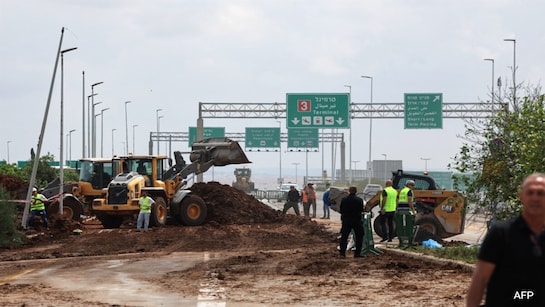
The Zionist colony’s “Sevenfold Response” Warning After Yemeni Missile Hits Biggest Airport. NDTV.com Following the successful missile attack on the “Tel Aviv” International Airport that outsmarted the sophisticated Zionist-American interception systems, Yemen has officially in a statement delivered by the Spox of the Yemeni Armed Forces General Yahya warned of a comprehensive AIR blockade on the Zionist colony.
-
Jolani’s HTS monitored armed civilians who killed Alawites, accused man says

Jolani’s Hay’at Tahrir al-Sham terrorists abusing and killing Alawites in the coastal region of Syria. One of the men accused of taking part in a wave of sectarian violence against Syria’s Alawite minority two months ago sais that he and other armed civilians who travelled to the area were advised and monitored by government forces there.
Abu Khalid said he had travelled as a civilian fighter to the Mediterranean coastal village of Sanobar on 7 March, to help battle former regime insurgents.
“The General Security department told us not to harm civilians, but only to shoot at insurgents who shot at us,” he told me.
“There were eight men with me, but it was a large group, and the General Security department was overseeing things so that no-one would vandalise the village or harm the residents.”
He later filmed himself shooting dead a 64-year-old village resident, Mahmoud Yusef Mohammed, at the entrance to his house.
Abu Khalid, who has now been arrested, insisted Mahmoud was an armed insurgent – but video he filmed of the incident does not support his account.
Military police told the BBC there had been no coordination between security forces and Abu Khalid.Human rights groups estimate that almost 900 civilians, mainly Alawites, were killed by pro-government forces across Syria’s coastal region in early March.
The Alawite sect is an offshoot of Shia Islam and its followers make up around 10% of Syria’s population, which is majority Sunni.
Syria’s coastal area – a stronghold of the former regime – has been largely sealed off, but a BBC team gained access, speaking to witnesses and security officials about what happened in Sanobar.
The violence came a day after fighters loyal to the country’s overthrown former President Bashar al-Assad, who is an Alawite, led deadly raids on government security forces.
The new Sunni Islamist-led government had called for support from various military units and militia groups to respond to those raids – but that escalated into a wave of sectarian anger aimed at Alawite civilians.
Witnesses told the BBC that several different armed groups had targeted Alawites for summary executions. Some also said that government security forces had battled violent and extremist factions to protect Alawite villagers from attack.When the violence along this coast erupted, the village of Sanobar was right in its path. Some 200 people were wiped out from this small Alawite village, over the course of a few days in early March.
Almost two months after the killings, there have been no funerals in Sanobar.
A mass grave now squats beside the winding village road. Hurried burials have cleared the remaining corpses.
This is now a village of women and secrets. Most survivors are still too scared to speak openly but their stories, shared with us privately, are often strikingly similar.The body of Mahmoud Yousef Mohammed lay outside his simple breeze-block house in Sanobar for three days after he was shot dead.
His wife, daughter and grandchildren, sheltering in a neighbour’s house, were too afraid to emerge from hiding and bury him, as armed groups roamed the village.
His family said Mahmoud was a polite man, known and respected in the village; a farmer with a military background, who sometimes worked as a minibus driver.
His house, on a quiet street at the edge of the village, stands less than 300m (985ft) from the main highway where, on 6 March, army officers from Syria’s former regime led co-ordinated attacks on the country’s new security forces.
For two days, government forces battled former regime fighters, known locally as “filoul” (“remnants”), in the villages along this coastal highway, calling for support from allied militia groups who helped push Bashar al-Assad from power last year.
An array of armed supporters responded to the call, including foreign jihadist fighters, civilians and armed units now nominally part of the new Syrian army, but still not fully under government control. All are groups now accused by survivors of civilian executions.All day on 7 March, Sanobar residents listened to the sounds of intense fighting around the village, as families hid in their houses.
Then the targeting of civilians began.
“All day, many groups entered our house,” one survivor from Sanobar told me. “They weren’t from the [military] groups based here, but from Idlib, Aleppo and elsewhere. Some wore camouflage uniforms. But the ones who killed us were wearing green uniforms with a mask.”
“They stole everything, insulted us, threatened the children,” she continued. “The last group came around 6pm. They asked, ‘Where are the men?’ and took my father and my brother Ali. We begged them not to kill them. They said, ‘You’re Alawite, pigs,’ and shot them in front of our eyes.”
Some time that day, Mahmoud stepped outside the building he was sheltering in with his family. One of his relatives said he could smell toxic fumes from a fire nearby, and wanted to check on his own house.
He never reappeared.
“We found the next morning that he had been killed,” the relative told us.
The story of what happened to Mahmoud began to emerge when a video of his killing surfaced on social media, filmed by the man who shot him.
In the video, Abu Khalid is seen grinning and taunting Mahmoud from the back of a motorbike before shooting him six times.To meet Abu Khalid, we travelled to Idlib, the heartland of transitional President Ahmed al-Sharaa’s Islamist group, Hayat Tahrir al-Sham (HTS), which swept Syria’s old regime from power last December.
Now in military police custody pending an investigation, Abu Khalid shuffled into the room, blinking and stretching as his blindfold and handcuffs were removed.
A young man in camouflage pants, he seemed keen to talk, explaining that Mahmoud was not a civilian, but an insurgent who was fighting in the village that day, and had been carrying an 8.5mm-calibre rifle when he shot him.
“I turned the camera on him and told him to sit down,” Abu Khalid told me. “He was running away and he wanted to kill me, so I shot him in the shoulder and the leg. When I got closer, I saw him moving his hand as if he had a bomb or a gun. I was afraid, so I killed him.”But the video Abu Khalid filmed of the shooting – its location and timing verified by the BBC – does not support his account.
A former member of the British special forces confirmed that there was no weapon visible on or near Mahmoud at any point in the video.
And at no point does Abu Khalid ask the 64-year-old to stop or sit down – nor does he appear scared or under threat.
Instead, he is shown whooping and grinning on the back of the motorbike, before calling out to Mahmoud, “I’ve caught you, I’ve caught you! Look at the camera!”
He then shoots him three times in quick succession. Mahmoud falls to his knees inside the doorway of his house.
“You didn’t die?!” Abu Khalid calls out, as he follows him to the building.
Mahmoud can be heard begging for his life, before Abu Khalid shoots him three more times at close range.International law forbids the killing of civilians, the injured, or disarmed fighters.
Khaled Moussa, from the military police unit now holding Abu Khalid, said he had gone to fight in Sanobar without coordination with the security forces.
“Civilians are not supposed to be there during military operations,” Mr Moussa said. “He made a mistake. He could have captured the person, but instead he killed him.”
But Abu Khalid has little regret for what he did.
When he cries during our interview, it’s not for Mahmoud – or even for himself. It’s for his little brother, killed in a bomb attack by President Assad’s former army in 2018 as his family sat down at home to break their Ramadan fast.
“He was eight years old, and I held him while his soul left his body,” he told me, before tears start flowing down his face.
“I was raised during the revolution, and saw nothing but injustice, blood, killing and terror. They ignore everything that happened in Syria before the liberation, and focus on the video I filmed.”
He tells me his family’s latest casualty was his 17-year-old cousin, killed while fighting insurgents near Sanobar. “He was completely burned,” he said. “We took him away in a plastic bag.”
“If I was going for revenge for what they did to us, I wouldn’t have left any of them.”The insurgent attacks on 6 March ripped open sectarian fault-lines that Syria’s new Islamist government had tried to paper over with promises of tolerance and inclusion.
The Syrian Network for Human Rights (SNHR), an independent monitoring group, says former regime loyalists killed at least 446 civilians, including 30 children and women, and more than 170 government security forces, most of them on 6 March.
Those attacks resurrected deep-seated anger over the repressive dictatorship of former President Assad, with Alawite civilians seen by some as complicit in the crimes of his regime – and as part of the insurgency that followed his fall.
The SNHR says the government’s crackdown on insurgents on the coast “escalated into widespread and severe violations”, most of which were “retaliatory and sectarian”.
The group says that pro-government forces and supporters killed at least 889 civilians, including 114 children and women, in the days following the insurgent attacks.
Amnesty International has investigated dozens of attacks it says were “deliberate”, “unlawful” and targeted at Alawite civilians.
One video from Sanobar shows a pro-government fighter marching through the village chanting, “ethnic cleansing, ethnic cleansing”.
Lists of victims from the village, compiled by local activists, include the names of more than a dozen women and children, including an 11-year-old, a pregnant woman and a disabled man.
The survivor who watched gunmen kill her father and brother said the family showed their killers the men’s civilian ID cards to prove they hadn’t been part of Assad’s army. But it made no difference; their only accusation, she said, was that the family were “Alawite pigs”.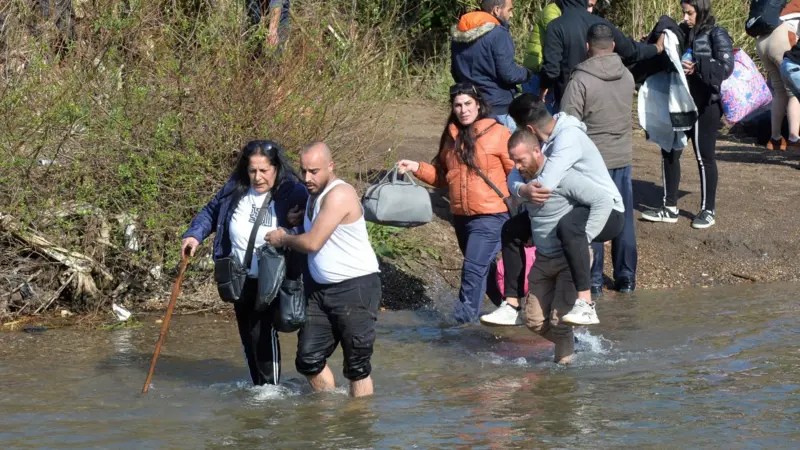
Many Alawites fled into neighbouring Lebanon to escape the attacks by Jolani’s Hay’at Tahrir al-Sham terrorists Separating civilians from insurgents is key to the new government’s plan to secure the country, and its promise to protect minorities.
But that will require prosecuting those responsible – and proving it can control its own military forces and armed allies.
Sharaa’s HTS group – once the local affiliate of al-Qaeda and still designated as a terrorist organisation by the UN, US and UK – formed the backbone of his new army.
There has been rapid recruitment to fill the ranks of a new civilian police and the General Security Forces.
Training has reportedly been shortened and many units say they are under-equipped. One commander looked wistfully at my body-armour and radio when we joined them on a patrol. “We don’t have those,” he said.
Turkish-backed militia and jihadist fighters who once fought alongside HTS to remove Bashar al-Assad are among those named by witnesses and human rights groups as carrying out summary executions.
In the streets of Sanobar, the names of Turkish-backed units, now supposedly under government control, have been graffitied on the walls, and the BBC heard several reports that their men were still present in the village.
Some videos of alleged violations also appear to show the presence of vehicles and uniforms from the official General Security Forces – prompting Amnesty International to call for investigation.The head of the General Security Forces for the Latakia region, Mustafa Kunaifati, told me that civilians with friends or relatives in the army were responsible for most of the crimes, but admitted that members of armed groups had also been involved – including what he called “individual cases” from his own General Security units.
“It happened,” he said, “and those members were also arrested. We can’t accept something like that.”
After the former regime fighters were expelled and the situation brought under control, he said his men “began removing all the rioters from the area and arresting anyone who had harmed civilians”.
Several witnesses have confirmed to the BBC that Mr Kunaifati’s forces intervened to protect them from other armed groups.
One of Mahmoud’s neighbours in Sanobar told us they evacuated him and his family 30 minutes before Mahmoud was killed.
And the witness who described the killing of her father and brother said the General Security Forces had helped them escape the village, and later to return and bury their relatives.
A special committee is currently investigating both the initial 6 March attack by insurgents, and the violence by pro-government forces that followed. The BBC understands some 30 people have been arrested.BBC report
This undated photo released by a militant group in 2016, shows Abu Mohammed al-Golani, the leader of Syria’s al-Qaida affiliate, second from right, discussing battlefield details with commanders in Aleppo, Syria. (Militant UGC via AP, File) -
Health authorities warn of severe supply shorts in Gaza as Netanyahu approves ‘The Plan’
UNRWA warned of a critical shortage in basic supplies and medical resources in Gaza as the total blockade enters its ninth week. One-third of medical essentials have run out, with the rest expected to deplete within two months. UNRWA’s Gaza office said food and flour stocks are also exhausted.
Gaza’s Health Ministry warned hospitals have fuel for only three more days. Amnesty International urged international actors, especially the EU, to pressure Israel to allow aid into Gaza and hold those responsible for war crimes accountable.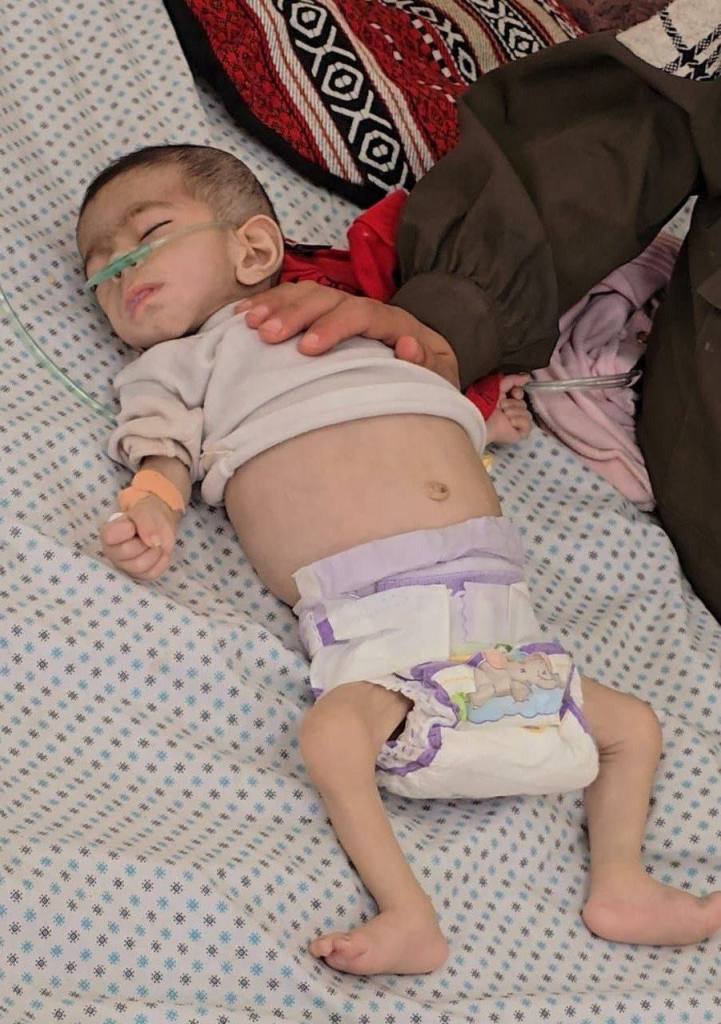
Child Janan Saleh Al-Skafi was martyred in Al-Rantisi Hospital in Gaza by the zionist weapon of starvation. RNN The Zionist colony approves plan for Gaza ‘conquest’ and mass displacement.
The Zionist colony has begun calling up reservists to implement a plan to ethnically cleanse Gaza, first proposed just days after the 7 October Hamas attack – The Cradle Media report.
The Zionist colony names new Gaza operation, which involves the occupation of territory and mass displacement of Palestinians, ‘Gideon’s Chariots’.
According to Israeli media:
The name of Israel’s new military operation in Gaza, recently approved by the Security Cabinet, is Gideon’s Chariots (Hebrew: מרכבות גדעון), which carries deliberate religious, historical, and military symbolism.
Symbolic meaning:
Gideon is a biblical figure from the Tribe of Manasseh, known for leading a small group of fighters to victory over the larger Midianite army through cunning and military strategy, according to the Book of Judges. In Israeli military theology, Gideon symbolizes triumph from a position of weakness or limited numbers, relying on “divine legitimacy” in battle.
Chariots: Refer to ancient war chariots, symbols of power, mobility, and swift attack. In modern terms, it may also evoke tanks or advanced military technology.
Historical context:
Israel previously named one of its 1948 Nakba operations “Operation Gideon,” which aimed to seize the Baysan (Beit She’an) region and expel its Palestinian inhabitants. The reuse of the name Merkavot Gideon today may echo this historical campaign of expulsion and control, reinforcing the colonial-settler undertones of the operation’s name.
Summary:
Merkavot Gideon is a name carefully chosen to provide religious and historical legitimacy to the operation. It evokes strength and determination in battle, while simultaneously referencing a renewed colonial impulse—where biblical figures are once again used to sanctify Israeli military violence against Palestinians.Palestinian Ministry of Health in Gaza:
—
Daily statistical report on the number of martyrs and wounded as a result of the “israeli” aggression on the Gaza Strip.
40 martyrs and 125 injuries arrived at Gaza Strip hospitals over the past 24 hours.
A number of victims remain under the rubble and on the roads, unable to be reached by ambulance and civil defense crews.
The martyrdom toll and injuries since March 18, 2025 has reached 2,436 martyrs and 6,450 injuries.
The martyrdom toll from the “israeli” aggression has risen to 52,535 martyrs and 118,491 injuries since October 7, 2023.
Palestinian Ministry of Health in Gaza.
May 04, 2025 -
Update: US warplanes carried out eight airstrikes on Al-Hazm District in Al-Jawf Governorate
In the past hours, US raids have targeted several areas across Yemen, among them Al-Hazm City in Al-Jawf Governorate and the capital Sanaa.
Al Masirah via Al Akhbar
Scenes of the aftermath of the American bombing that targeted Al-Arbaeen Street in the Shu’ub District in Sana’a, which resulted in the injury of 14 citizens, including passersby and shop owners. Al Masirah video -
US strike injures 15 in Yemen as Sana’a vows to escalate air siege on the Zionist colony
15 civilians were injured in US airstrikes on Sana’a, Yemen, according to the Yemeni Health Ministry, which condemned the targeting of populated areas as a violation of international law. Following the strikes, the Yemeni Armed Forces vowed to enforce a total air blockade on the Zionistcolony, focusing on Ben Gurion Airport, which they hit with a hypersonic missile, prompting flight suspensions.
Zionist media expressed frustration over the failure of US and Israeli defense systems to intercept the missile. Outlets like Yedioth Ahronoth and Maariv warned of prolonged disruptions to air traffic and broader strategic damage.Initial footage of the damage to shops as a result of the American aggression, Al-Arbaeen Street, Shu’ub District, in the capital, Sana’a.
Al Masirah video -
Unabated American-Zionist aggression airstrikes on Yemen
American warplanes have once again bombed the Ras Issa oil port in Hodeidah, western Yemen, as well as Kamaran Island off the coast of the city. This is coinciding with an ongoing aggression on Sana’a.
On April 18, 2025, over 80 civilians were murdered in cold-blood by the American-Zionist entity in airstrikes on the
Ras Al Isa Port in Hudaydah.American warplanes carried out 3 airstrikes on Saada and renewed their aggression on Sanaa, Yemen.
-
Yemen warns the Zionist colony of a comprehensive AIR blockade
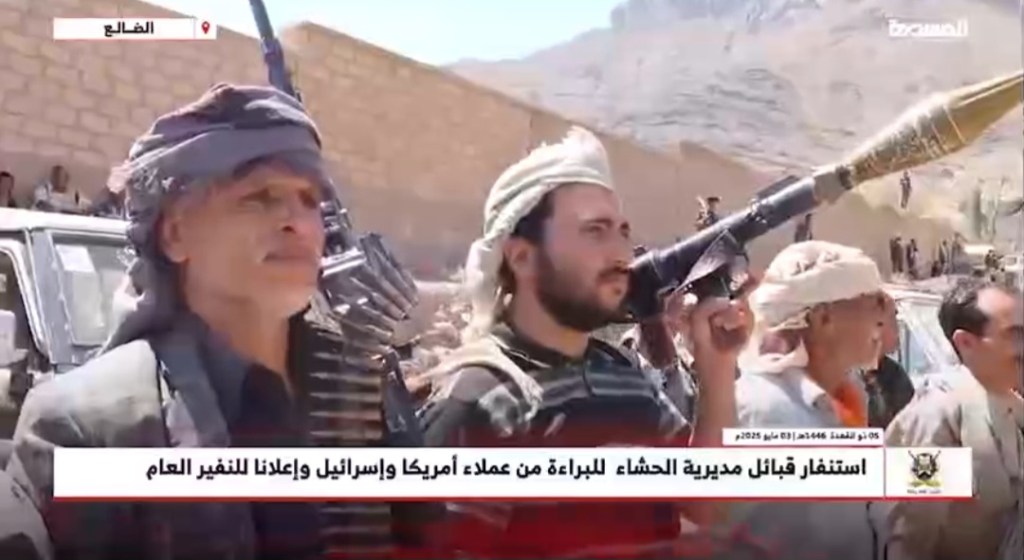
Except from Al Masirah video In response to the Zionist escalation with its decision to expand aggressive operations against Gaza the Yemeni Armed Forces announce that they will work to impose a comprehensive air blockade on the Zionist enemy by repeatedly targeting airports, most notably Lod Airport, known in the Zionist colony’s as Ben Gurion Airport.
It calls upon all international airlines to take into consideration the contents of this statement from the moment of its announcement and published, and to cancel all scheduled flights to the airports of the criminal enemy, to preserve the safety of their aircraft and their agents.
Beloved, free, and independent Yemen will not accept the continuation of the state of violation that the enemy is trying to impose by targeting Arab countries such as Lebanon and Syria.
It affirms that this nation will not fear confrontation and will reject submission and subservience.
Sana’a,
Dhu al-Qi’dah 6, 1446 AH
May 4, 2025 AD
Issued by the Yemeni Armed Forces
http://t.me/army21yeAl Masirah video
-
Subscribe
Subscribed
Already have a WordPress.com account? Log in now.
 Nascent Yemen