-
British ‘UnHerd’ Report: US Military Power Humiliated in Yemen, Unable to Achieve Victory
An analytical report by the British website UnHerd confirmed that the United States cannot even come close to victory in Yemen, revealing that the Yemeni Armed Forces have exposed America’s military humiliation and declining power amid the ongoing confrontations in the Red Sea over recent months.
The report stated: “In today’s world, America has no new weapon that can even come close to securing victory in Yemen.”
It noted that US aggression against Yemen—whether under Biden or Trump—has ended in failure, achieving little progress. Washington has been unable to reopen the Red Sea to Israeli enemy navigation, as the mighty US military was somehow “handicapped.”
The analysis continued: “The natural conclusion was that once Trump took office, the gloves would come off.” Trump attempted to demonstrate a new, more forceful US military response against Yemen—but only for six weeks. American aircraft carried out round-the-clock airstrikes, with rare and expensive stealth bombers flying missions from Diego Garcia to support carrier-based jets.
Despite these raids, Trump proudly declared that Yemen had “surrendered” and that the U.S. no longer needed to continue bombing. Oman mediated a ceasefire, which was promoted as a glorious victory for the American military. However, the truce agreement granted the Yemeni Armed Forces complete freedom to continue targeting Israeli-affiliated ships—proving it was not Yemen waving the white flag.
The British outlet pointed out that Trump’s “Rough Rider” operation, unlike Biden’s campaigns, deployed some of America’s most limited, costly, and advanced weapons in an attempt to subdue the “Houthis.” Yet, aerial warfare proved ineffective.
The analysis concluded: “But the US has no alternative warfare methods to fall back on, meaning its days as a dominant military power may be nearing an end.”
Since late 2023, Yemen has intensified its stance against the Israel entity in solidarity with Gaza, launching long-range missile and drone operations in response to Israeli military actions. These operations have positioned Yemen as a key player in the regional resistance front.
In retaliation, Israel has increasingly targeted Yemeni infrastructure, including civilian sites like airports and ports. The recent attack on Sana’a International Airport, which targeted a civilian aircraft designated for transporting pilgrims and patients, marks a clear indication of the occupying entity’s failure to achieve its objectives. This strike follows ongoing US and Israeli efforts to curb Yemen’s military support for Palestine, amid rising condemnation over the humanitarian crisis in Gaza.Al Masirah report

Yemen will soon turn pride of Israel’s aircraft into source of mockery – PressTV report.
Mahdi al-Mashat, the head of Yemen’s Supreme Political Council -
US-BACKED terror colony airstrikes kill one civilian
Zionist warplanes bomb Tartous and Latakia on Syria’s coast.
A civilian killed this evening in a colony airstrike targeting the outskirts of Zama village in Jableh countryside. (SANA)
The Cradle Media -
Elias Rodriguez … the feda’i
The operation carried out by the feda’i Elias Rodriguez marked a pivotal moment of unconditional solidarity with the Palestinian people and the struggle against imperialism.

Occurring amid one of the fiercest phases of the genocidal war waged by the Zionist entity against the Gaza Strip for more than twenty months, the operation was a natural and legitimate response to this brutal aggression and an echo of the voice of resistance that remains alive and deeply rooted in the conscience of free peoples.
The revolutionary intellectual and martyr Ghassan Kanafani (1936–1972) was the foremost theorist of revolutionary violence in confronting imperialism and Zionism. Kanafani’s link to armed struggle was not romantic but was tightly bound to his political thought, his convictions, and the approach whose logical and moral coherence he defended until the moment of his martyrdom. This practical, organic connection was among the chief reasons for his assassination.
Kanafani also waged an unrelenting intellectual struggle against those—whether Palestinians, Arabs, or others—who opposed “external operations.” The author of the dictum “behind the enemy everywhere” continually affirmed, up to the moment of his assassination, that there is neither separation nor contradiction between the actions of the fedayeen in Palestine and across its borders and “external operations,” so long as the political strategy is unified and the enemy is one. Has the enemy camp changed today? Have its colonial policies changed, or have they grown even more savage?
Rodriguez’s heroic operation clarified that the “solidarity movement” with the Palestinian people is not a single current or unified vision, but rather a mixture of diverse forces: some believe in the path of resistance and the liberation of Palestine from the river to the sea, while others have positioned themselves within liberal frameworks that confine the conflict to human rights discourse and the diplomatic arena, and practically call for what is termed the “two-state solution” as the only viable horizon for the Arab-Zionist conflict. This divergence is not new. It reflects the political and ideological contradictions that have always accompanied international solidarity movements, from the Algerian revolution to the support movements for the struggles in Vietnam, South Africa, Ireland, and others. In fact, it also reveals internal Palestinian contradictions—but that is a longer discussion…At the heart of this complex picture lies the importance of Rodriguez’s operation. It was not only a security challenge to the U.S. security apparatus but also held up a mirror reflecting the reality of positions: who truly stands with the resistance, and who hides behind general slogans to promote a vision oscillating between nihilism and surrender. Many speak of “the Palestinian people’s right to resist,” yet they reject any actual, conscious practice of this right if it steps outside the bounds of discourse acceptable in the West, a discourse that often translates into calls for compromises and political concessions, foremost among them the promotion of the “two-state solution” and a “peace” that entails recognition of the Zionist entity’s legitimacy and the surrender of Palestine—and of our minds as well.
Conversely, there are those who stood firmly and clearly with the resistance, not only as a theoretical concept, but as practical action grounded in the principles of liberation, return, and the rejection of the occupation’s legitimacy. These are the natural extension of Palestinian liberation movements around the world, who view the Palestinian struggle as part of a global front against colonialism, racism, and predatory and brutal capitalism. For this reason, we are witnessing the advance of radical labor, youth, student, and women’s forces, while the trend of “conditional solidarity” is in retreat.
Rodriguez’s operation not only revealed the limits of liberal discourse; it also restored the value of direct action as a mobilizing and agitational tool, placing everyone before their responsibilities. The broad popular response to this operation, particularly among youth and within Palestinian, Arab, and Muslim communities, reveals that popular sentiment remains aligned with armed struggle and a revolutionary position on Palestine. The battle being waged by the Palestinian people is not confined to the West Bank and Gaza, but extends and expands globally within the framework of revolutionary struggle against imperialism, Zionism, and reactionary and fascist regimes.
These differences, despite their sharpness, must not turn into a source of nihilistic discord; rather, they should be understood as part of the natural plurality within global liberation movements. Historically, solidarity movements with just causes have witnessed similar divergences, whether in supporting the Cuban revolution, the struggles of Latin America, or even positions on the resistance in Iraq and Lebanon. However, there is an urgent need to prevent the enemy from exploiting this “plurality,” especially amid the genocide. The Zionists, through propaganda campaigns and political and legal pressures, seek to demonize all who support the resistance and its supporters, and to sow doubt and distrust within the ranks of solidarity activists in general.Our assessment is that the majority of the Palestinian people—inside the homeland and in the diaspora—especially in light of the massacres in Gaza, see the revival of feda’i action as a revolutionary necessity. They are calling for broader popular participation in supporting the resistance, whether political, financial, media, or cultural support, or through direct involvement. This is the popular cradle and the revolutionary driving force needed to halt the aggression, shift the balance of power, and achieve liberation. The greater the occupation’s crimes, the deeper the conviction that there is no place for neutrality and that confronting the enemy has become a duty, not a choice.
Today’s battle is not confined to Gaza or the West Bank, but includes the diaspora as well. Therefore, Rodriguez’s operation represents a cry in the face of the American system, and a message that resistance is not the preserve of geography, race, or color, but is an affiliation, an identity, and an ethical and political stance that allows for no compromise.
In conclusion, the forces of resistance and their allies must build on this moment, broaden the circles of revolutionary dialogue with liberation movements on an international level, and safeguard their ranks against the Zionist campaigns that seek to isolate and defame the resisters. The battle is long and open to all possibilities, but clarity of vision and direction—as Rodriguez demonstrated—is the first condition for victory. -
Deir Yassin—a legacy of resistance and international solidarity against imperialism
On the 53rd anniversary of the Deir Yassin Operation at Lod Airport –
Deir Yassin: A brutal massacre carried out by zionist death squads in 1948 indelibly etched into the collective consciousness of all Palestinians.
Deir Yassin is why we resist—to reclaim our stolen village and avenge the blood of our martyrs. Throughout the storied history of Palestinian resistance, heroes vowed revenge in the name of Deir Yassin: resistance fighters killed 77 zionists in an operation four days after the 1948 massacre, the Deir Yassin Unit of Arab resistance fighters carried out an operation that killed 40 settlers under the command of martyr Dalal Al-Mughrabi in 1978, and the Deir Yassin Operation of 1972 was an internationalist feat of anti-imperialist resistance that shook the world.
The Deir Yassin Operation was launched 53 years ago today. Three Japanese comrades—Bassem, Salah, and Ahmed—joined forces with five Palestinian comrades to strike the zionist entity at its heart. Their real names were Tsuyoshi Okudaira, Yasuke Yasuda, and Kozo Okamoto, and they were members of the Japanese Red Army, which received weapons, training, and finances from the PFLP. They had trained in Lebanon, and all were students: Bassem of architecture, Salah of electrical engineering, Ahmed of botany, and all of revolution.
Their location of choice was the so-called “Lod Airport” (now “Ben-Gurion Airport”) in occupied Al-Lydd. Known as quiet men, they quietly arrived from Paris at 10 PM, waited for their luggage—violin cases loaded with weapons, ammunition, and explosives—and carried out their revolutionary duty. By the time they were done with their operation, 26 zionists were left dead on the ground and 80 were wounded. Five Palestinian comrades fired outside the airport in support. Bassem was martyred after he ran out of ammunition, Salah blew himself up in a revolutionary act, and Ahmed (Kozo) went on to become a revolutionary icon after spending 13 years in solitary confinement in the zionist prisons.
In interrogation, Kozo declared that the operation was part of the global revolution against zionism and imperialism. He and the masterful tactician Dr. Wadie Haddad had planned it. In the attached video, PFLP founder Bassam Abu Sharif claims the operation on behalf of the PFLP, stating that it is a continuation of the PFLP’s line of “attacking the enemy wherever it hurts most” in reference to Wadie Haddad’s slogan “behind the enemy in every place.” After brutal psychological and physical torture, Kozo was freed in 1985 in the Ahmed Jibril prisoner exchange, and he went on to live his life in asylum in Lebanon after a troublesome period. Kozo was interviewed years later; he stated that he had hoped to be martyred during the operation, and when asked if he regretted anything: “I had no choice but to open fire in the name of armed struggle.”
Five weeks after the operation, the Mossad assassinated PFLP leader Ghassan Kanafani and his 17-year-old niece Lamees in Beirut in retribution for the Deir Yassin Operation. When the day comes, we will tell you Ghassan’s story.
Glory to the glorymakers, the internationalist revolutionaries who upheld the promise of resistance and global revolution. The echoes of Deir Yassin’s pain are reflected in the bullets of our comrades, the internationalist fighters united against imperialism who pledged to keep the memories of the martyrs and usurped villages alive.
The struggle for Palestinian liberation and the fight against zionism everywhere transcends borders. With every stone thrown, every bullet fired, and every zionist weapons company dismantled, our resistance honors our martyrs and struggle with every act of defiance until our lands are liberated of zionism and freed, from the river to the sea. We will never forget Deir Yassin, and we will never forget the bravery of those who committed themselves to liberation by any means necessary.
Remember Deir Yassin. Remember our heroes. For this—our joint struggle—is the legacy of Deir Yassin and our inheritance.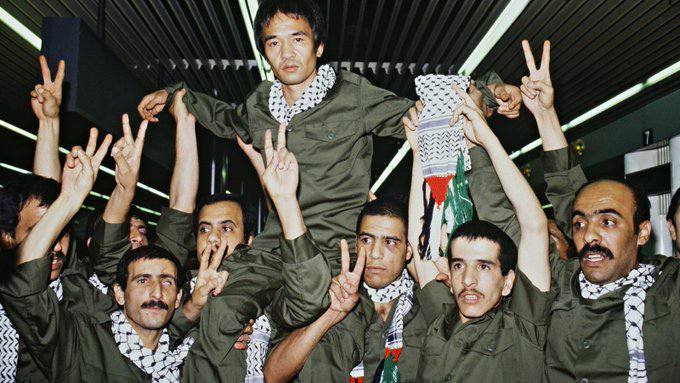
-
Zionist War Spending Tops $46 Billion as Daily Cost of Gaza Assault Surpasses $81 Million
New data reveals the staggering toll the war has taken on the Zionist entity’s economy.
Zionist Channel 12 reported Thursday that, 600 days after the Palestinian resistance launched the landmark Operation Al-Aqsa Flood on October 7, 2023, the financial toll on the Israeli occupation—through its so-called “Operation Swords of Iron”—has exceeded $46 billion in direct military costs, making it one of the most economically draining wars in its history.
According to figures from the Israeli security establishment cited in the report, the average cost of a single day of war is approximately 300 million shekels (about $81 million).
These figures represent only the direct military expenditures, excluding broader economic impacts such as civilian compensation, evacuation costs, and non-defense emergency measures.
Breakdown of Military Spending
The report emphasized that the Israeli occupation forces, unusually transparent for a military institution, have provided real-time budgetary updates throughout the conflict.
Of the total more than $40 billion spent so far:
$15 billion went to payments and support for reservists. According to the report, this sum could have been significantly reduced if the government had enlisted ultra-Orthodox men in line with “Supreme Court” rulings or extended mandatory service by four months, as the military recommended.
$10.9 billion was allocated for ammunition and missile defense systems — including tank shells, small arms munitions, aerial bombs, and interceptors such as Iron Dome and Arrow missiles.
$6 billion funded the acquisition of aircraft, naval and ground equipment, and related spare parts.
$4.6 billion covered logistics.
$3.5 billion went toward weapon systems.
$2.45 billion was spent on communications and intelligence infrastructure.
$2.18 billion was used for military infrastructure, support lines, and other expenses.
Long-Term Social and Financial Burden
Approximately $1.36 billion has been allocated for rehabilitation, medical treatment, and family support services. However, Channel 12 noted growing concern within the defense establishment and Finance Ministry over the enduring nature of these costs. Unlike wartime expenditures, these are long-term liabilities.
Payments to wounded soldiers, widows, orphans, and others under the Ministry of War’s Rehabilitation Division will persist for years.
The report added that around 16,000 Zionist soldiers have been injured in the war so far, with nearly 50% suffering from psychological trauma.Austerity and Economic Repercussions
Channel 12 linked the war’s staggering cost directly to the adoption of the Israeli austerity budget for 2025, which includes tax increases to help cover military expenditures.
The Finance Ministry, the report added, fears the prolonged conflict could force a reopening of the 2025 budget due to projected overspending by the security establishment in the billions.
This scenario could result in further budget cuts and additional tax hikes as early as 2026.
The war’s mounting financial burden continues to drain the Israeli occupation’s economy, reflecting the sustained resilience and impact of the Palestinian resistance.Al Manar report
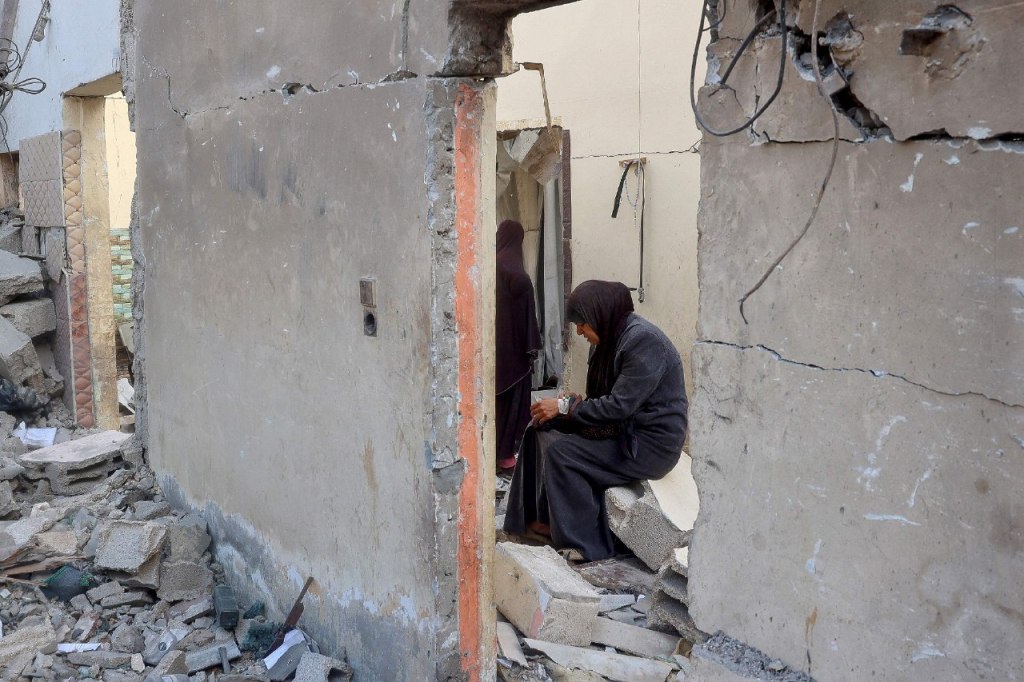
American mercenaries throw stun grenades and fire live rounds at Palestinian civilians seeking to fetch aid from the newly opened aid distribution point in central Gaza, leaving dozens injured. PressTV report -
Zionist Airstrikes Pound Southern and Eastern Lebanon in Escalation of Ceasefire Violations Amid Official Silence
Zionist occupation warplanes launched a wave of intense airstrikes across southern and eastern Lebanon late Thursday night, marking a blatant violation of Lebanese sovereignty amid state silence.
Heavy Bombardment Targets Southern Lebanon
The aerial assault began with concentrated strikes on the Iqlim al-Tuffah region, where warplanes targeted Wadi al-Safa, located between the towns of Kfarfila, Sarba, and Ain Qana.
Additional strikes hit the town of Qaaqaiyat Al-Snoubar, while Israeli surveillance drones conducted extensive low-altitude flights over the Al-Zahrani area—reportedly in unprecedented silence, indicating possible use of advanced stealth technologies.
The bombardment continued with two additional airstrikes on the Rihan hills in Jezzine and an attack on the Jabbour area in the town of Kfarhouna. Fighter jets maintained a heavy presence over the broader southern airspace throughout the night.
The assault culminated in two of the night’s most intense strikes on the town of Bnaafoul in the Sidon district—described by local sources as the most forceful bombardments yet—constituting what Lebanese officials labeled a blatant violation of national sovereignty.Strikes Extend to the Bekaa Valley
In a parallel offensive, four successive Israeli airstrikes targeted the outskirts of the town of Shmestar, near Taraya, west of Baalbek, shortly after midnight. These strikes extended the geographic scope of the attacks deep into Lebanon’s eastern interior.
Tensions Near UN Line Amid Israeli Violations
Separately, the Lebanese Army reported that one of its units, in coordination with the United Nations Interim Force in Lebanon (UNIFIL), worked to dismantle Israeli-erected earth mounds and reopen roads in the vicinity of Adaisseh, in the Marjayoun district.
According to a military statement, Israeli occupation forces—including a tank—attempted to obstruct the operation but failed to stop the army from completing the task.
UNIFIL’s Deputy Head of Mission, Hervé Lecoq, reaffirmed that Hezbollah has not engaged in any offensive actions against the Islaeli enemy since the last truce agreement, nor has the group obstructed the Lebanese Army’s operations in the south. He noted no visible military presence of Hezbollah in the area, countering Israeli claims.
The Israeli attacks occur in the continued absence of any meaningful response from the international monitoring committee overseeing the ceasefire, chaired by the United States. Lebanese officials have criticized both the lack of enforcement and the failure to pressure Israel to halt its assaults.
Since November 27, Israeli occupation forces have reportedly committed 3,347 violations and attacks, according to Lebanese military figures.
Source: Al-Manar Website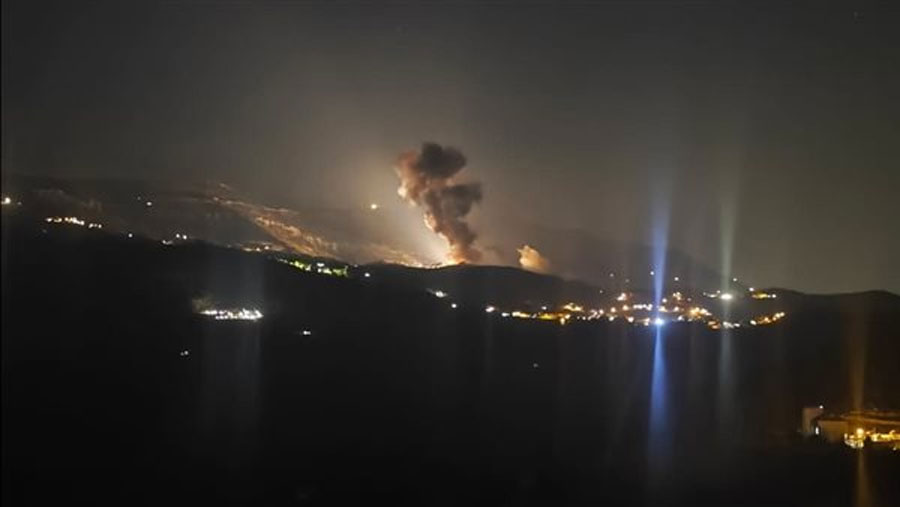
Israeli occupation warplanes launched a wave of intense airstrikes across southern and eastern Lebanon (May 30, 2025) -
Statement by the Spox of the Yemeni Armed Forces General Yahya Saree
The YAF targeted ‘Ben Gurion Airport’ halting all flights!
Triumphing for the oppressed Palestinian people and their Mujahideen, and in rejection of the crime of genocide perpetrated by the Zionist enemy against our people in the Gaza Strip.
“The missile force of the Yemeni Armed Forces carried out a military operation targeting Lod Airport, Israeli named Ben Gurion Airport, in the occupied area of Yaffa, using a hypersonic ballistic missile.
The operation successfully achieved its goal, thanks to allah, forcing millions of occupying Zionists to flee to shelters and halting air traffic at the airport.
The Yemeni Armed Forces assure all our faithful and struggling Yemeni people that, with Allah’s help, they will continue to fulfill their religious, moral, and humanitarian duty toward our people in Palestine until the aggression against them stops and the siege is lifted.
They will also, with trust in Allah, confront every Israeli aggression against our country with further supportive operations for the oppressed Palestinian people, including the continued ban on Israeli air traffic to and from Lod Airport.”
Sana’a,
Dhu al-Hijjah 2, 1446 AH
May 29, 2025 AD
Issued by the Yemeni Armed Forces
http://t.me/army21ye‘Hot summer awaits you’: Yemen threatens reprisal after Israel attacks Sana’a airport – PressTV report.
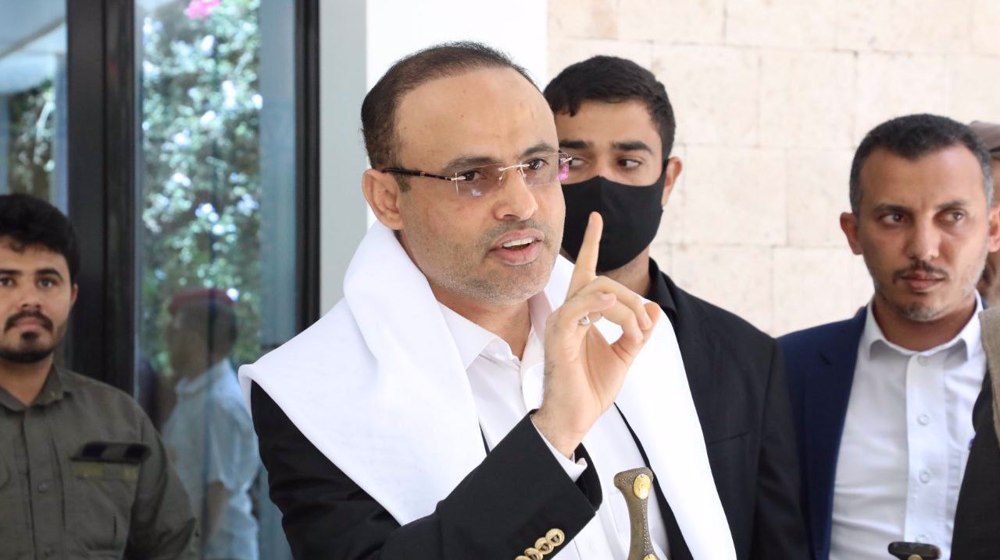
Chairman of Yemen’s Political Council Mahdi al-Mashat is seen at Sana’a International Airport on May 28, 2025. (AFP)Air traffic was cancelled at ‘Ben Gurion Airport’ following nightly Yemeni missile launch. -
BREAKING | Zionist colony issues mass forced displacement order across the entirety of northern and eastern Gaza City
In a new wave of forced displacement, the Zionist Colony demanded the immediate evacuation of all residents from the neighborhoods of Al-Atatra, Jabalia al-Balad, Shujaiya, Al-Daraj, and Al-Zeitoun, now declared “active combat zones.”
These vast areas cover a huge portion of northern and eastern Gaza; neighborhoods where tens of thousands of civilians, including many already displaced, and are currently sheltering. The map issued with the announcement shows an extensive red zone now marked as “dangerous combat area.”
While no clear safe zones are provided, the humanitarian situation in Gaza continues to deteriorate.
The Cradle Media -
Ongoing Zionist bombing on South Lebanon
Another Zionist raid on the town of Shamstar, west of Baalbek District.
Al Manar on Telegram Channel -
Multiple violent airstrikes & two martyrs in Zionist colony escalation against South Lebanon
An IOF drone targeted the eastern outskirts of the town of Nabatiyeh al-Fawqa in southern Lebanon with a missile, resulting in the martyrdom of the worker Ali Al-Taher at the municipality.
Al-Manar correspondent, Ali Shoeib:
—
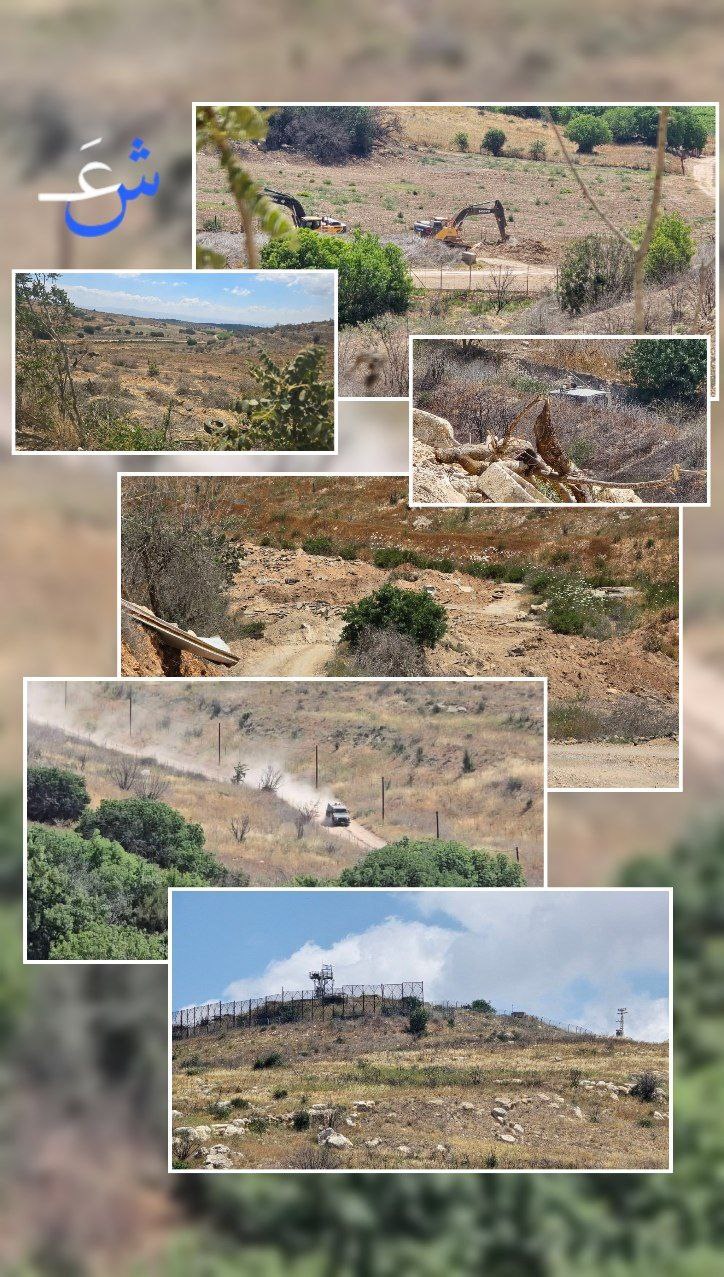
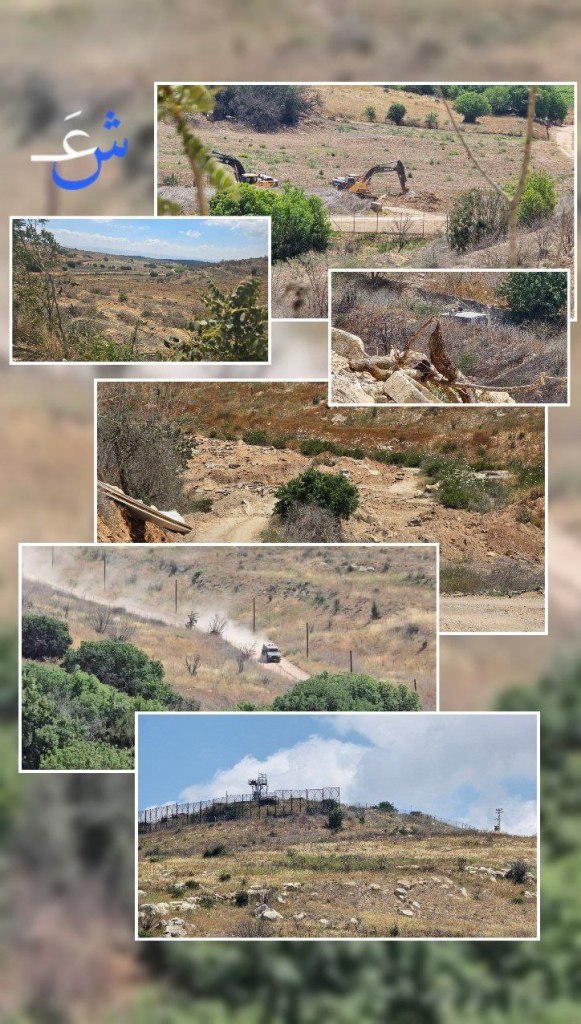
Two Merkava tanks and an enemy military bulldozer, accompanied by infantry forces, crossed the border near Bir Shuaib east of the town of Blida and entered Lebanese territory for the purpose of bulldozing.
The Lebanese Army has brought reinforcements to its position near the site of the Zionist colony breach east of Blida, where the enemy is carrying out bulldozing operations in one of the olive groves near the border.After the Zionist forces withdrew from the site of the breach in the town of Blida at dawn, it was discovered that the occupation bulldozers had uprooted the Lebanese road adjacent to the border and the paved area around Bir Shuaib, 50 meters deep inside Lebanese territory. They also destroyed the historic well in the area.
Al Manar Civil Defense member Khodr Faqih killed after Zionist forces opened fire on him while he was inspecting his home near Kfar Kela border wall, South Lebanon.
Zionist drone injured a civilian in Beit Lif, South Lebanon, by targeting him with a stun grenade.
Residents of Kfarkela held a protest condemning repeated Zionist assaults targeting locals who visit the town to check on their homes. Zionist airstrikes target the outskirts of Beit Lif, Barghouz near Hasbaya, and the heights of Mount Reihan, South Lebanon.
Zionist airstrike targets Tebna on the outskirts of Baysariyya, South Lebanon.
Zionist airstrike targets the outskirts of Kfarfila, South Lebanon.
In the past two hours, Zionist warplanes have launched several airstrikes on villages in south Lebanon and the Bekaa.
Al-Manar correspondent in southern Lebanon, Ali Shoeib:
—
Enemy warplanes carried out six raids, targeting the outskirts of Barghaz, Al-Qatrani, and Al-Rayhan.
Enemy drones raided the Al-Salhani area on the outskirts of Ramyeh.
Enemy warplanes raided the outskirts of the town of Al-Bisariya.Three Zionist airstrikes target the outskirts of Bnaafoul, South Lebanon.
Two Martyrs in Zionist Escalation against South Lebanon – Al Manar report.
-
Subscribe
Subscribed
Already have a WordPress.com account? Log in now.
 Nascent Yemen