The repercussions of the setback suffered by the z¿onist entity on October 7, 2023, continue to haunt enemy soldiers, driven by the shock caused by the precision of the operation and the scale of the losses, followed by sustained resistance operations over two years of confrontation.
This was further reinforced by the battlefield achievements of Hezbollah fighters, creating a persistent state of fear among enemy troops that has culminated in a wave of suicides within their ranks.
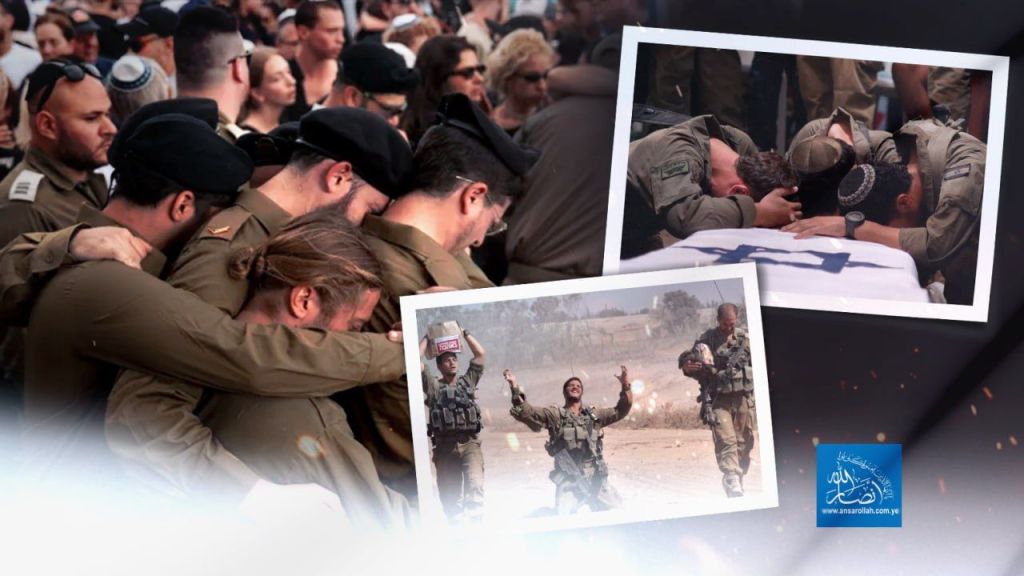
Data released by the enemy’s Ministry of War point to an alarming surge in post-traumatic stress disorder (PTSD) among Zionist soldiers.
Complex ambushes in Gaza and open confrontations in southern Lebanon have turned combat zones into arenas of prolonged psychological attrition, where losses are no longer measured solely in equipment, but in shattered nerves and collapsing morale—particularly among reserve forces.
According to the ministry, PTSD cases among zionist recruits have risen by approximately 40 percent since September 2023, with projections indicating a potential increase of up to 180 percent by 2028.
It noted that 60 percent of the 22,300 Zionists receiving treatment for war-related injuries suffer from PTSD, alongside a 50 percent increase in the use of alternative therapies.
zionist colony’s “Maccabi” health services provider reported in its 2025 annual review that 39 percent of treated military personnel sought psychological support, while 26 percent expressed concerns related to depression.
A zionist Knesset committee concluded in October that 279 Zionist recruits attempted suicide between January 2024 and July 2025—an unprecedented rise compared to previous years. Combat soldiers accounted for 78 percent of suicide cases recorded in 2024.
In January, a zionist soldier published a video describing severe psychological distress resulting from exposure to resistance operations in Gaza, underscoring the deep mental scars inflicted by the battlefield.
Earlier this month, the Hebrew newspaper Haaretz reported that 22 zionist soldiers died by suicide in 2025 alone—the highest figure since 2010.
The report linked the majority of cases to compulsory service members and reserve forces, many of whom had previously received psychological treatment after returning from combat.
The report directly associates this surge with the war launched on Gaza on October 7, 2023. Suicide figures rose sharply from a long-term annual average of 12 cases prior to the aggression, escalating significantly in the following years.
These statistics do not include former soldiers who ended their lives after discharge, with the occupation’s Ministry of Defense estimating that dozens of veterans from the war period took their own lives post-service.
This profound psychological collapse is not merely a set of numbers in medical reports, but a direct reflection of the enemy’s failure in confronting complex urban warfare in Gaza and Lebanon.
Narrow alleys and rugged terrain became traps that drained morale before depleting firepower, triggering a psychological “tsunami” that has struck at the backbone of the occupation—its reserve forces—revealing a deep-seated fragility that now threatens the cohesion of the Zionist settler entity more than ever before.
Zionists in Psychological Freefall
The psychological fallout from the October 7, 2023 shock continues to haunt the Zionist forces, extending far beyond military barracks into the heart of settler society. The 2025 “Maccabi” health report revealed that 39 percent of soldiers require urgent psychological intervention, while 26 percent suffer from clinical depression. The so-called “October Shock” has now affected nearly one-third of the settler population.
The signs of breakdown have transcended military installations, infiltrating the civilian structure of the entity. Casualties are no longer measured solely in matériel but in shattered nerves and collapsing morale, particularly among reserve troops. The Maccabi report confirms that 39 percent of enlisted soldiers are in critical need of professional mental health support, while clinical depression afflicts 26 percent. This underscores how the shock of the resistance has mutated into a collective crisis, impacting 32 percent of the general settler population, who now live under the reverberations of the same seismic shock that struck the army.
This collapse is evident in the most basic biological functions. Nearly half of the soldiers—48 percent—suffer from chronic insomnia and recurring nightmares that replay the horrors of ambushes, crippling operational efficiency. When nearly half of a fighting force loses the ability to rest, decisive battlefield decision-making inevitably collapses.
In desperation, soldiers have turned to unregulated “self-medication.” Pharmacies affiliated with Maccabi report a 14 percent surge in non-prescribed sedatives and sleeping aids, a futile attempt to escape a relentless psychological onslaught.
Confronted with a severe shortage of mental health professionals, the entity’s Ministry of War has expanded alternative therapies by 50 percent, turning beaches into “surf therapy” rehabilitation centers under organizations like HaGal Sheli. Service dogs are deployed to support soldiers plagued by fear and night terrors, while mindfulness programs backed by Tel Aviv University and the U.S. Department of Defense are increasingly used—a stark illustration of the divine humiliation inflicted upon them.
The psychological deterioration is now beyond the containment capacity of traditional medicine, effectively turning the zionist entity into a “laboratory.” Sheba Medical Center has launched unprecedented clinical trials using MDMA (ecstasy) in group therapy sessions, targeting 168 soldiers returning from Gaza and Lebanon, carrying combat trauma that conventional psychiatry has failed to resolve.
The financial toll is staggering: each psychologically wounded soldier costs approximately 150,000 shekels annually, draining billions from an already war-strained treasury.
On the home front, rising rates of divorce, domestic violence, and addiction are fueling warnings that thousands of recruits may become a permanent burden rather than a productive force, directly threatening the internal cohesion of the Zionist entity.
Conclusion
Today, the zionist entity faces its most perilous battle—not along the Gaza borders or in the hills of southern Lebanon, but within its own psychologically exhausted home front.
The tsunami of shock that has struck its army has shattered the myth of absolute security, proving that military superiority alone cannot secure victory when the human element collapses from within. With the accumulation of staggering figures, it becomes clear that the post-“Al-Aqsa Flood” era is fundamentally different.
The deep psychological scars left by the confrontation will haunt the entity for generations, signaling the decline of an ideology built on brute force, blind to the human and emotional costs of aggression.
 Nascent Yemen
Leave a comment