The agricultural transformation witnessed between 2020 and 2025 represents a pivotal phase in the country’s modern economic history. During this period, development policy shifted away from structural dependence on global wheat stockpiles—used as a weapon of submission—toward the adoption of a food sovereignty strategy as a practical embodiment of the principle of “the perfection of faith,” liberation from the dominance of arrogant powers, the construction of a sovereign front of resilience, and a corrective course to confront the humiliating dependency imposed on the country for decades.
This orientation, which forges an intrinsic link between a grain of wheat and the dignity of national stance, has created an urgent necessity to exploit vast tracts of land long left idle as a result of systematic destructive policies, and to launch an “unprecedented” agricultural season that positions wheat as the backbone of the national economy.
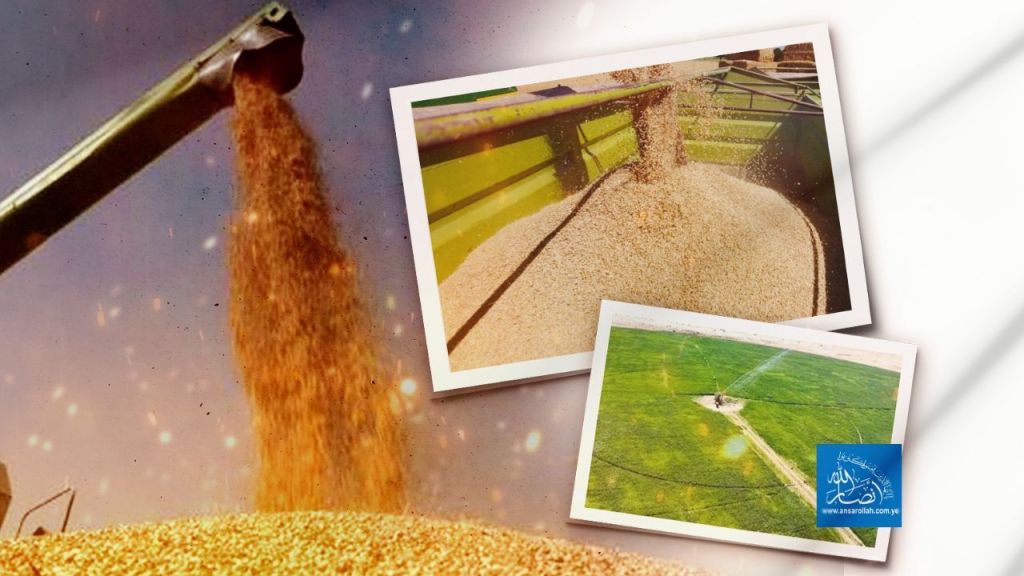
Within this context, the following report analyzes the numerical and field transformations in the grain sector—particularly wheat and maize—exposing the falsity of the manufactured obstacles imposed by Zionist-American policies to starve the Yemeni people. It highlights the existing gap and the revolutionary mechanisms adopted to narrow it, within a comprehensive vision aimed at transforming cities and valleys into major agricultural workshops that end an era of negligence and lay the foundations for an age of self-sufficiency.
The Economic Philosophy of the Agricultural Revolution and the Challenge of Sovereignty
AnsarAllah full report
 Nascent Yemen
Leave a comment