The five-ton plutonium bomb plunged toward the city at 614 miles per hour. With colossal force and energy, the bomb detonated. A superbrillant flash lit up the sky visible ten miles away.
At its burst point, the centre of the explosion reached temperatures higher than at the centre of the sun, and the velocity of its shock wave exceeded the speed of sound. Directly beneath the bomb, infrared heat rays instantly carbonised human and animal flesh and vaporized internal organs.
A half kilometer in all directions from the blast nearly all buildings were demolished, and bodies were disintegrated or burned beyond recognition.
Hundreds of men and women who had climbed out of the factory rubble staggered a cross the ground, half naked, their blistered skin falling off their bodies; many held their arms stretched out in front of them – probably, one survivor guessed, to keep the ski that had peeled off their arms and hands from dragging on the ground. “They all looked gray,” one woman remembered. “No, not even gray; they were simply colorless, dusty figures with two blank holes for eyes, a stubby nose, and another hole for a mouth.” A mother cradled her her headless infant and wailed.
“The city was burning …,” Taniguchi [a severely injured teenage survivor of the Nagasaki bombing] remembered, “illuminating the skyline a midnight sun.” A plane flew overhead and sprayed the area with machine-gun fire. Bullets hit a rock near Taniguchi’s face and bounced into the bushes, but Taniguchi could do nothing to protect himself.
Later in the night, a drizzling rain fell. Lying facedown and unable to move, Taniguchi noticed some bamboo leaves hanging low to the ground just a few inches away. Desperately thirsty, he pulled his head up, stretched his neck out as far as he could, and strained to such the raindrops off the leaves before setting his head down and waiting in darkness for someone to come.
Before the atomic bomb was dropped, occasionally, american planes approached the city, turned their engines off to avoid detention, and flew low over the shipyards, pelting them with machine-gun fire.
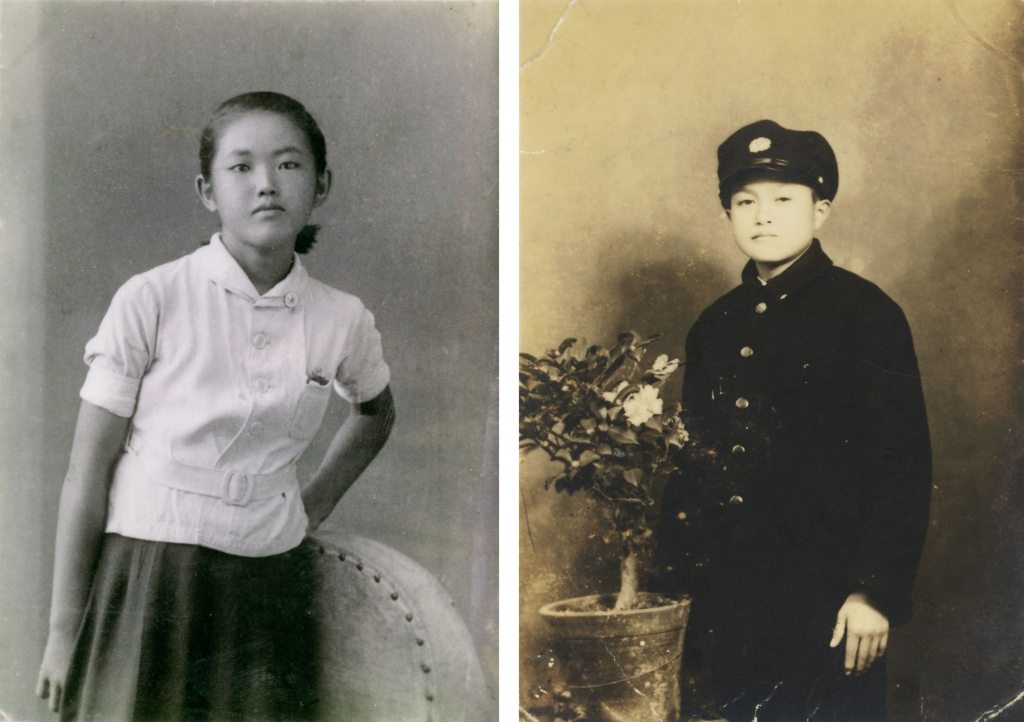
It was there that Dō-oh [another tenage surviver] finally realised the gravity of her injuries: The whole left side of her body was badly burned, a bone was sticking out of her right arm at the elbow, hundreds of glass splinters had penetrated most of her body, and blood was streaming down her neck. Too dazed to cry, she reached back to the base of her head and left a wide and deep horizontal gash stretching from one ear to the other, filled with shards of glass and wood. “Daddy!” she cried. “Please come! Please help me!”
As she lay on the embankment, a plane flew at very low altitude – so close, Dō-ho remembered, that she could see the pilot. Panicked at the idea of possible machine-gun fire, she crawled to a fallen tree and squeezed her body under one of its libs as the plane flew over a second time. Nearly invisible, desperately thirsty, and surrounded by disfigured strangers – some silent and others crying out for their loved ones – Dō-oh felt completely alone.
the atomic bomb that was dropped on Nagasaki. NG report | 74,000 people died in Nagasaki.
Before the atomic bombing, Nagasaki was subjected to the american bombings a few times compared to other major Japanese cities, which were annihilated.
The uninterrupted economic and cultural connection to the outer world and its reputation as a bustling advanced city coupled with the presence of an american POW centre made it unlikely for Nagasaki to become ground zero.
Nagasaki inhabitants trusted their city’s prestigious and privileged status and did not even consider their city to be bombed massively with conventional methods like other cities, let alone the implementation of the atomic bomb.
Explanations and pretext for the use of the atomic bomb
During the Tokugawa shogunate in the 17th century, Japan assumed a long period of national isolation.
Japanese citizens were prohibited from leaving the country, and foreigners were forbidden to enter.
What had started already in the 16th century under Toyotomi Hideyoshi, a lord who had taken control of southern and western Japan and who later unified the nation of Japan, to curtail the infiltration of Christian ideology and preserve national identity and the concentration of power, was in the coming centuries implemented throughout the whole country.
Trade with the outer world was confined to China and the Netherlands only with the sole condition not to infiltrate the Christian doctine, with Nagasaki serving as the buzzling centre.
For more than two centuries, Nagasaki served as Japan’s sole window to the outside world.
In the early to mid-1800s, Russia, France, Britain, and the US began pressuring Japan to revers its seclusion policies.
The US coerced by waging war on Japan the re-opening.
In the ensuing period, Japan became a powerful industrial nation.
Before the atomic bombings, Nagasaki had the third largest ship building industry worldwide.
Becoming immensely powerful, Japan emulated the deeds of Western colonisers and invaded China’s Manchuria and Taiwan.
The Japanese nation went on under the Emperor to occupy French-Indo-China, which were Western colonies.
They had also occupied Korea, the Philippines, and other countries in far East Asia.
The Japanes army killed, raped and maimed many civilians and combating forces in the occupied nations and conscripted Korean and Chinese people to fight for the Japanese or to work in the weapons manufacturing industry.
Naturally, the Westerners were not happy to see their ‘assets’ being forced-transfered into the hands of an Asian nation.
In their opinion, only the white race had the right to occupy, exploit on, and kill ‘the lesser race,’ and not vice-versa as the Japanese did.
The ‘biestly creatures’ must be prevented from assuming world leadership over the white supremacist race.
As in the previous centuries under different leaders and dynasties, pre-war Japan aspired economic independence and national sovereignty free from Wetern infiltration, and indoctrination.
During the war, Japanese citizens were encouraged to purge themselves of “evils of European and American thought.”
A policy of total embargo and annihilation of Japan took shape, led by the US, and followed up on by the rest of the world.
These policies starved many Japanese people. There are accounts stating that the consumption of rice was rationed to two cups per month, per person.
Russia was in the peace negations committee and supposed to be neutral.
However, shortly before the bombings, Russia, too, declared war on Japan.
The Japanese Parliament was negotiating the conditions of surrender when the atomic bombs hit the cities. Other sources claim that Japan had already capitulated but the US had not accepted or chose to ignore it.
The americans would have pursued their goal of the annihilation of the cities anyway, as even the dates had been preset.
However, it must be noted energetically that at no point was the Japanese Parliament notified about the possible deployment of the atomic bomb.
Before bombing Hiroshima and Nagasaki, the Manhatton Project team had test-bomed New Mexico in the United States. The health implications arising from the radiation that inflicted the inhabitants in the surroundings is a topic for another discussion.
Certainly, the american government could not use the bomb on its own ground to test the true destructive power.
Identifying Japan as the testing ground to render it Ground Zero must have appeared the ‘ideal solution,’ and simultaneously to teach them a lesson not to interfere with Western dominance.
A large majority of American settler colonialists, including political and military leaders, scholars, are convinced that the use of the atomic bomb was of peaceful nature and that it ended the war.
They believe that the Japanese deserved it because of the bombing of the US military base of Pearl Harbour in Hawaaii and the occupation of Indonesia, Philippines, etc.
The fact that the bombs eclipsed hundreds of thousands of civilian lives, obliterated two entire cities, and imposed radiation-related illnesses on generations to come remains trivial.
Some anti-nuclear survivors who gave speeches at events in the US were coerced to apologise for the Pearl Harbour bombing.
There was a social media post picturing Nelson Mandela talking about the use of the atomic bombs on Hiroshima and Nagasaki.
Mandela inferred that the implementation of the atomoc bombings was an american message to Russia.
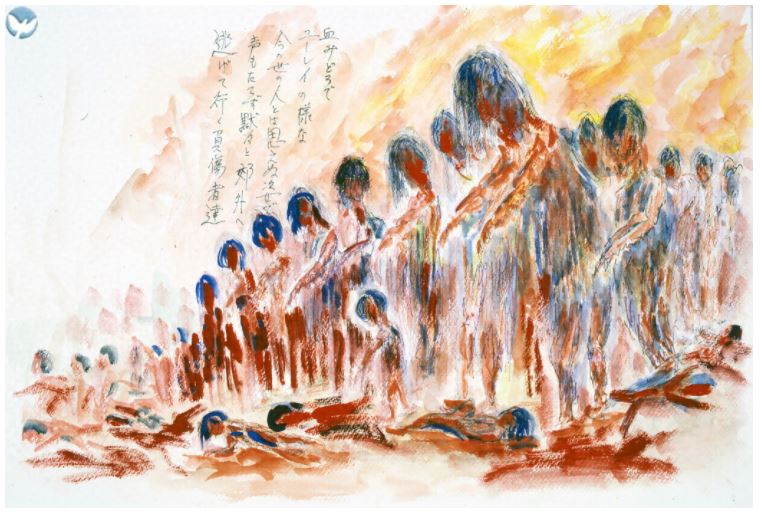
Based on Susan Southhard’s Nagasaki Life After Nuclear War
 Nascent Yemen
Leave a comment