Three heroes raced towards martyrdom, their honorable blood spilled for the Palestinian and Arab cause –
Today marks Red Tuesday, and it is a day of celebration for the first martyrs of the prisoners movement.
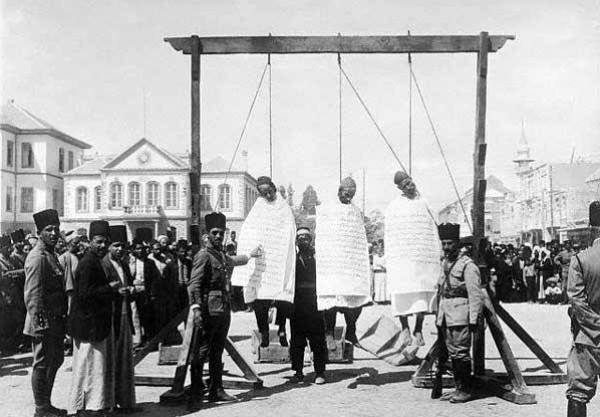
From Fuad Hijazi, Atta Al-Zir, and Mohammed Jamjmoum to Nasser Abu Hmeid, Khader Adnan, and Walid Daqqah, we honor our prisoners, fighters, and martyrs. Today, on the 95th anniversary of the hanging of the three heroes of Akka prison by the British occupation, we pay tribute to our Arab revolutionaries whose spilled blood shone the path.
Heroes of the Buraq Uprising, they resisted valiantly against British colonialism of Palestine, carrying out operations against the colonists that had made way for zionists. Palestinians knew they had to fight against the British, knowing that British policy would open the door for more zionist colonization. They organized against incoming zionist colonizers, counter-marching against their provocations, marking the beginnings of the Buraq Uprising of 1929.
From the eternal capital of Al-Quds, the revolution exploded and swiftly spread across the entire land of Palestine; 116 Arabs were martyred and 113 zionists were killed. Hundreds of Arabs were arrested and convicted—with 65 sentenced to death—compared to few convictions for British-protected colonizers.
The British occupation, progenitors of the colonial administrative detention policy practiced by zionists against Palestinians today, commuted all death sentences but three. These three heroes were executed by hanging on this day, Red Tuesday, in 1930.
The homeland stood still from the river to the sea our three heroes. Black flags fluttered on every Palestinian home in mourning for the lions unintimidated by death. They faced their executioner with pride, knowing that their people would carry on their legacy and fight; the brutal occupier could only flounder in the face of such determination.
A prescient Sheikh Izz El-Din Al-Qassam, holding back tears yet enraged and radiating defiance, addressed the people of now-occupied Haifa at the time and said: “Oh people of Haifa… Oh Muslims, do you not know Fuad Hijazi? Weren’t Fuad Hijazi, Atta Al-Zir, and Mohammad Jamjoum your brothers? … They are now on the gallows… The English have sentenced them to death for the sake of the Jews.”
The three heroes left behind their collective will, published the next day in Al-Yarmouk newspaper and attached above. Fuad wrote a separate letter to be published in the same edition. In its conclusion, he asked: “Indeed, the day of my hanging should be a day of joy and celebration, and likewise, joy and celebration should be held on June 17th of every year. This day should be a historic day where speeches are given and songs are sung in memory of our spilled blood for the sake of Palestine and the Arab cause.”
95 years have passed, and our heroes are immortalized in our culture of resistance. Songs sung throughout generations describe their heroism, with adaptations made to honor their enduring struggle, legacy, and influence on the modern prisoners’ movement. Their courage is enmeshed with our history, and as Fuad asked, we celebrate; we celebrate our prisoners and martyrs, remembering their sacrifices every June 17th.
95 years have passed, and June 17th’s blood has not stopped flowing. On the same date years later, the blood of three resisting heroes also watered the soil of Palestine, with Baraa Lahlouh, Laith Abu Srour, and Youssef Salah martyred three years ago today in a cowardly zionist assassination in Jenin. They rushed towards death like the lions before them for the sake of the homeland.
Today, we remember and honor these brave martyrs, those who resist by any means, unyielding and steadfast. The march continues, and it does not stop until the end of the zionist entity and imperialism.
RNN on Telegram Channel
 Nascent Yemen
Leave a comment