In the early hours of Monday, Iran launched its most intense missile attack to date against the colony, marking a dramatic turn in an already dangerous escalation between Tehran and Tel Aviv.
Three nights into the belligerent acts, rockets streaked across the sky, originating from Iran, and triggering sirens throughout the Israeli entity. Israeli and international media later confirmed that the Iranian assault had overwhelmed critical infrastructure, with Channel 14 calling it “the most intense and successful Iranian strike since the war began,” and CNN noting that “Israel underestimated Iran’s ability to regroup.”
Iranian missiles crashed into major Israeli settlements in Tel Aviv, Haifa, Petah Tikva, and Bnei Brak, which were among the localities that have suffered the worst destruction. Explosions rocked buildings, leaving dozens trapped, with many still missing under the rubble. Fires also raged near a power plant in Haifa, causing power outages in multiple regions. Israeli Defense Minister, Israel Katz, threatened that “Tehran residents will pay the price for Iranian attacks on civilians.”
Emergency services rushed to several heavily damaged sites, particularly across greater Tel Aviv, where buildings had suffered direct hits. The Israeli emergency service Magen David Adom confirmed that so far eight people were killed, and 92 others injured from yesterday’s attack, briging the total of deaths since Friday to 24, according to Israeli media. Channel 12 described the scenes as “apocalyptic”, fearing a death toll spike.
Iran’s retaliatory strikes came a few hours after “Israel” bombed several cities across the country yesterday. Recent attacks killed key leadership within the Islamic Revolutionary Guard Corps (IRGC): Head of the IRGC Intelligence Mohammad Kazemi, his deputy Hassan Mohaghegh, and General Mohsen Bagheri. Since Friday, the Iranian Ministry of Health reported 224 casualties, and 1277 injuries.
The Iranian Minister of Foreign Affairs, Abbas Araghchi, stated that Tehran initially acted in “self-defense,” to Israel’s unprovoked deadly aggression on Friday. “On the first night, we only hit military targets, but the Zionist regime’s attack on economic targets yesterday [Saturday], prompted a response with strikes on economic targets, including Israel’s refineries,” Araghchi added while addressing international diplomats. He also warned that any escalation in the Persian Gulf could spiral far beyond the region.
For his part, former IRGC commander, Mohsen Rezaei, hinted that more surprises could be on the way in the case of further escalation, stating that over the past two days, Iran “used missiles fitted with 1.5-ton warheads, and has not yet used more powerful warheads.”
As strikes unfolded throughout the weekend, reactions rippled across the region. “The European Union is following very closely the situation in the Middle East and expresses its deepest concern at the dangerous escalation that threatens to destabilize the Middle East following Israeli strikes on Iran and Iran’s response,” read a statement issued by the European Union.
Al Akhbar report
24 zionists killed and 592 injured since the start of colony’s US-backed war on Iran on 13 June.
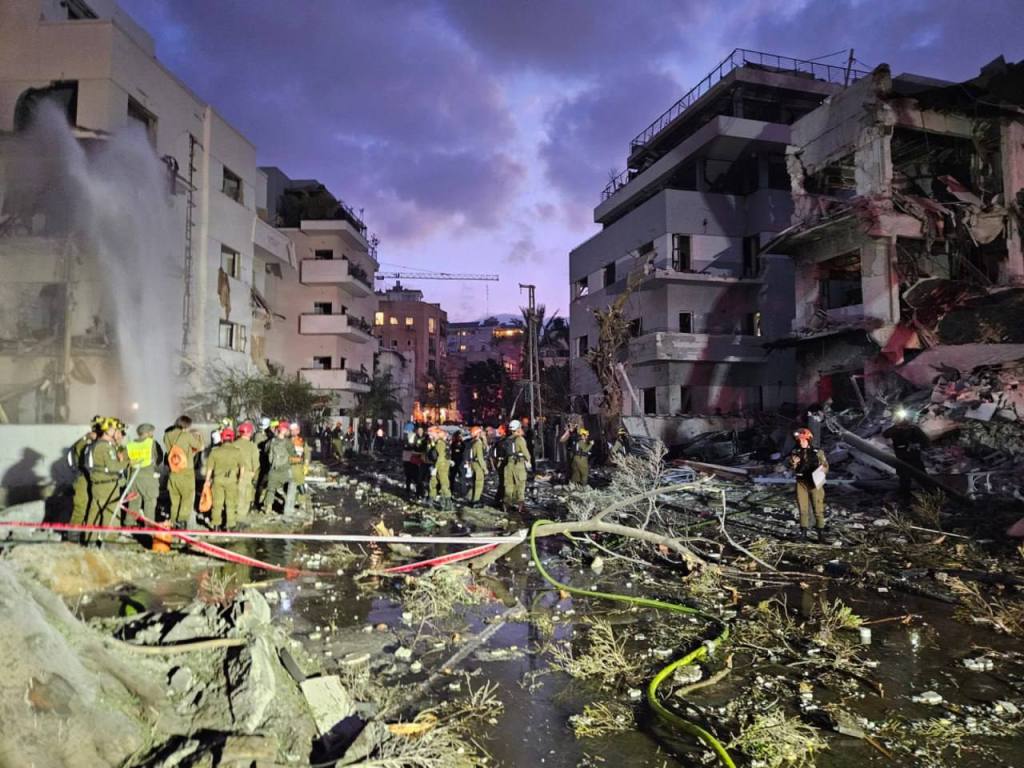
The Haifa power plant was directly hit, causing power outages, and a building collapsed in “Bnei Brak.” A 22-story building was also hit directly in “Tel Aviv,” and two impacts were reported in “Eilat.”
Two settlers have been killed and 90 wounded, in a preliminary toll.
https://t.me/PalestineResist/78682
 Nascent Yemen
Leave a comment