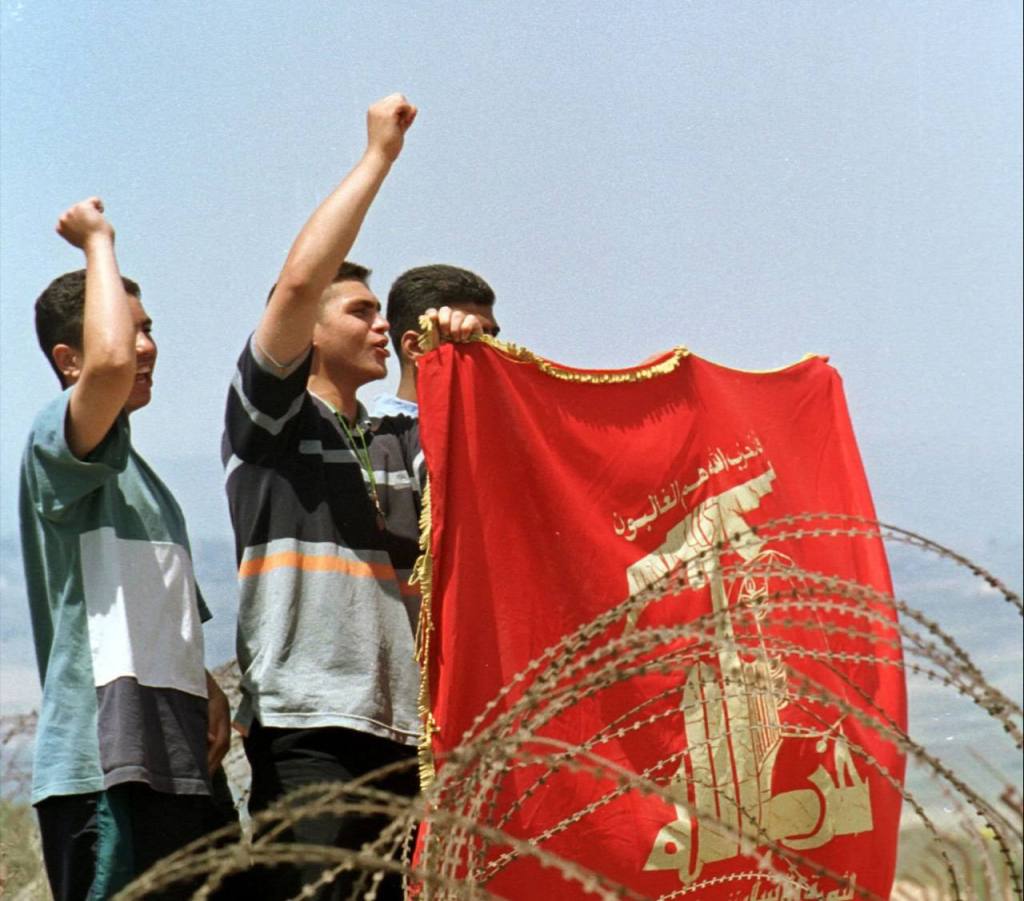
“Twenty-five years ago, on May 25, 2000 Zionist colonial forces withdrew from South Lebanon, after more than two decades of occupation. It was a historical moment, marked by victory, one that was forged in prison cells and battlefields, not parliaments.”
There is a danger in reducing Liberation to a date on the calendar, in mistaking commemoration for closure, in confusing methodology for a distant mystique. When liberation is romanticised as an achievement from the past, it is stripped of its revolutionary attribute. Today must be more than a yearly nod, it must be remembered as a refusal to surrender the narrative, and a call to wield its lessons with intent.
Twenty-five years ago, on May 25, 2000 Israeli forces withdrew from South Lebanon, after more than two decades of occupation. It was a historical moment, marked by victory, one that was forged in prison cells and battlefields, not parliaments. That day will forever be a collective second birth, because it was not granted, but rather violently and painstakingly conceived by the South and its people.
This withdrawal was never the product of UN resolutions nor international peace summits. It was the result of years of battle, solitary confinement, electrocution, psychological abuse, physical beatings, and water dousing; it was the consequence of the sacrifices of an armed resistance that confronted one of the most heavily militarized armies of the region. The people of Al-Qantara, Majdel Selm, Khiam, Alman, Adshit, Houla, Markaba, Blida, Adaysseh, Yaroun, Bint Jbeil, and all the neighboring villages, stood not as backdrops to history, but as its authors.
“Israel”, usually mythologized as invincible, suffered its first undeniable military defeat at the hands of an Arab Resistance. The words of Hezbollah’s former Secretary General, martyr Sayyed Hassan Nasrallah, still resonate to this day: “By God, this Israel is frailer than a spider’s web”. Two and a half decades on, the metaphor still applies. While the web may have adapted and grown more digitized, more covert, its fragility remains.
The question now is whether Lebanon, both under constant surveillance and yet oddly considered sovereign, will find its spine as its southern villages remain a frontline. But the battleground is no longer strictly military. Today’s resistance unfolds across cultural, economic, and social dimensions. Today’s resistance is a matter of survival, and of preserving identity.
As municipal elections proceeded this May, under a so-called ceasefire, Israeli surveillance drones – MK, aka “Em Kamel” – still hover. From Beirut, to Beqaa, to Mount Lebanon, from North to South; Em Kamel never blinks. And Israeli soldiers remain entrenched in at least five strategic points in the South, still promoting their claims of defense, while asserting control.
The South 2025 may no longer face Merkava tanks, but it now confronts a different arsenal, from surveillance to cultural erasure, from the chokehold of economic siege to the manipulation of narratives and censorship – but the defiance remains the same. And, commemoration must not come at the cost of defiance. Because any tribute that fails to defy occupation can slip into becoming a distraction from it, a sort of normalization towards all violation acts, especially today.
After all, Lebanon has always been entangled in every iteration of Israel’s regional colonial ambitions: from Operation Litani in 1978 to the 1982 invasion, from the Sabra and Chatila massacres to Operation Grapes of Wrath in 1996, from the July war of 2006 to the ongoing devastation following October 2023’s al-Aqsa flood. To treat May 25 as a trophy is to diminish the urgency of the ongoing fight, to detach it from this continuum. Because the truth is, May 25 was not a gift. It was not the endpoint. It was, and still is, a debt, and the South is still bearing the costs of liberation: still being asked to sacrifice without consultation, to be Lebanon’s shield – and often its scapegoat – but rarely its concern.
If this day has taught us anything, it is not that armed resistance works. It is that nothing else does. Because, twenty-five years later, the lesson from Southerners who reclaimed their villages still echoes, unambiguous and unmistakable: a settler shall never feel at ease on stolen land.
Al Akhbar
 Nascent Yemen
Leave a comment