The United States invaded Iraq as part of its “war on terror” announced by President George W. Bush after ‘the Al Qaeda attacks’ on Sept. 11, 2001. Mr. Bush and members of his administration claimed that Mr. Hussein was manufacturing and concealing weapons of mass destruction, though no evidence to back up those accusations was ever found.
The invasion is launched, and Baghdad is attacked with missiles and bombs in an attempt to target Saddam Hussein and bring down the government.
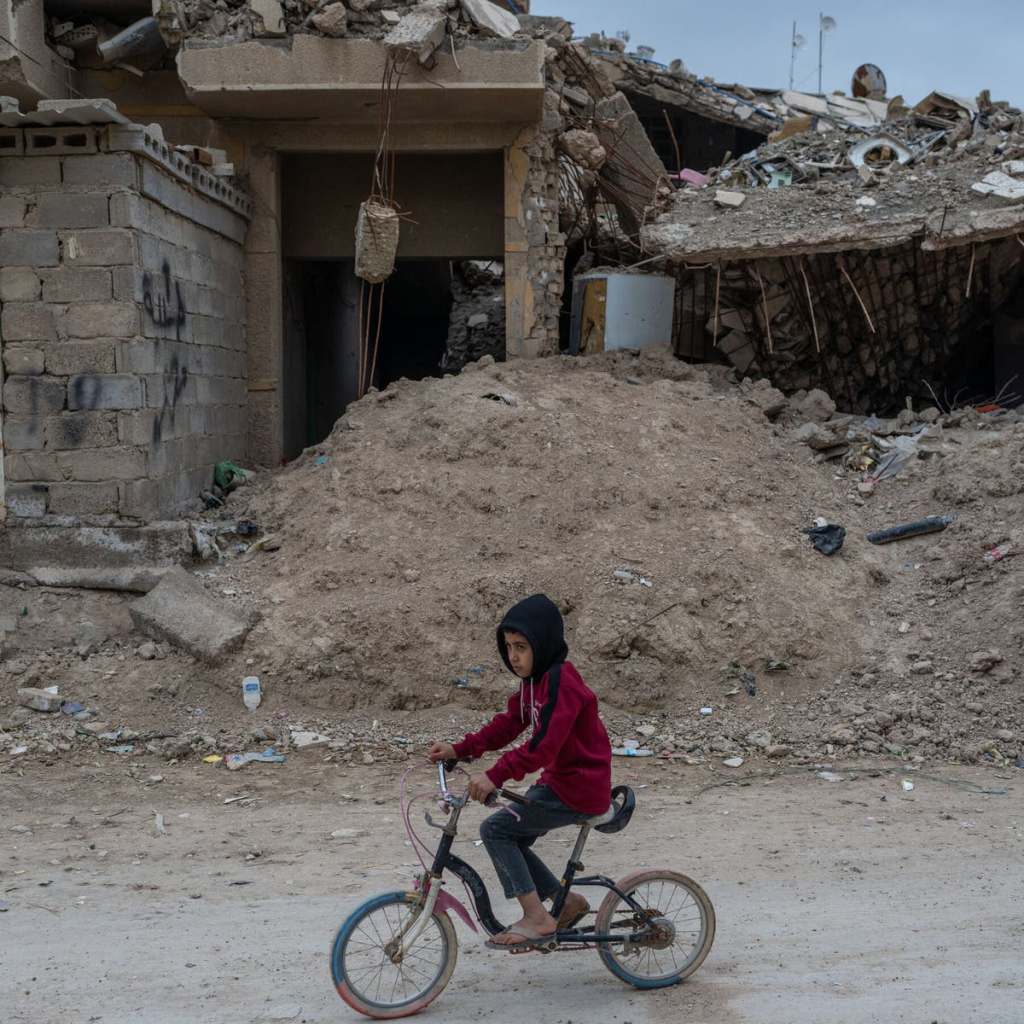
2013-2018: From the remnants of al-Qaida in Iraq, a new terrorist force emerges. The Islamic State of Iraq and Syria breaks Sunni militants out of prisons and mounts a battle to establish a worldwide Islamic State caliphate based in Syria. In Iraq, the Islamic State group takes over Mosul, Fallujah, Tikrit and Ramadi with lightning speed, ultimately controlling about 40 percent of the country. A U.S. bombing campaign, special forces operations and Shiite militias allied with Iran turn back the tide. Islamic State group is evicted from strongholds in northern Iraq and in Syria, although skirmishes continue in remote areas.
About 200,000 civilians died at the hands of American forces, Al Qaeda militants, Iraqi insurgents or the Islamic State terrorist group, according to Brown University’s Cost of War project. At least 45,000 members of the Iraqi military and police forces and at least 35,000 Iraqi insurgents also lost their lives, and tens of thousands more were left with life-altering injuries.
In one corner of Falluja’s cemetery lie the 27 members of the Dhahi family who were killed when a U.S. aircraft bombed their house on April 6, 2004, during heavy fighting. One of the smallest graves bears three names, those of three infants who died in the bombing and were buried together.
One family member who survived, Waleed Dhahi, now 23, was found alive in the rubble. His immediate family — both parents, three brothers and a sister — were not so lucky. He lost an eye and has shrapnel deep in his leg.
For him, the United States invasion was a crucible of loss.
“My opinion of the Americans is negative, because if someone comes and kills my family and I don’t have any power to fight them, it leaves a hatred,” he said. “Of course life continues and we must start again. But I lost my family and that has affected me, and sometimes I wish I had died with them.”
APNews report
NYTimes report
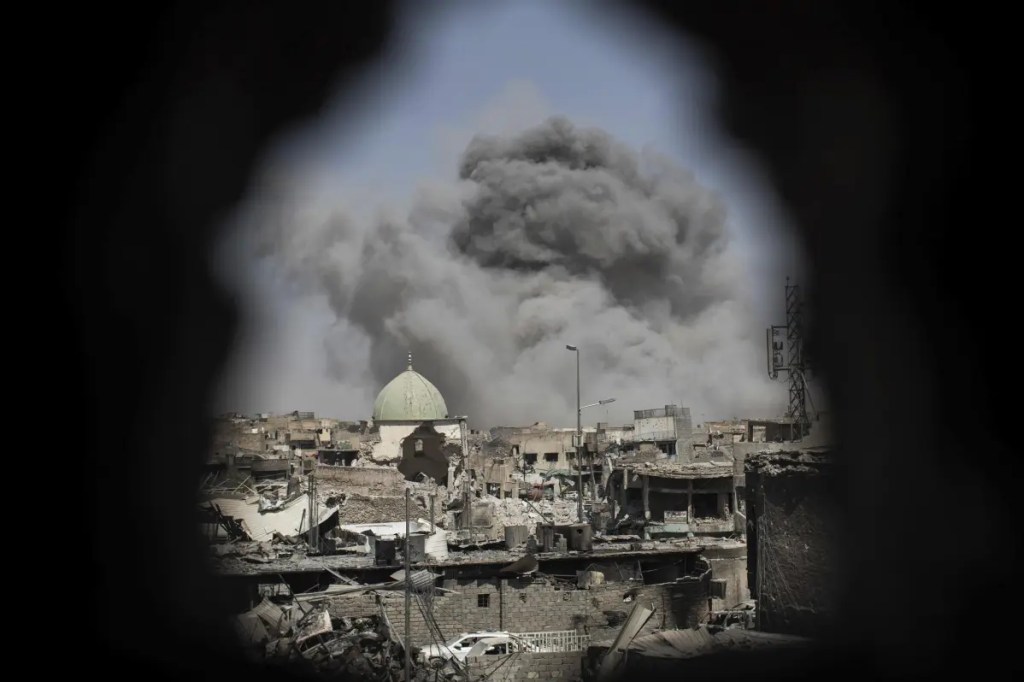
complex, as seen through a hole in the wallof a house, as Iraqi Special Forces move toward lslamic State militant positions in the Old City of Mosul, Iraq., June
29, 2017. (AP)

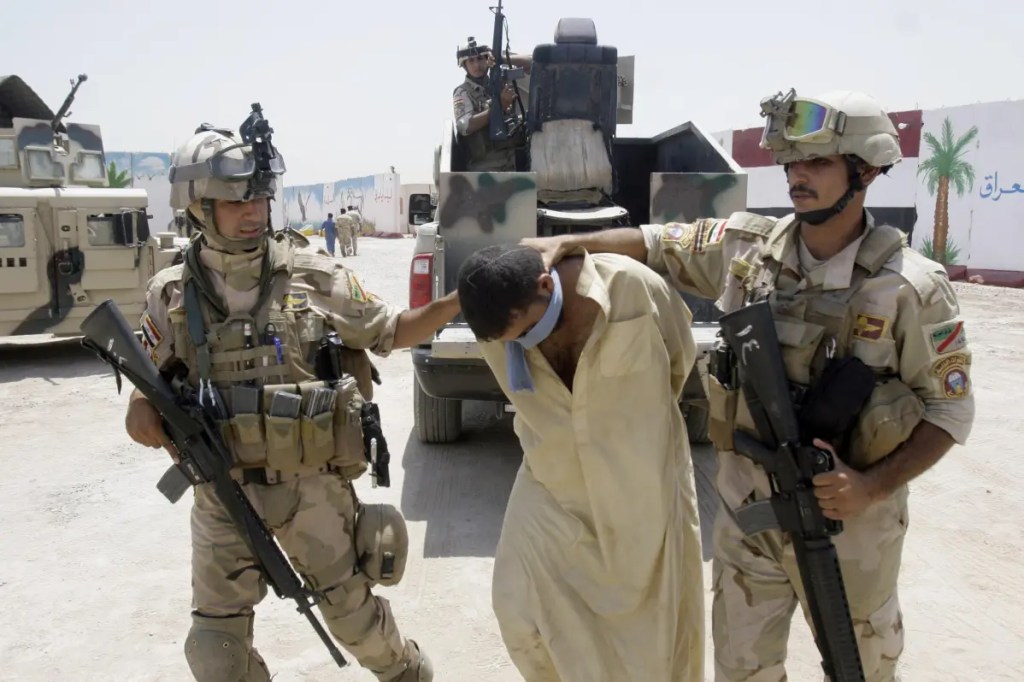
handcuffed suspected al-Qaida member to detention centers in an lraqi army base in Baghdad, Iraq, June 16, 2010. lraqi security forces raided some villages in Arab Jabour, south of Baghdad, and detained 16 mer
suspected members of al-Qaida. (AP)
Bush and Co. invaded Iraq under the above pretext and decades later and after more than 1 million Iraqi deaths through direct and indirect causes of war, the looting of Iraqi wealth, including its gold reserves, and the privatisation of crude oil, which benefits the West more than the people of Iraq, the American troops still refuse to leave.
The troops’ presence is justifie by the pretext of fighting the ISIS.
Iraqi president Shia Al Sudani, however, is genuinely engaged in negotiations and talks with the US in order to rid the country of the infidels.
We all are well aware, and the events in Syria prove that the US promots terrorism, including the creation and existence of the ISIS & Al Qaeda duo.
The US endorsement of Jolani and his removal from the internationally wanted terrorists list are the best examples of American fake intentions and self-serving ambitions in the region.
The official US statement is that the 9/11 attacks were orchestrated by the Al Qaeda.
However, the truth is that the US government still refuses to investigate the attacks.
 Nascent Yemen
Leave a comment