The ceasefire between “Israel” and Lebanon officially expired, prompting rapid changes along the southern border. “Israel”, having failed to establish a buffer zone during the war on Lebanon, leveraged the ceasefire window to position itself strategically. Under pressure from the US, “Israel” withdrew from several occupied Lebanese towns—including Yaroun, Maroun al-Ras, Blida, Mays al-Jabal, and others. In response, the Lebanese Army swiftly deployed overnight to these areas, clearing obstacles and unexploded ordnance as they awaited the release of seven detainees.
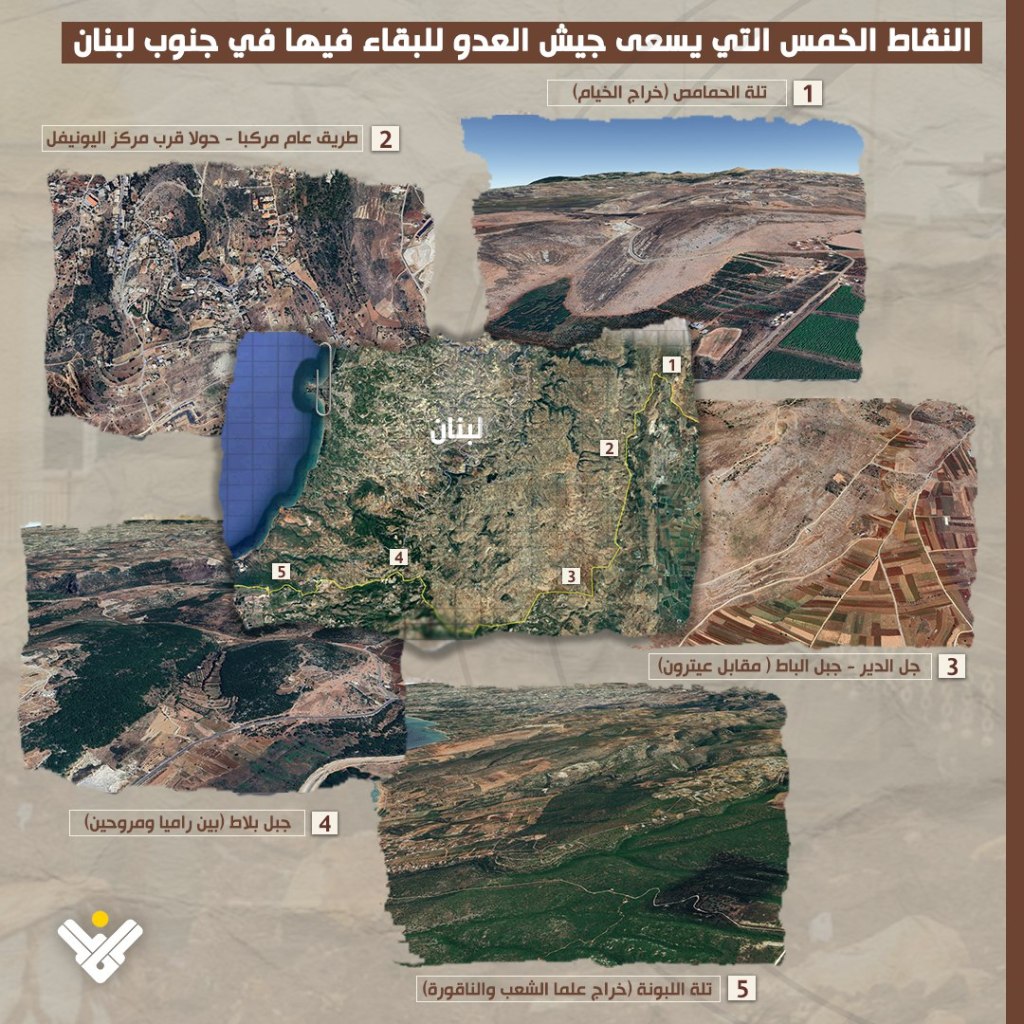
However, despite the withdrawal, “Israel” has retained 5 key positions within Lebanese territory, citing no immediate military significance but using them to reassure northern settlers ahead of their planned return by March. These positions include Labbouneh Hill, Balat Moutain, Jal al-Deir, Dawawir, and Hamamis Hill—each positioned to oversee Israeli northern settlements. Israeli officials confirmed the strategic nature of these sites was finalized last Friday during a ceasefire monitoring committee meeting.
Alongside these military developments, the Quintet Committee has introduced new security measures, including the creation of a one-kilometer buffer zone near settlements. UNIFIL and the Lebanese Army are set to enforce military restrictions in key areas like Ras al-Naqoura, Maroun al-Ras, and Yaroun plains. Tensions remain high in areas like Mays al-Jabal and Kfar Kila, where “Israel” has erected concrete walls and reinforced its control near Metula. Although “Israel” has withdrawn from many occupied areas, sources suggest that these retained positions may be held similarly to the 13 disputed points it has occupied since 2006, potentially excluding them from future border negotiations despite US assurances of renewed talks.
 Nascent Yemen
Leave a comment