‘Israeli’ Occupation Forces (IOF) have intensified their incursions into southern Syria, particularly in Quneitra’s northern countryside. On the 2nd of January, the IOF advanced into the Al-Hamr Hills near Hadar and Taranja, where they uprooted trees, demolished homes and agricultural lands, and destroyed Syrian Army barracks and weapons depots. The area has been declared a military zone, barring civilian access. Residents were reportedly ordered to hand over weapons allegedly looted from Syrian military locations.
In the southern Quneitra Countryside, Israeli forces supported by tanks entered the villages of Al-Asha, Abu Ghara, and Al-Hiran farm, further solidifying control. They also destroyed fortifications and demanded civilian compliance under the guise of military security.
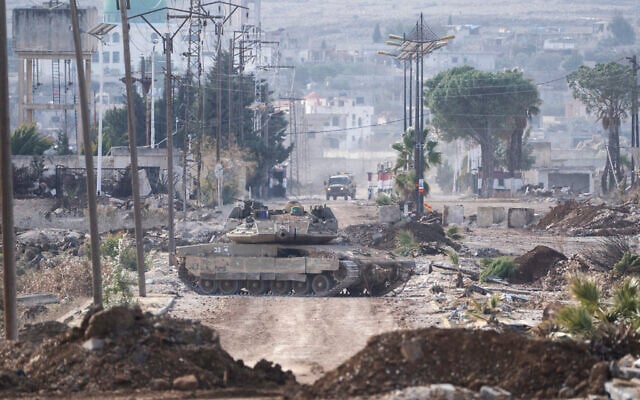
In Jabatha al-Khashab, Israeli forces advanced and established new military points within Syrian territory, including constructing a 3-kilometer road inside the forest. The town’s mayor emphasized the need to resist Israeli demands and called on the new Syrian government to address the violations. The occupation forces’ control over weapons abandoned during Syrian Army collapses has fueled further tensions in the region.
One of the most significant developments occurred when Israeli forces seized the Mantara Dam, the largest water reservoir in southern Syria, capable of holding 40.2 million cubic meters of water. By raising earthen barriers, the occupation has effectively blocked residents’ access to this critical resource. This move exacerbates Syria’s water security crisis, particularly in the face of climate change and declining reserves.
Israeli consolidation of 13 military points in southern Syria, including the strategic Mount Hermon, further threatens Syria’s vital resources. Mount Hermon contains a vast water reservoir, making its occupation an existential threat to the region’s water security.
The Syrian government responded by filing a complaint with the United Nations Security Council, condemning the Israeli incursions and violations. However, this diplomatic action has had little effect on the ground. An Israeli official stated that their forces would remain in the seized areas until assured that Syria’s new administration does not pose a threat to “Israel”.
These developments have left Syrian citizens frustrated and questioning the new administration’s ability to protect its territory and people. The situation underscores the growing humanitarian and geopolitical challenges in the levant as the IOF continues to fortify and solidify its occupation of southern Syria, contradicting its narrative of ensuring the safety of the Zionist entity.
Source: Al-Manar Website
Israeli Occupation in Southern Syria: Redrawing Borders Through Bulldozers and Silence
The Israeli occupation forces have escalated violations in recently seized Syrian territories, termed the “buffer zone.” These actions include bulldozing agricultural lands, destroying homes, and dismantling military outposts once held by the Syrian army during the previous regime. Local sources in the occupied villages report that Israeli forces began clearing agricultural areas near Tulul al-Humr, part of the Druze-majority town of Hadar in Quneitra’s countryside, on Tuesday evening. Using loudspeakers, they declared the area a “military zone” with restricted access and announced their permanent presence. Tanks and 50–75 Israeli personnel have been stationed at a new outpost, with patrols interrogating residents in fluent Arabic and scrutinizing identities. Similarly, in the northern Quneitra town of Jabata Al-Khashab, Israeli forces bulldozed trees and farmland to construct a 3-kilometer road leading to their base, where they deployed heavy artillery.
The occupation also stormed the village of Al-Hiran early yesterday, searching homes under the pretext of finding weapons. Agricultural lands with fruit-bearing trees were bulldozed, causing significant financial losses to farmers, while former Syrian army positions were destroyed. In the town of Kudna, over 50 dunams of olive and fruit trees were razed. These actions have displaced many residents, forcing them to flee to nearby areas like Khan Arnabeh. One displaced villager lamented the systematic destruction of homes, outposts, and farmland, noting the complete absence of action from the Syrian government. Residents criticized the UN peacekeeping forces for observing these widespread demolitions and land clearances “before their eyes” without any intervention.
Meanwhile, tribal sources from Quneitra expressed frustration with the Syrian Interim Government’s silence on Israeli incursions. Efforts to address the violations have been blocked, as the government warned against engaging with international organizations without prior approval from the Foreign Ministry. Residents view this stance as a suppression of dissent and an unwillingness to confront Israeli actions. Ahmad al-Sharaa’s administration appears more focused on consolidating its authority than addressing Israeli aggression. For example, in the city of Al-Sanamayn, Brigadier General Badr Abdul Hamid, the newly appointed police chief of Dara’a, announced security campaigns targeting “remnants of the previous regime” and plans to confiscate weapons from all groups, including those loyal to the new government. A local source told Al-Akhbar that the Interim Government prioritizes its security grip over addressing sovereignty or broader geopolitical issues, using former regime loyalists to reinforce its control.
Al Akhbar on Telegram Channel
 Nascent Yemen
Leave a comment