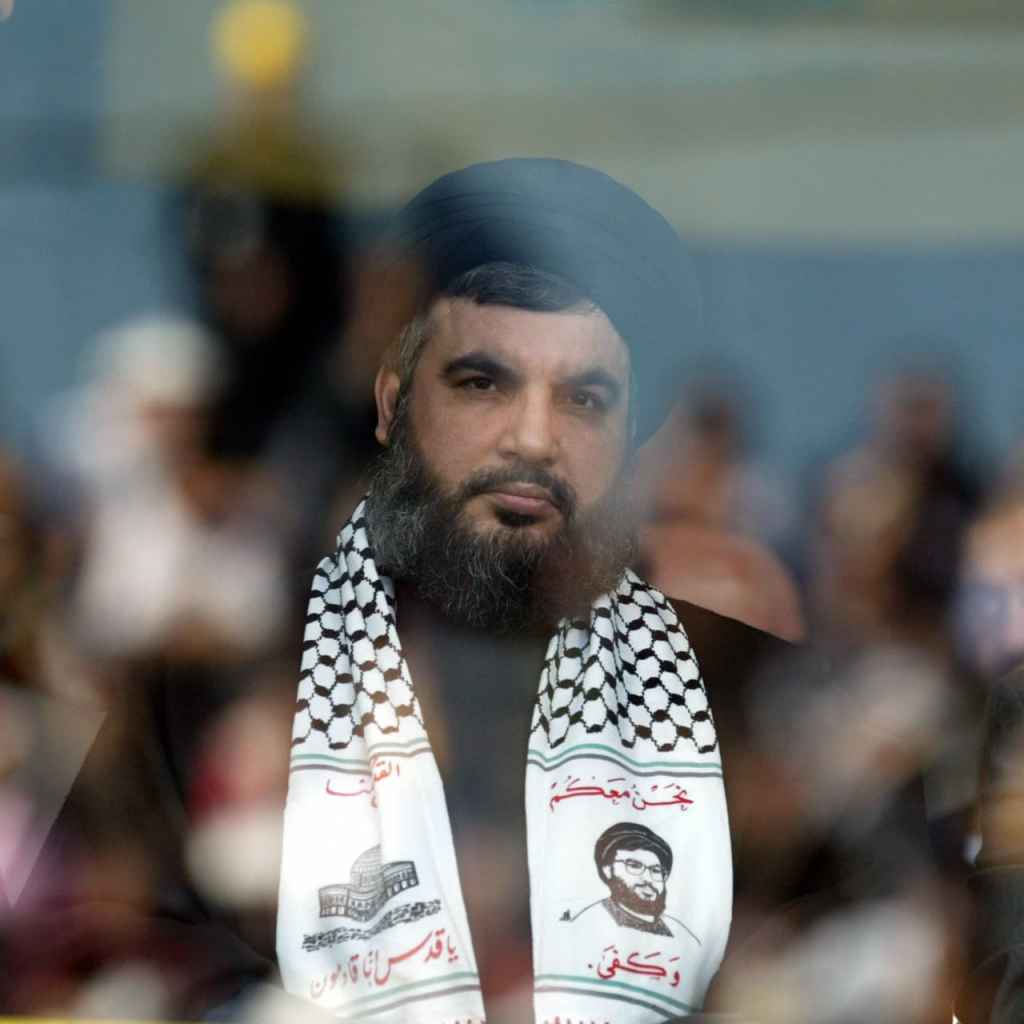
A life in the service of Islam –
The secretary-general was considered by many to be the single most powerful individual in Lebanon, with as many as 100,000 fighters at his disposal.
Members of the Shia political and military faction are also MPs in parliament.
Nasrallah was born in Beirut in 1960 to a poor Shia family in Beirut’s impoverished suburb of Sharshabouk.
After being displaced to south Lebanon, he studied theology, described as a devout and motivated student of Islam.
He joined Hezbollah in 1982, the year it was formed, following his involvement in the Amal movement, a political and paramilitary organisation.
Under Nasrallah, Hezbollah was credited with leading the war of attrition that led to the withdrawal of Israeli troops from south Lebanon in 2000.
His status rose and was further cemented in 2006 when Hezbollah fought Israel to a stalemate during the 34-day war.
After rising through its ranks, the 64-year-old led Hezbollah in conflicts with Israel and took part in the conflict in neighbouring Syria.
Under his leadership, the group was transformed into a regional military and political power.
Nasrallah cemented Hezbollah as an arch-enemy of Israel, seeking deeper alliances.
Nasrallah held the title of Sayyed, an honorific meant to signify the Shia cleric’s lineage dating back to the Prophet Muhammad.
Nasrallah has countless followers across the Arab and Islamic world, but he is viewed as an extremist in much of the West.
Nasrallah will be replaced. The assassination of leaders can prove to be a short-term victory because they are often succeeded by someone more formidable than before, as witnessed by the killing of the former Hezbollah leader Abbas Al-Moussawi in 1992.
In February 1992, then leader Abbas Musawi was killed in an Israeli helicopter gunship raid in south Lebanon, opening the door for Nasrallah’s leadership. He was succeeded by Nasrallah.
Reuters
 Nascent Yemen
Leave a comment