Amran Markets and al-Fayush market airstrikes
Starting about 4:30 p.m. on July 6, bombs hit two locations in the governorate of Amran, north of Sanaa, killing at least 29 civilians, including a woman and 15 children, and wounding at least 20 civilians.
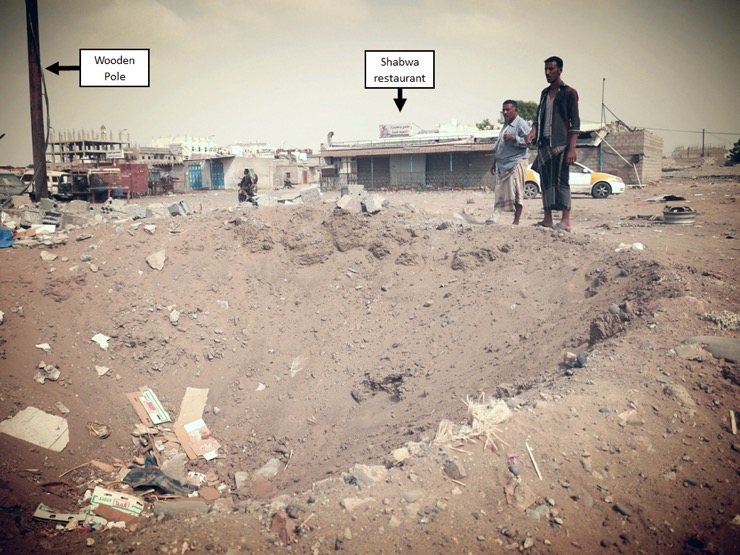
The first strike hit an area known as Bawn market, where vegetable sellers gather near the main road between Amran and Raydah, about 10 kilometers (6.2 miles) northeast of Amran City.
The Bawn market strike killed at least 10 civilians, including nine children, and wounded at least six.
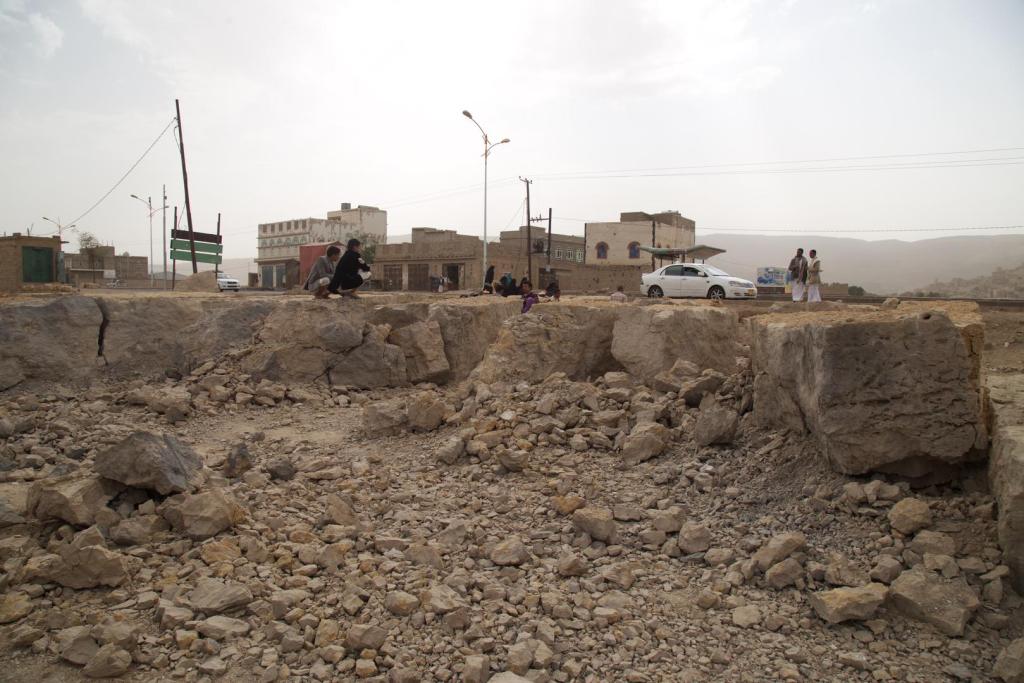
© 2015 Ole Solvang/Human Rights Watch
Minutes later, a second bomb struck the Jawb market along the road just over one kilometer (0.62 miles) further north, damaging a gas station, a car outside the local mosque, and the home of Mansour Ahmed Taqi, 40, a local farmer. The market had been there for at least two years and was the largest in the area, attracting hundreds of people daily.

© 2015 Ole Solvang/Human Rights Watch
Witnesses to the strike interviewed by Human Rights Watch said that they had not seen any Houthi or allied military vehicles on the road at the time of the strike, nor did they know of any military targets in the area.
The Jawb market strike killed 22 people, at least 19 of them civilians, including one woman and six children, and wounded 14. Four of the dead were members of the Taqi family. Three people who were in a car at the time of the attack had not been identified at the time that Human Rights Watch visited, so it was not possible to determine whether they were civilians.
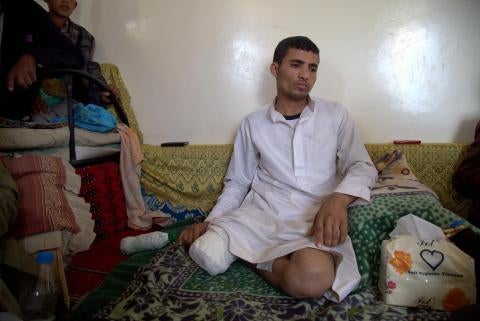
According to Khaled Sanad, the representative of an aid organization linked to the Houthis, a third airstrike hit a security checkpoint south of Amran, about 15 kilometers (9.3 miles) away, at about the same time as the attack on the two markets, killing four Houthi members manning the checkpoint and three civilians who were on the road at the time.
Al-Fayush market airstrikes
6 July 2015: Coalition forces bombed a livestock market killing 40 people and injuring many more.
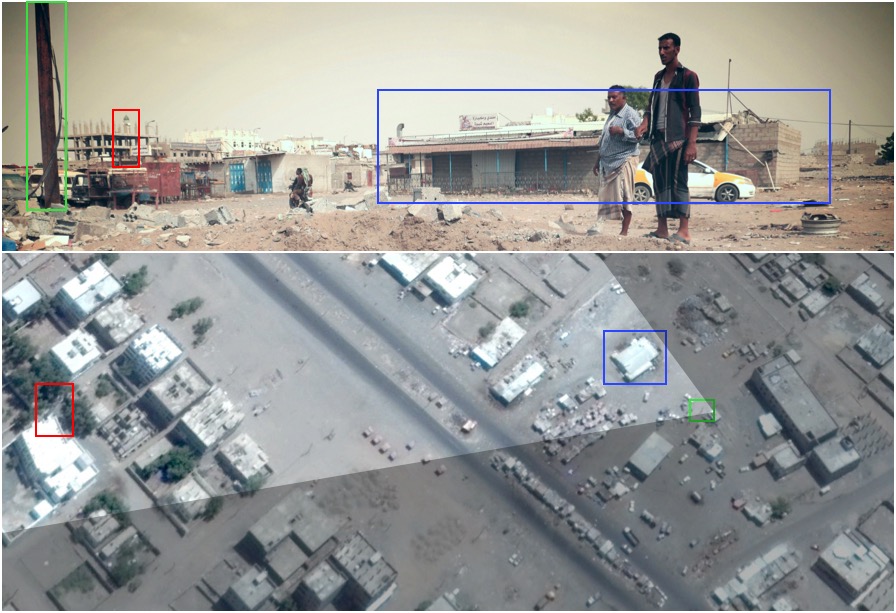

These civilian deaths occurred in strikes that account for just a handful of the thousands of bombing raids carried out by the Saudi-led coalition since its aerial campaign began.
Of particular concern are the U.S.-style “double tap” strikes — where follow-up strikes hit those coming to rescue victims of an initial missile attack — which became a notorious trademark of covert CIA drone strikes in Pakistan.
On July 6, for instance, at least 35 rescuers and bystanders were killed trying to help scores of traders hit in a strike five minutes earlier on a farmers market in Fayoush, in Yemen’s Lahj province.
This form of death is now commonplace amid a war so hidden that foreign journalists are forced to smuggle themselves by boat into the country to report on an ongoing conflict.
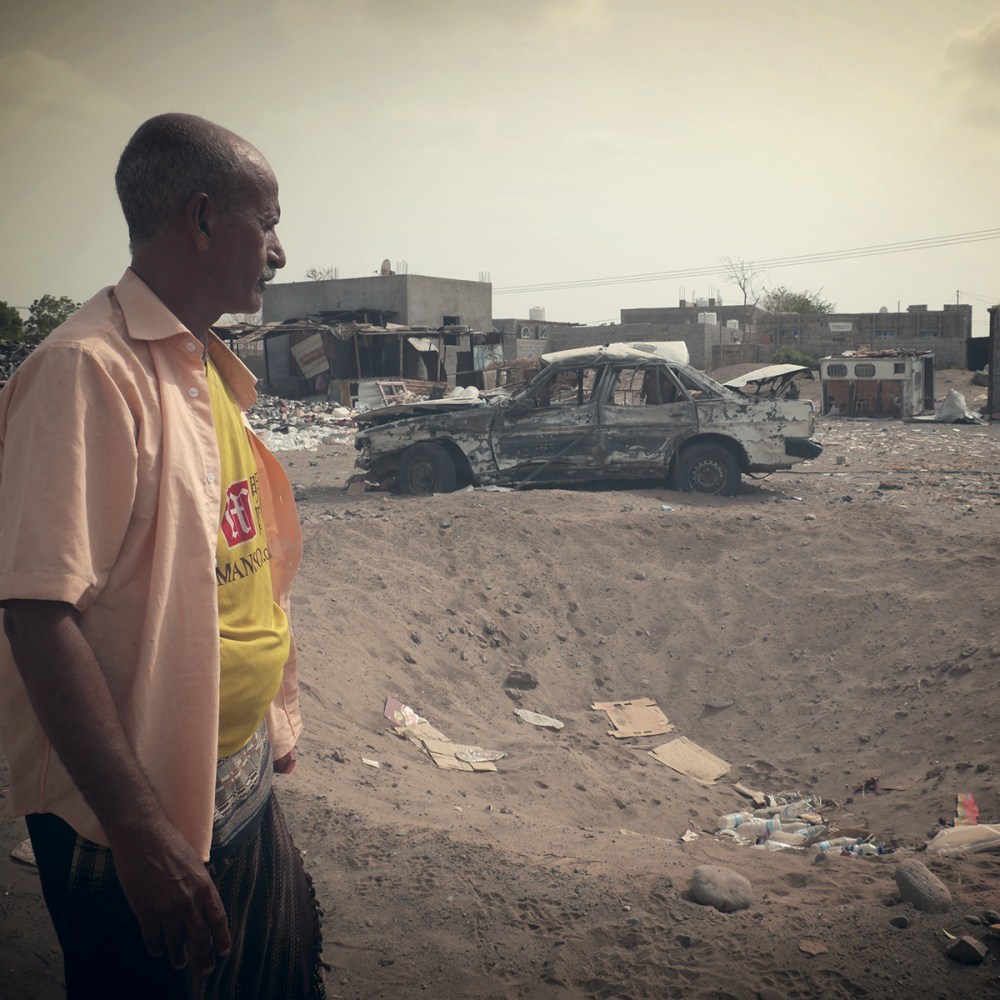
Abdul Hamid Mohammed Saleh, 30, was standing on the opposite side of the road when the first missile hit the gathering of more than 100 men who had been arriving since before 6 a.m. to trade goats and sheep at the daily market. The initial blast, he told me, killed around a dozen men and injured scores more. Body parts flew through the air, and an arm landed next to Saleh. He said he began to flee, but hearing the screams of the injured he turned back and crossed the road to try and help. The second strike landed less than 30 yards from him, sending shrapnel flying into his back.
Mohammed Awath Thabet, a 52-year-old teacher who helped collect the bodies of the dead after the twin strike, said at least 50 people, all civilians ranging from teenagers to men in their 60s, were killed in total. “After 50 it was hard to tell,” Thabet said. “The rest were all body parts. People cut to pieces. What parts belonged to who? We couldn’t tell. Some were animal parts. Some were human,” he added, pointing to a brown stain on a nearby cinderblock wall left by a man’s head that had been stuck to it by the force of the blast. He and other witnesses said that there were no conceivable military targets or Houthi fighters in the area.
Amnesty International report on the al-Fayush market airstrikes.
FAYUSH, LAHJ, 6 JULY
On 6 July, a day prior to the airstrikes on the mosque in Waht, coalition forces bombed the livestock market in Fayush, north of Aden in Lahj governorate. The strike, the deadliest hitherto reported, killed some 40 people and injured scores. Local residents and sellers in the adjacent food market told Amnesty International that at the
time of the airstrike there were no unusual gatherings or activities in the market.
6 July 2018, in Hudeidah, two citizens were killed and were injured after Saudi bombardment.
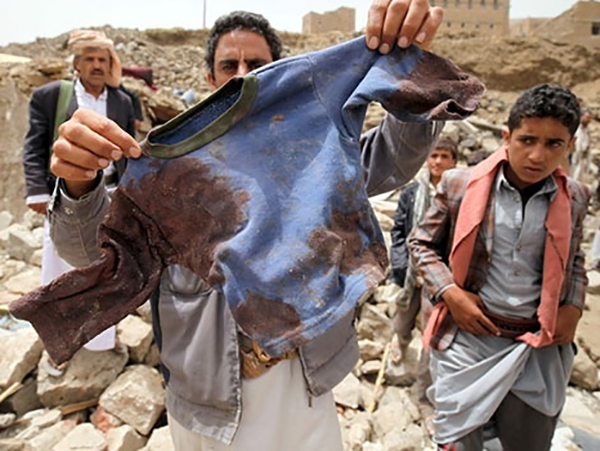
 Nascent Yemen
Leave a comment