Coalition aircraft bombed the marketplace at Muthalith Ahim, crowded with people breaking the Ramadan fast, killing at least 65 people and wounding 105. A nearby Houthi checkpoint was not hit. (Human Rights Watch, What military target was in my brother’s house?, November 2017.)
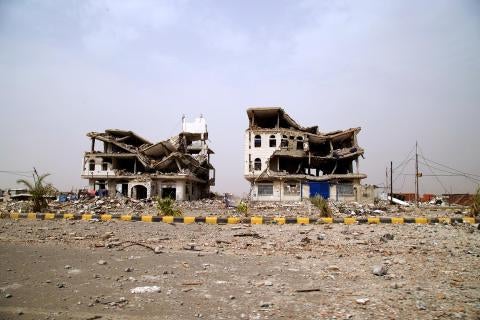
Muthalith Ahim – HRW
At about 10 p.m. on July 4, coalition aircraft bombed the marketplace in the middle of the village of Muthalith Ahim, about 20 kilometers south of the Saudi border in Yemen’s northwest. Because the attack occurred during the holy month of Ramadan, the area was crowded with people breaking their fast in restaurants late in the evening. The airstrike destroyed at least six buildings along the main road of the village, including a four-story building housing the Sanaa Restaurant, a small shop and hotel, and a water truck and car parked outside.
Human Rights Watch examined the site on July 24 and spoke to the staff of four hospitals that received the dead and wounded, as well as officials with the Ministry of Human Rights. The attack killed at least 65 people, including at least six African migrants and three children, and wounded at least 105. Forty of the wounded who were sent to al-Jumhouri Hospital in Hajja were suffering from metal fragment injuries, and most needed surgery, according to a nurse who was on call that night.[82]
Muhammad’s doctor said he had metal fragment injuries to his left shoulder, chest, and right leg. After multiple surgeries, Muhammad had yet to regain movement in his left arm.[85]
Salem al-Mashwali, 40, a truck driver who was in the market at the time, described the scene after the explosion:I was outside in the alley beside the restaurant taking out the trash when the strike hit. I saw fire and smelled gunpowder. The pressure of the explosion threw me back about 10 meters into a pile of trash bags. I tasted blood, and felt a pain in my chest, and then I lost consciousness. I woke up here at the Hajja hospital, only to find out that 13 waiters from the restaurant who worked with me were killed in the explosion.[84]
We got news of the strike about 30 minutes after it happened, but we waited two hours before leaving because we were scared the coalition might target us on the road. We finally left at 12:30 a.m. While on the road we passed a truck carrying 23 of the victims—we stopped the driver to see if we should help the people on the truck or keep driving. It was piled high with bodies, heads open and bleeding. Two of the people in the truck were already dead, another 10 were near death. We kept on driving and made it to the Bani Hassan medical center [in Hajja, about 30 kilometers (19 miles) south of Muthalith Ahim], where most of the wounded had been brought. I will never forget the scene—there were bodies all over the floor.[87]
I counted 45 bodies intact, many lying under the stalls of the qat sellers. I saw other bodies that had been shattered to bits, some already stiff. People all around me were shouting. I saw the driver of the water truck, a friend of mine, and his assistant both dead in the vehicle, as it was burning. I witnessed a terrible thing, a very scary scene.[86]Dr. Adnan al-Wazzan, a pharmacist at al-Jumhouri Hospital in Hajja, some 140 kilometers (87 miles) away, drove an ambulance to Muthalith Ahim after the strike:Abd al-Rauf al-Silwi, 52, a mechanical engineer who went to the site of the bombing early the next morning, told Human Rights Watch:When I arrived, there were still many bodies—most of their faces looked normal, like they were sleeping, just with some marks from metal fragments. In front of Sanaa Restaurant, I saw one man with his backbone sticking out of his neck. By the qat market, I saw dozens of bodies, charred, some headless, others without legs. I saw 10 bodies inside the Hadramawt Restaurant, many missing their arms and legs, all killed while they were in the middle of having their dinner. The arm of one man was still attached to the large water cooler by the entrance. A water truck had exploded, and I saw the head of the driver hanging off the end of what was left of the truck.It is not clear if any Houthi or allied fighters were killed in the attack. Al-Mashwali, the truck driver, told Human Rights Watch there had been a Houthi checkpoint about 50 meters (55 yards) from where the strike hit, manned by 10 to 12 Houthi fighters.[88]
Witnesses who spoke to Human Rights Watch said the strike did not damage the checkpoint.
Even if the checkpoint, a legitimate military objective, was the target of the attack, the coalition should conduct an investigation to determine if all feasible precautions were taken to minimize the harm to civilians, and whether the attack as carried out was unlawfully indiscriminate or disproportionate.

The Bellingcat report includes a list of names of the martyrs and the injured.
All videos depicting the aftermath have been removed and replaced with the notification, “This video is no longer available because the YouTube account associated with this video has been closed.”
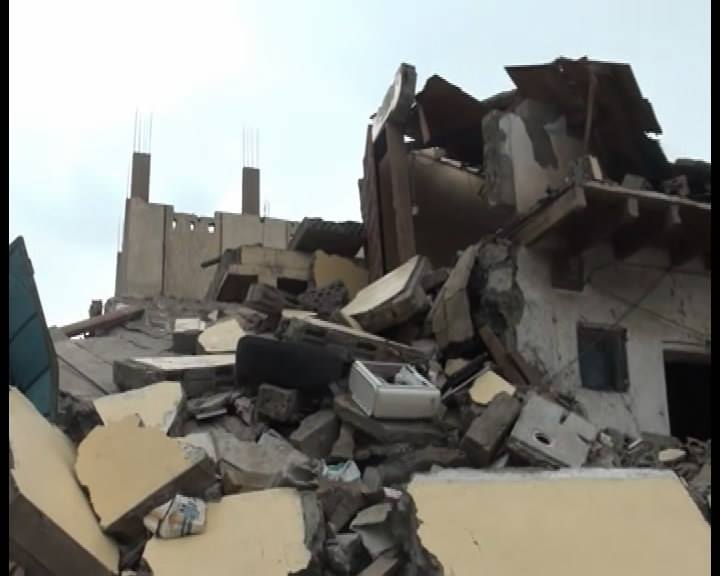
In Hajjah, The Muthalith Ahim.
Sadah: A woman and a child killed and a man and a little girl injured.
The al Ansar school was attacked by the coalition war planes.
A person died and many injured as a result of a Saudi air raid that targeted a civilian home.
In Lahj, two children died in their family home following Saudi Arabia-led coalition bombings.
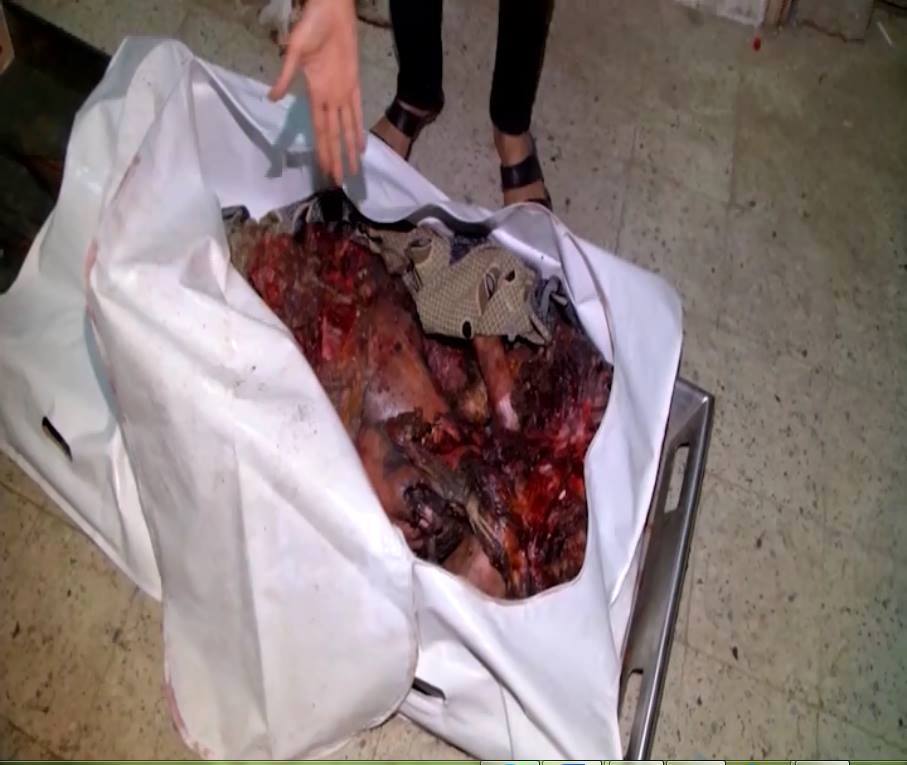
 Nascent Yemen
Leave a comment