On May 8, 2015, the Saudi Arabia-led coalition declared the cities of Saada and Marran to be military targets, followed by an intense and indiscriminate bombing campaign lasting for several months.
In the wake of the bombing frenzy, the Saudi Arabia-led coalition attacked residential houses, countless markets, food/wheat storages, schools, petrol stations, mosques, wells, and many other civilian infrastructure.
“Human Rights Watch identified from a time series of satellite imagery 210 distinct impact locations in built-up areas of the city consistent with aerial bombardment as of May 19, 2015. The satellite imagery shows that these attacks damaged or destroyed hundreds of buildings.Impact craters and damage to buildings at some sites indicate that coalition forces on several occasions used aerial bombs of at least 1,000 pounds in attacks on the city. At a government building in Saada City, Human Rights Watch photographed the remnants of an MK-83 air-dropped 1,000-pound bomb made in the US.“
The city of Sa’da has suffered more destruction from coalition airstrikes than any other city in the country.
“Even though the city is noticeably emptier,
many people were not aware of the order of evacuation – it hasn’t been heard by the entire population. There is no electricity, no working telephones and yesterday there was a huge storm … we fear that everyone wasn’t aware of the ultimatum.
“The bombing has been quite intense, more than twenty bombs have hit different buildings in the city, which has already suffered a huge level of destruction in recent weeks. There have been reports of 140 bombs being dropped on the city in a single day.
Saada’s political, economical, and developmental state must be seen within the context of a lasting central governmental neglect in conjuction with constant military attacks.
Lacking investments and subsidiaries from the Central government, Saada was not able to recover or make any developmental progress.
This stagnation goes back to the aftermaths of the 1962 Revolution and overlaps with the six Saada wars fought between 2004-2011, with the involvement of multiple foreign powers.
Sa’ada’s cultural heritage destroyed
The following consists of excerpts from a report by The Intercept.
Yemen’s architectural history has been targeted by the Saudi Arabia-led coalition, leading to broad-scale destruction.
The Middle East’s poorest nation is famous for constructing the world’s first skyscrapers, often up to 100 feet high, with as many as 11 stories designed to keep extended families and their livestock safely under one roof.
These centuries old resedential houses futuring windows made of colourfull glass, that is a 4,000-year-old Yemeni art form, have been deliberately targeted and destroyed.
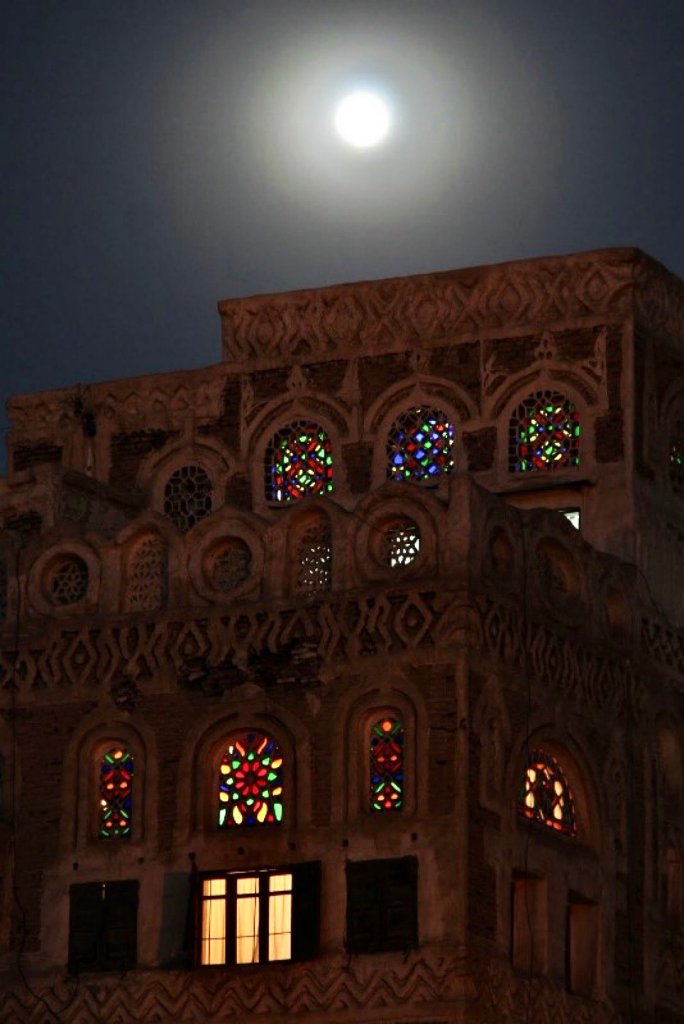
The historic city of Saada, which harbours the ancient heritage of Zaidi Shiism, is on the tentative list of the world heritage body, UNESCO.
On May 9, a day after the coalition’s ultimatum for civilians to leave, multiple airstrikes hit the heart of Saada City’s historic old city.

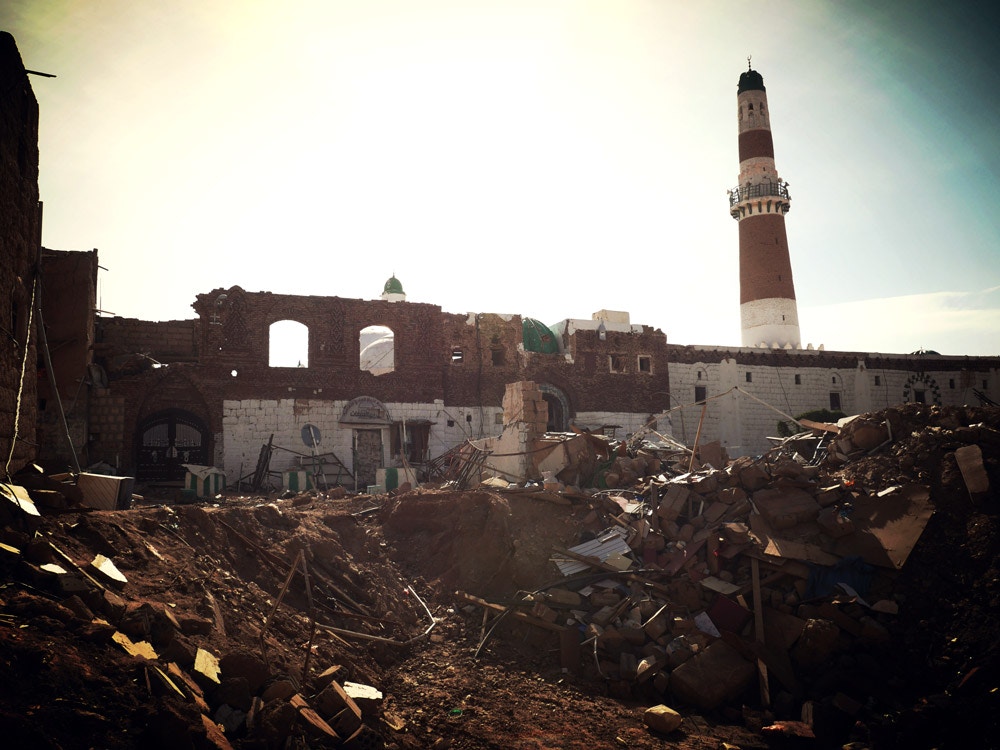
The mosque is the final resting place of Imam al-Hadi ila’l-Haqq Yahya, the first Shiite Zaydi imam of Yemen, who died in 911 A.D. Local legend has it that the site of the mosque is where the Prophet Mohammed’s camel once rested. But today, the mosque’s prominent green dome is cracked like an eggshell and its doors blown out. Repeated ground-shaking strikes just a few feet from the high walls surrounding the structure have crumbled its ceilings. For the first time in its 1,200-year history, the Hadi mosque is now closed.
The village of Rahban, on the outskirts of the city, was razed. It consisted entirely of historic, centuries-old multistory homes with thick rammed-earth walls, rainbow-colored stained-glass windows and hand-carved wooden doors. Timber joists that supported families for tens of generations now protrude from piles of rubble. More than 30 homes were wiped out.
I once read that
AOAV.ORG.UK
on International Humanitarian Law, or the laws of war
In September, the spokesperson for the Saudi-led coalition, Brig. Gen. Ahmed Assiri, told The Intercept that the coalition was using Western precision-guided weapons “to avoid collateral damage.”
The Intercept
Yet countless reports, including evidence consisting of photographic documentation and witness and survivor testimonies by leading human rights organisation, prove willful, indiscriminate targeting.
All warlords know the laws of war but rarely follow these.
Under the international humanitarian law, or the laws of war applicable to the armed conflict in Yemen, civilians and civilian objects may never be deliberate targets of attack. Attacks that fail to discriminate between civilians and combatants or that cause civilian harm disproportionate to the expected military gain of an attack are prohibited. Warring parties are required to take precautionary measures to minimize incidental loss of civilian life, injury to civilians, and damage to civilian objects. This includes avoiding the deployment of forces in densely populated areas.
Human Rights Watch

Saudi Brig. Gen. Ahmed Assiri, spokesperson for the Saudi-led coalition
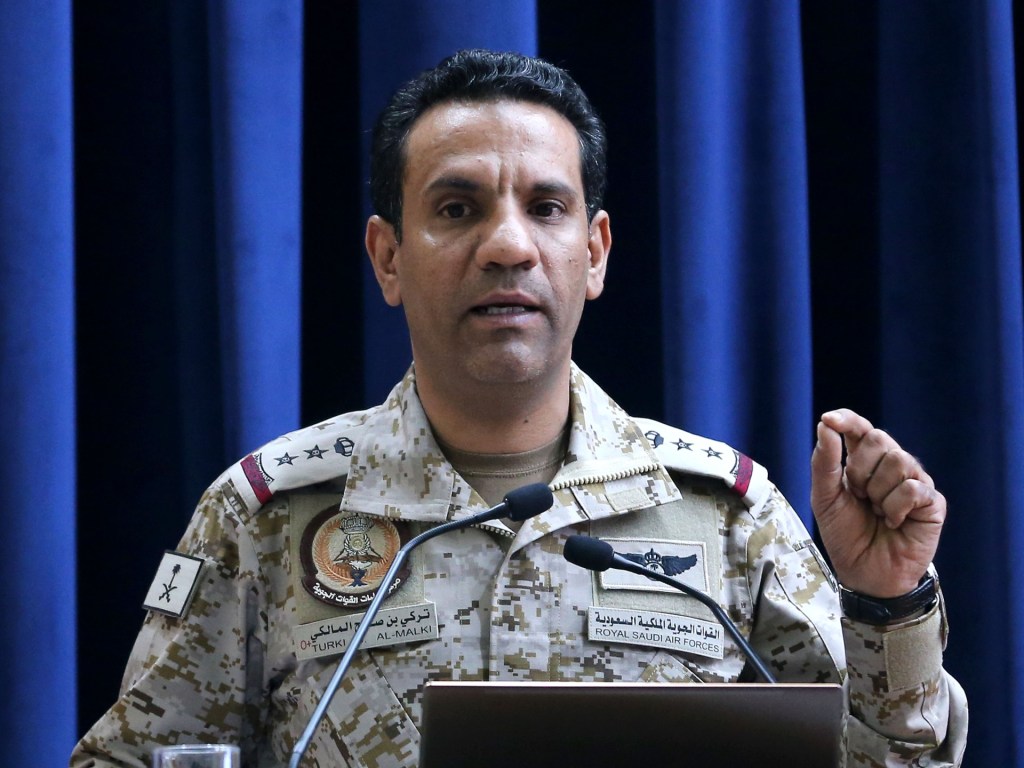
Saudi-led coalition spokesman, Col. Turki al-Malki,
If I may so, I would like to close with a most heart-tearing and epic quote.
[War always leaves something in the souls … and this is what became evident during the war: all people are in the same place and in the same trench, but in the souls remains something of the past, its tragedies, and its aftermath.]
Former governor of Saʿdah
Tribes and Politics in Yemen, by Marieke Brandt
#Onthisday
APPENDIX
Book recommendations for a better understanding of the Yemen war:
Beyond the Arab Cold War The International History of the Yemen Civil War, 1962-68 – Oxford Studies in International History
by Asher Orkaby
Tribes and Politics in Yemen: A History of the Houthi Conflict
Oxford University Press
by Marieke Brandt
 Nascent Yemen
Leave a comment