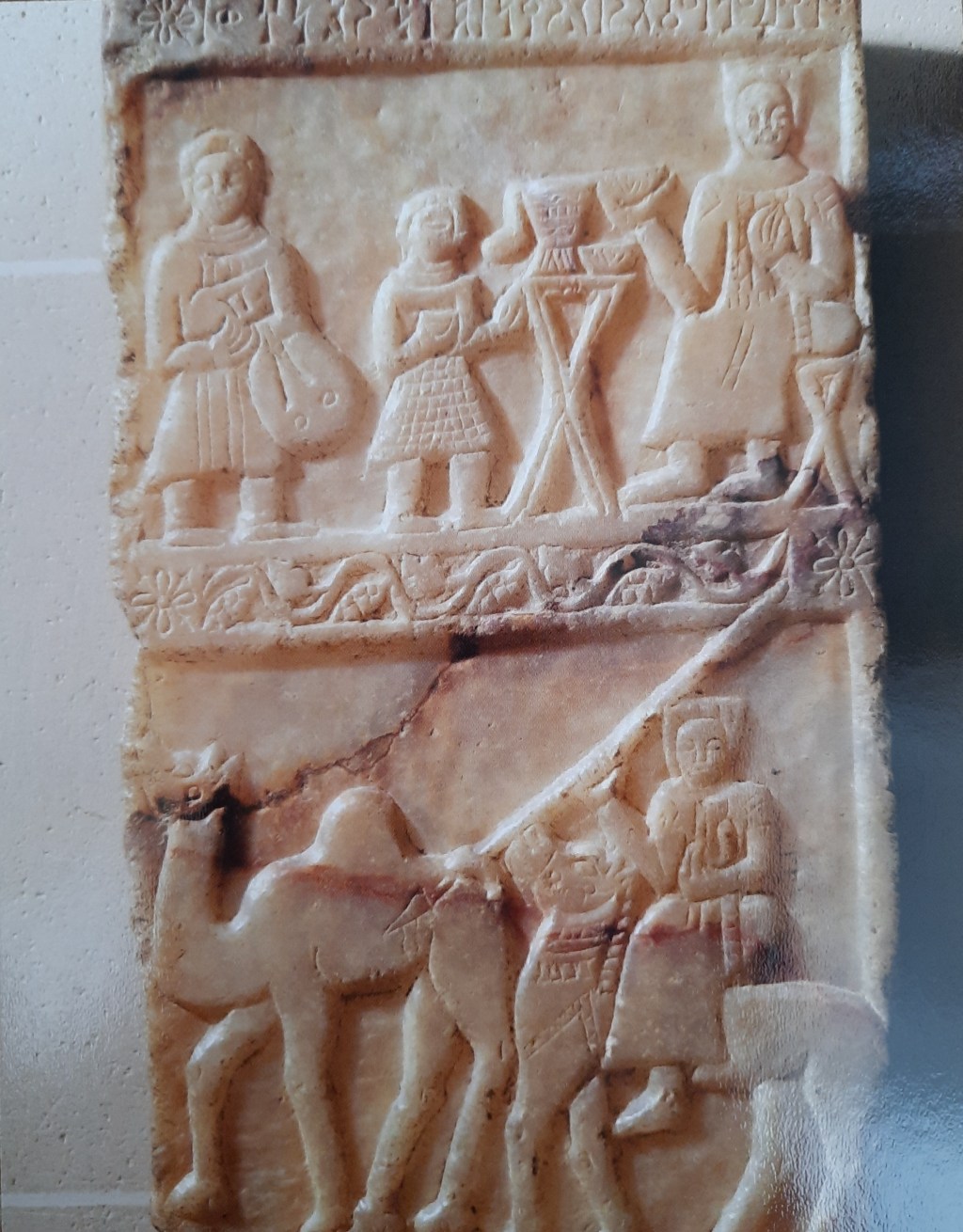
There are only a few good reports and footage released by leading scholars or entities on the deliberate and willful destruction and plundering of Yemen’s cultural heritage. One of these reports launched in 2017 is stating,
“It is difficult to rationalize destruction of cultural heritage in any context, and even more so in this land where the past, the present, and the landscape are intricately interrelated.”
The Cambridge University
One might feel compelled to argue, but being deprived of cultural heritage or identity could be no less incisive than bereavement and loss of lives.
The destruction inflicted on Yemen’s rich culture and history by the Saudi Arabia-led coalition and numerous other actors in conjunction with ongoing looting is difficult, if not impossible, to evaluate. How can you assess the value of a funerary stelae when over 24 million people depend on humanitarian aid? Which standard of measurement could be implemented to define the significance of a centuries old mosque when tens of thousends civilians have lost their lives in direct military attacks. By far, the more urgent question would be, whether the international community is willing to act or whether they have salvaged their conscience already.
Since the Saudi Arabia-led coalition with the support and backing from the UK, US, France etc., invaded Yemen eight years ago, the Yemen-based organisation Yemen Data Project has reported over 25.000 airstrikes.
Three of these damaged sites are UNESCO World Heritage Sites and include the historic cities of Sanaa, Zabid, and Shibam, while three others—Thula, Marib, and Saada—are on the tentative list of UNESCO World Heritage Sites.
The Cambridge University
In the absence of governmental protection measures and uncontrolled borders, the looting of artefacts has flourished. These stolen cultural remnants are via various channels, most frequently by the UAE, illegally transferred to the prestigious auction houses and museums in the US, UK, and other European countries.
The following video entails measures put in place to raise awareness for Yemen’s cultural heritage at risks.

The Washington Post, January 2023
The Middle East Monitor, November 2022
APPENDIX
Disclaimer:
UNESCO is a scientific and cultural based sub branche of the United Nations. Countless archaeological sites of great significance to Yemeni heritage are still not recognized by UNESCO.
The British Museum harbours many illegally acquired artefacts from all over the world and refuses to return these cultural treasure of immense value to their rightful owners. Formal and legal disputes about ownership are still ongoing. Most recently, the Wallstreet Journal released an article on this topic.
As always, statistics do not reflect the true account of the researched topic. Rather, they provide very limited information confined to a specific period of time. Hence, statistics are fractured. The gathering of information and its evaluation depends on databases, where information is collected based on reports received. In war-stricken countries, the existing systems collapse, concentrating governments and the public on defence and survival skills only. The true account of loss, damage, and other variables remain widely in the darkness. Statistic can also be very biased and limited depending on funding members of the research work and which outcomes they aspire to achieve. However, we all depend on numbers and graphics in culminated available statistics as the foundation of our own work. Remains to explore and establish which resources to rely on. Genuinely speaking in the unfortunate case of Yemen, there is only scant information available. Missing data may be another indicator of the expression ‘world’s worst humanitarian crisis’, which was coined to describe the dire state of Yemen.
 Nascent Yemen
Leave a comment