The conflict in Sudan is taking shape and claiming presence in the media with each passing day. Reading the news, reminiscent of Libya’s destiny – Sudan’s neighbour to the north-west, one wonders which foreign countries have been involved in the conflict so far and who is going to enter yet.
Sudan is no stranger to internal conflicts or insurgencies. Rather, the country has a long history of internal divisions and fights for power dominance. The leader of the Sudanese army and the head of the Rapid Response Forces had been once upon a time fighting on the same front, supporting each other within an alliance to topple the previous government of Bashir, who had ruled the country for over 30 years, until his rule came to an end in 2019 through the joint forces of the now opposing parties. Bashir’s reign marked the split of the country, creating South Sudan, and the Darfur conflict took place during his presidency.
Following Bashir’s overthrow in 2019, the country was then governed by the army and civilian forces, ending with a military coup in 2021. According to formal and informal sources, the military has been considered the sole governing force of the country since. However, the exacerbation of the conflict is deemed to originate by the Rapid Response Forces’ demands to be embedded as a civilian entity into the country’s governance. In essence, it is about the rivalry of the two now opposing generals’ power dynamics in the country. Their fighting is about dominance and submission.
Now, whether it is true or not, remains to be uncovered in the years to come, but CNN is claiming that Russia is involved in providing military and political assistance for access to gold reserves in Sudan. Sudan is resource-rich and strategically located. I was aware of the oil fields in Sudan, but it is new to me that Sudan has other crude commodities.
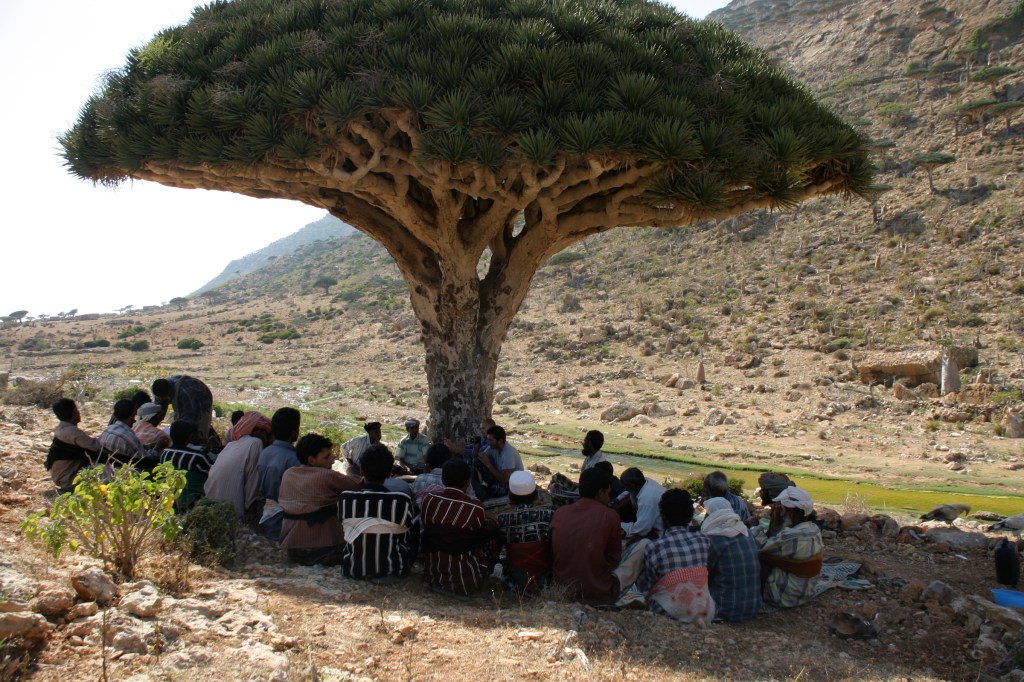
Devastation caused by natural elements is no news to Yemen. The country has experienced weather-related catastrophes, such as torrential rains, floods, and cyclons. In 2018, the UAE invaded the Yemeni archipelago of Socotra under the guise of provision of emergency assistance following a cyclon. Since then, the UAE turned the island into a military base, leading to forced displacements of residents. Simultaneously, they have started an irresponsible tourism campaign threatening the island’s unique biodiversity. Saudi Arabia’s pretext of starting the war on Yemen is a little lengthy story, which is difficult to cover here in its entirety. However, that too corolates with the thesis that governments create narratives in order to intervene in conflicts to guard interests or extent their power predominance. This thesis makes a great basis to launch the next news.
The White House is meanwhile considering a plan to send US troops to Port Sudan to help with the evacuation of American citizens, a US official with knowledge of the operations told CNN on Monday.
Three US warships are also being deployed.
Is there a new war in the making in a resource-rich country with geopolitical significance? This is like the Yemen war all over again. Meanwhile, Yemen’s oil and gas rich governerates, a vast number of ports, and the surrounding seas are under the Saudi Arabia-led coalition rule, who are backed and assisted by US UK France and the rest. Their dominance spans the governorates of Shabwah, Hadrahmout, Mahra, Marib, and the ports and islands of Socotra, Mayun, Bab Al Mandab strait etc. If you get a chance, read the Wikileaks on Yemen.
Lastly, remember that Sudan is still a party to the Saudi Arabia-led coalition, which invaded Yemen on 26 March 2015.
They (The generals of the Sudanese military and the Rapid Response Forces respectively) commanded separate battalions of Sudanese forces, who were sent to serve with the Saudi-led coalition forces in Yemen.
CNN
Disclaimer: CNN is a part of the corporate media that scratches only the surface instead of providing genuine investigative journalism.
 Nascent Yemen
Leave a comment